

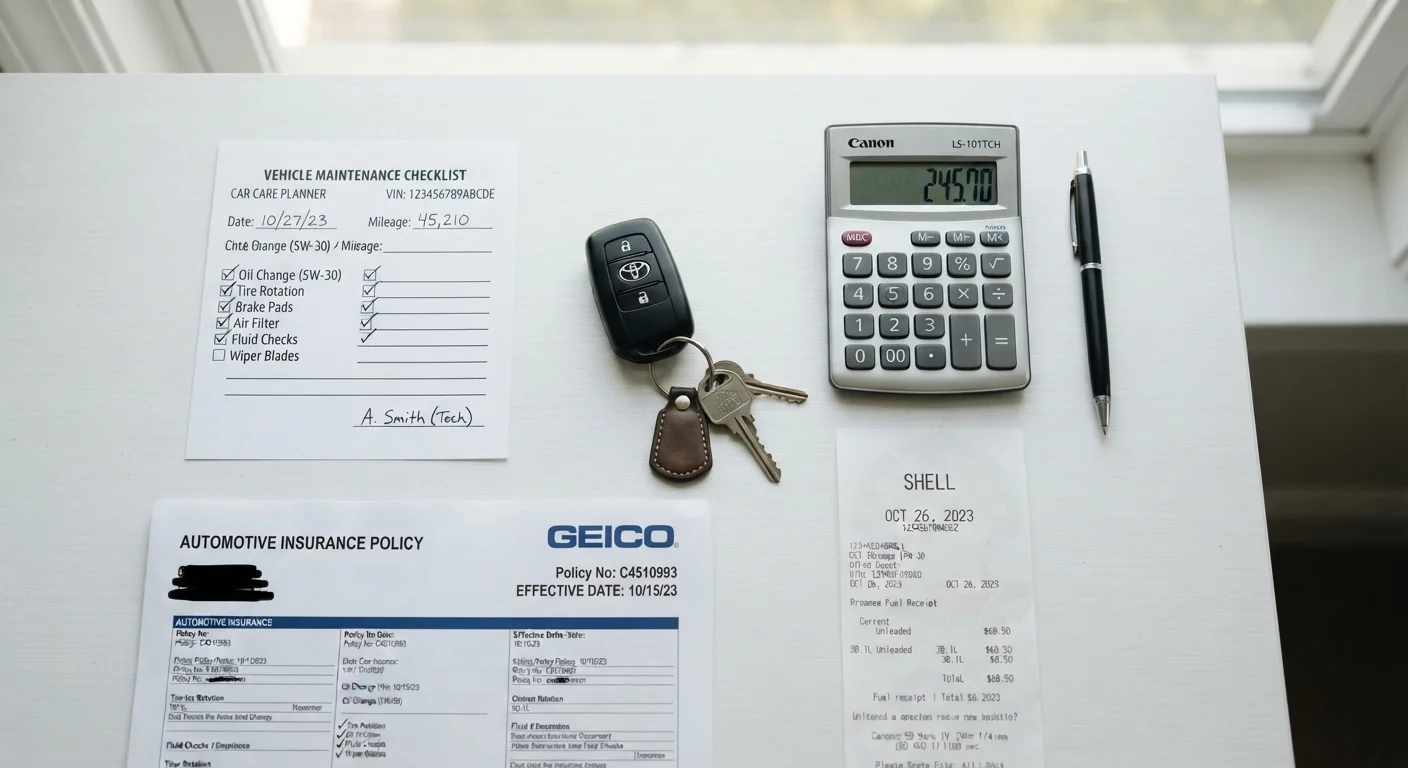
What Annual Car Ownership Actually Costs
Owning a car involves far more than a monthly payment. The American Automobile Association (AAA) has consistently found that the average annual cost of vehicle ownership in the US runs into the thousands of dollars once all expense categories are tallied. For most drivers, the full picture is a surprise - and understanding each category is the first step toward managing it.
This reference guide breaks down the six primary recurring cost categories, explains what drives variability in each, and offers context for benchmarking your own situation. For a deeper dive into what these costs look like across the full ownership lifecycle, see the true cost of owning a car in the US.
The Six Major Expense Categories
1. Fuel
Fuel is typically the most visible ongoing expense. Annual spending depends on three factors: miles driven per year, the vehicle's fuel economy rating (measured in miles per gallon or MPGe for electric vehicles), and local fuel prices. A driver covering 15,000 miles annually in a vehicle averaging 28 mpg will use roughly 535 gallons per year - a cost that shifts significantly with pump prices. Electric vehicle owners substitute electricity costs for gasoline, which varies by local utility rates and charging habits.
2. Auto Insurance
State law requires at least a minimum level of liability coverage in nearly all US states. Premiums are influenced by your driving record, vehicle type, location, age, credit history (in most states), and the coverage levels you choose. Comprehensive and collision coverage - which protect your own vehicle - add considerably to base liability premiums. Rates can vary by hundreds of dollars annually for the same driver profile across different insurers, making periodic comparison shopping a financially meaningful exercise.
3. Depreciation
Depreciation is the largest cost category for most owners, yet it's the least visible because no check is written. A vehicle loses value from the moment it is driven off the lot. New vehicles typically lose a significant share of their value within the first few years; older vehicles depreciate more slowly. Depreciation matters most when you plan to sell or trade in - it determines the equity position you carry into your next vehicle decision.
4. Financing Costs
If you carry a loan, interest is a real and recurring cost. The total interest paid over a loan term depends on the principal borrowed, the annual percentage rate (APR), and the loan length. Longer terms reduce monthly payments but increase total interest paid. Drivers who pay cash avoid this category entirely. For context on how financing interacts with overall ownership value, comparing buying and leasing can clarify the trade-offs.
5. Maintenance and Repairs
Routine maintenance - oil changes, tire rotations, fluid checks, filters, and brake service - is predictable and schedulable. Repairs are less so. Older and higher-mileage vehicles generally carry higher repair exposure. Staying current on scheduled service reduces the likelihood of costly failures. The car maintenance schedule guide explains what each interval includes and why skipping them can multiply costs downstream.
6. Registration, Taxes, and Fees
Annual vehicle registration fees are set by state and sometimes local governments. Some states base fees on vehicle value or weight; others charge flat rates. Property taxes on vehicles apply in certain states. These costs are relatively fixed year to year but can vary significantly by state - from under $50 annually to several hundred dollars for newer or higher-value vehicles. Understanding vehicle fees at purchase is equally important for budgeting from day one.
Electric Vehicles Shift - But Don't Eliminate - These Categories
EV owners substitute electricity costs for fuel and generally face lower routine maintenance expenses (no oil changes, fewer brake replacements). However, depreciation, insurance, registration, and financing costs still apply - and in some cases, insurance and registration fees for EVs can be higher than for comparable gas vehicles. The overall cost picture for EVs varies considerably by region, driving patterns, and whether home charging is available.
Using This Information to Budget
Once you know your expense categories, building a simple annual ownership budget becomes straightforward. Add up estimated fuel spend, your actual insurance premium, an estimated depreciation figure, any loan interest, a realistic maintenance allowance, and registration fees. The result is your total cost of ownership for the year.
High-mileage vehicle owners face a different calculus: as maintenance costs climb, the comparison between continued upkeep and replacement becomes financially meaningful. Understanding the maintenance math for aging vehicles walks through how to evaluate that decision objectively.
Depreciation
The reduction in a vehicle's market value over time. It is the gap between what you paid and what the vehicle is worth when you sell or trade it in.
APR (Annual Percentage Rate)
The yearly cost of borrowing money expressed as a percentage, including interest and certain fees. A lower APR means less paid over the life of a loan.
Comprehensive Coverage
An optional auto insurance coverage that pays for vehicle damage from non-collision events such as theft, weather, or falling objects.
Total Cost of Ownership
The complete annual or lifetime expense of owning a vehicle, combining all recurring costs rather than just the purchase price or monthly payment.
MPGe (Miles Per Gallon Equivalent)
A fuel economy metric used for electric and plug-in hybrid vehicles, standardizing electricity consumption against the energy equivalent of one gallon of gasoline.
Tracking actual spending against these categories - even with a simple spreadsheet - tends to surface patterns that lead to smarter decisions, whether that means adjusting coverage levels, changing driving habits, or timing a vehicle replacement more strategically.