

Key Takeaways
- A written care sheet covering your dog's routine, diet, and medical needs is essential for any sitter or boarding facility.
- Always provide at least two emergency contacts, including your veterinarian's direct number.
- Dogs with breed-specific health concerns or medications require extra documentation and clear written instructions.
- Confirm your dog's vaccinations and ID tags are current well before your departure date.
- Doing a trial run with a new pet-sitter before your trip can prevent avoidable stress for your dog.
Summary
24 items · 30–60 minutes
Why a Thorough Handoff Matters
Leaving your dog in someone else's care — whether a professional boarding facility, a pet-sitting service, or a trusted friend — requires more preparation than most dog owners anticipate. Even a well-meaning caregiver can struggle without clear, written guidance on your dog's daily rhythm, health history, and behavioral quirks.
The stakes are especially real if your dog takes medication, has food sensitivities, or belongs to a breed with particular health vulnerabilities (such as brachycephalic breeds like Bulldogs and Pugs, who can overheat quickly, or large breeds prone to bloat). A thorough handoff protects your dog and gives the sitter confidence. Think of this checklist as your dog's temporary care manual.
If you're coordinating the rest of your trip logistics at the same time, the pre-departure checklist for travelers can help you run through the broader picture alongside your dog care prep.
Health and Medical Information
Daily Routine and Diet
Identification and Safety
Behavior and Handling Notes
Logistics and Permissions
Tools and Documents to Gather First
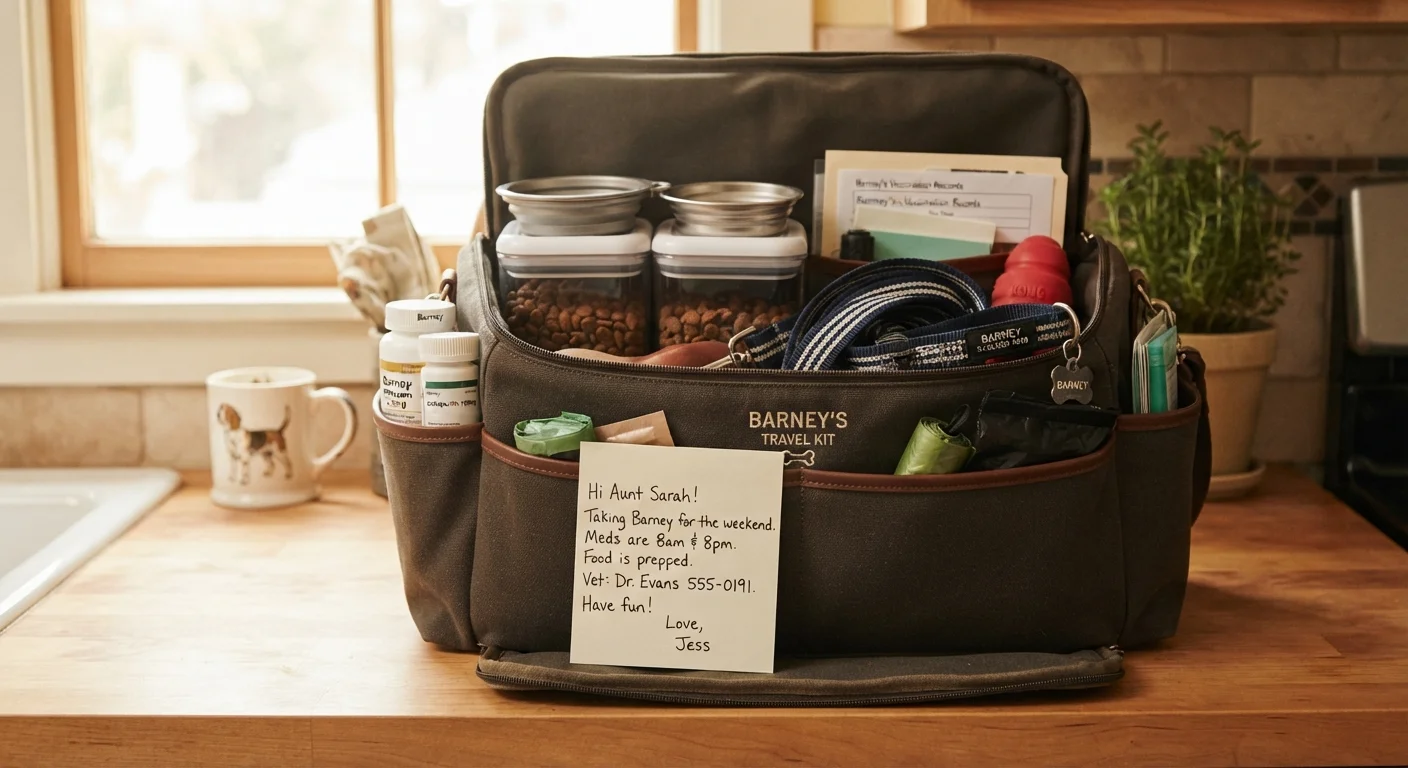
Before you start filling out care sheets, pull together the physical items and documents your sitter will need on hand. Having everything in one labeled folder or bag makes the handoff far smoother.
Written Care Sheet
A single document summarizing your dog's routine, diet, medications, and behavioral notes that the sitter can reference at any time.
Vaccination Records
Required by most boarding facilities and useful for any vet visit that may occur during your absence.
Veterinary Authorization Letter
A signed document granting the sitter permission to authorize emergency veterinary care on your behalf.
Extra Collar and Leash
A backup leash and collar prevents delays if the primary set is lost or broken during the stay.
Comfort Item from Home
A familiar blanket or worn t-shirt can reduce anxiety in dogs adjusting to a new environment.
Don't Assume Verbal Instructions Are Enough
Even experienced pet-sitters can forget details shared only in conversation, especially during a busy handoff. Always back up verbal guidance with a written care sheet. For dogs with medical needs, a clear written medication log — noting each dose given — is also worth leaving so nothing gets double-dosed or missed.
A Note on New Dogs and New Sitters
If this is your first time leaving your dog with a sitter — or your dog is new to your household — plan for a transition period. A meet-and-greet visit before your departure lets your dog associate the sitter with a positive, low-stress experience. For guidance on what new dog owners should understand about their pet's needs more broadly, see what to expect when bringing home your first dog.
Senior dogs, anxious dogs, and those with chronic health conditions may benefit from an in-home sitter rather than a group boarding environment. Discuss your dog's temperament honestly with any prospective caregiver, and don't downplay behaviors like resource guarding or separation anxiety — these details directly affect your dog's safety and the sitter's ability to manage them.
Always Leave Emergency Vet Authorization in Writing
Without written authorization, some veterinary clinics may delay or limit treatment for a pet in an emergency because they cannot reach the owner. Before you leave, sign a letter explicitly authorizing your sitter or the boarding facility to approve emergency treatment up to a stated dollar threshold. Ask your vet's office if they have a standard form, or confirm what documentation your chosen facility requires.
This checklist is for general informational purposes only. Always consult your veterinarian about your individual dog's health needs, medications, and suitability for boarding or in-home care.