
Stress Management Habits: What Different Approaches Are Actually Doing in the Body

Key Takeaways
- Each stress-relief habit targets the body's stress response through a distinct physiological pathway.
- Slow breathing and walking carry the strongest research evidence among common approaches.
- Journaling works through cognitive processing rather than producing immediate physiological calm.
- Cold water exposure shows early promise but lacks the evidence depth of exercise or breathwork.
- Consistency matters more than intensity - sustainable habits accumulate benefits over time.
Our Verdict
No single stress-management habit addresses every dimension of the body's stress response. Slow breathing and moderate movement carry the strongest evidence and suit most people as a foundation; expressive journaling adds a valuable cognitive-processing layer; cold exposure is a plausible but still-emerging option that is not yet equivalent to the others in research depth.
| Best for | Recommended |
|---|---|
| Immediate relief during an acute stressor | Slow / diaphragmatic breathing |
| Sustained reduction in background stress and mood support | Walking or moderate movement |
| Processing emotionally complex or recurring stress | Expressive journaling |
| Those interested in experimental stress-adaptation challenge | Cold water exposure |
The Biology Behind Stress Relief
When the brain perceives a threat - a looming deadline, a conflict, even a sudden loud noise - it activates the hypothalamic-pituitary-adrenal (HPA) axis and the sympathetic nervous system. These systems release cortisol and adrenaline, raising heart rate, redirecting blood flow to muscles, and sharpening short-term alertness. In brief episodes, this response is functional and adaptive.
Sustained activation tells a different story. A substantial body of stress physiology research links chronic HPA-axis overactivation to elevated systemic inflammation, disrupted sleep architecture, and impaired memory consolidation. The habits commonly recommended for stress relief are not merely relaxing distractions - each intervenes at a specific point in this biological chain. Stress management interacts directly with sleep, nutrition, and movement, and understanding the mechanisms helps you choose approaches that genuinely fit your life.
Four Common Habits, Four Different Mechanisms
The comparison below covers four widely practiced approaches, assessed by mechanism, physiological effect, speed of action, evidence strength, and accessibility. Distinguishing well-established findings from emerging or preliminary research matters - not all habits carry the same scientific weight. For a deeper look at one specific practice, see what the research actually supports for journaling.
| Slow Breathing | Walking / Movement | Expressive Journaling | Cold Water Exposure | |
|---|---|---|---|---|
| Primary mechanism | Vagus nerve / parasympathetic activation | Cortisol metabolism; endorphin release | Prefrontal cortex engagement | Norepinephrine surge; hormetic adaptation |
| Main physiological effect | Lowers heart rate and reduces arousal | Reduces stress hormones; elevates mood | May reduce amygdala threat signaling over time | Acute stress inoculation; unclear long-term durability |
| Speed of effect | Fast (minutes) | Moderate (30-60 min) | Gradual (days to weeks) | Fast surge; long-term effects unclear |
| Evidence strength | Well-established | Well-established | Moderate and growing | Early / mixed |
| Accessibility | High - no tools needed | High - low cost, adaptable | High - pen and paper sufficient | Moderate - requires cold tolerance |
Layering Habits for Real-World Consistency
No single technique addresses every dimension of the stress response, which is why complementary approaches tend to work best together. Slow diaphragmatic breathing works within minutes because it stimulates the vagus nerve - directly signaling the parasympathetic nervous system, the body's counterpart to the fight-or-flight response, to reduce arousal and lower heart rate. This makes it well-suited to acute, in-the-moment stress.
Walking and moderate movement work more slowly but produce more durable effects. Rhythmic exercise helps metabolize circulating cortisol and stimulates endorphin release; these shifts can sustain improved mood and reduced tension for hours afterward. The two habits pair naturally: a short walk with slow nasal breathing activates both pathways simultaneously.
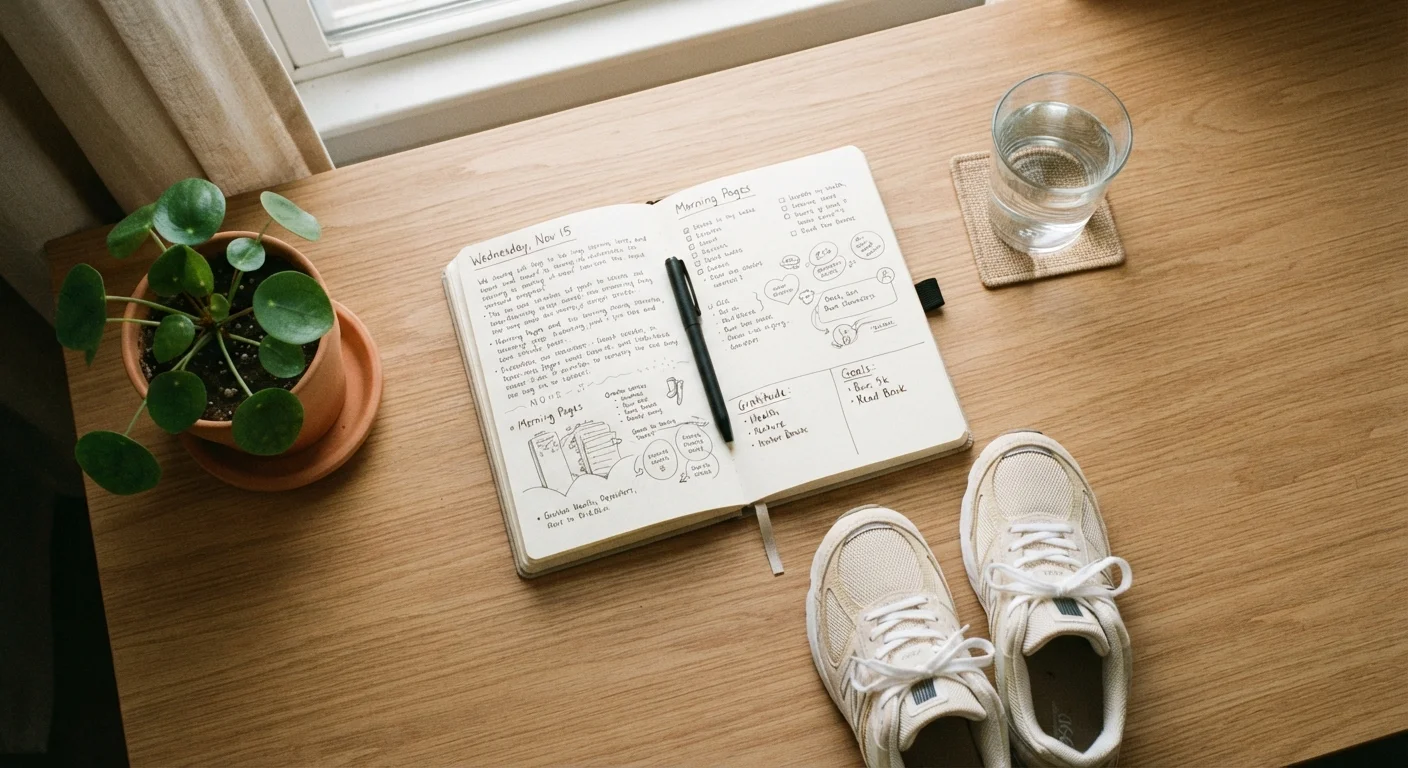
Expressive journaling - writing freely about thoughts and feelings rather than logging events - appears to work through a distinct cognitive route. Translating emotional experience into language engages the prefrontal cortex in ways that may gradually reduce the amygdala's threat-signaling activity over repeated sessions. The effect is cumulative rather than immediate. Consistent, low-effort daily habits tend to accumulate meaningful benefits over time.
Cold water exposure produces a sharp spike in norepinephrine. Some researchers hypothesize that this repeated brief stressor may build broader stress tolerance through hormesis - a concept describing beneficial physiological adaptation to controlled challenge. The hypothesis is biologically plausible, but human evidence remains preliminary and effect sizes in studies are inconsistent. It is not currently on par with exercise or breathwork in research depth.
Start With What You'll Actually Do
The most effective stress-management habit is one you will use consistently. If slow breathing or a short walk feels manageable, start there - both have strong evidence and near-zero barriers to entry. You can layer in journaling or other approaches once a foundation is established. Sporadic use of any technique produces limited results; regularity matters more than variety.
When Everyday Habits Are Not Enough
These approaches are best suited to managing everyday, cumulative stress - the kind that builds from work pressure, disrupted routines, and ongoing demands. They are not substitutes for professional support when stress is severe, persistent, or meaningfully disrupting sleep, concentration, or relationships. Chronic, unremitting stress can also indicate underlying conditions that warrant clinical evaluation.
Social support plays a genuine role in stress resilience, though its mechanisms differ from the physiological approaches described above - and the evidence on venting specifically is more nuanced than popular advice suggests.
This article provides general health information for educational purposes only and is not a substitute for personalized medical advice. If you are experiencing persistent or severe stress, anxiety, or related symptoms, please consult a qualified healthcare professional.