

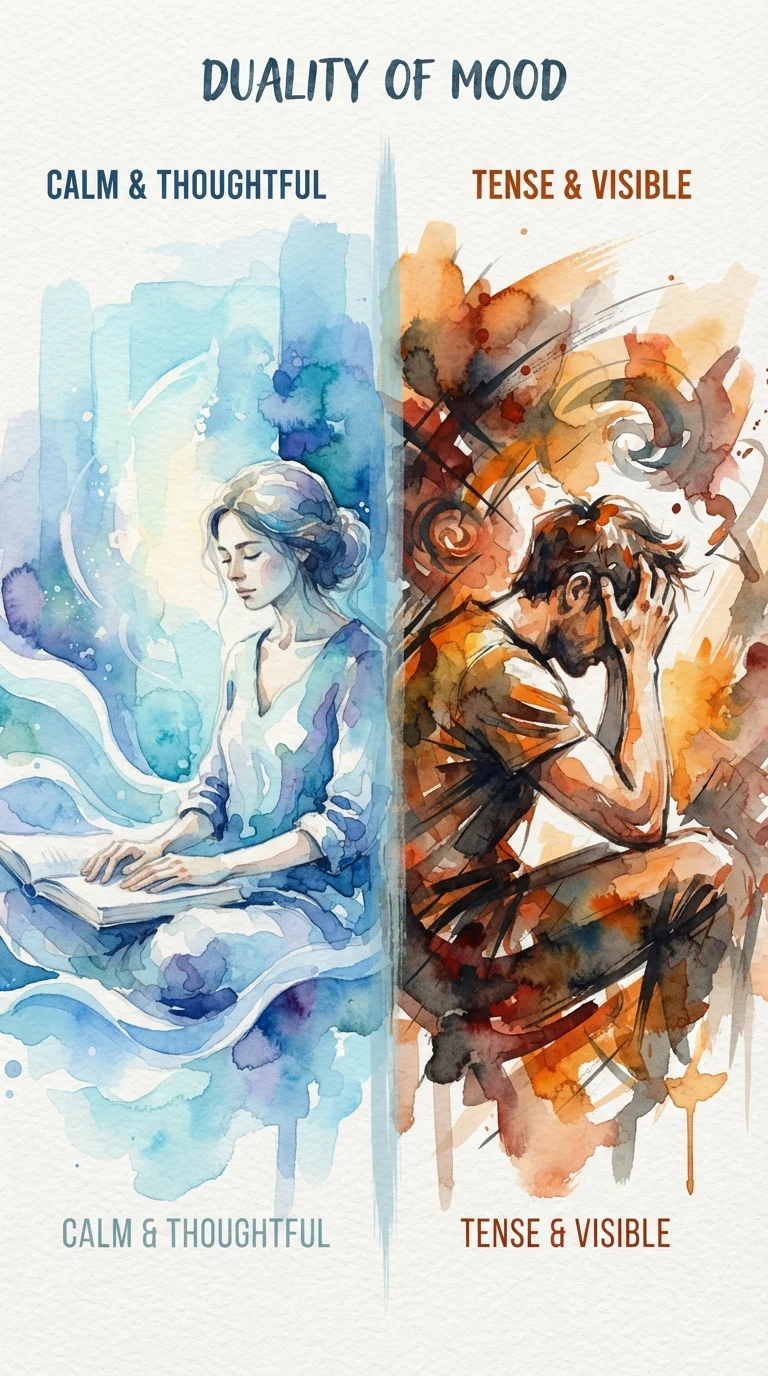
Key Takeaways
- Everyday worry is typically tied to a specific trigger and resolves when the situation does.
- Anxiety tends to persist, feel uncontrollable, and interfere with daily functioning.
- Both experiences exist on a spectrum - the distinction lies in intensity, duration, and impact.
- Anxiety disorders are among the most common mental health conditions in the United States.
- Recognizing the difference helps you decide whether self-care strategies or professional support are appropriate.
- Neither worry nor anxiety is a character flaw - both are rooted in how the brain processes perceived threat.
Option A
Everyday Worry
A normal, temporary response to real-life stressors.
Best for: Understanding as a universal human experience tied to specific, identifiable concerns.
Option B
Anxiety
A persistent pattern that extends beyond the situation at hand.
Best for: Recognizing when distress becomes disproportionate, chronic, or functionally limiting.
If you feel stressed before a job interview or medical appointment
Everyday Worry
Situational stress tied to a real, upcoming event is a normal response. It typically fades once the event passes.
If distress lingers for weeks with no clear cause and disrupts sleep or work
Anxiety
Persistent, hard-to-control worry that impairs daily life warrants attention and possibly professional evaluation.
If you want to build general resilience and emotional awareness
Everyday Worry
Learning to process normal worry through mindfulness or reflection can strengthen emotional coping skills over time.
If physical symptoms like racing heart or chest tightness accompany your worry
Anxiety
Somatic symptoms paired with persistent distress may signal an anxiety condition that benefits from professional assessment.
Why the Distinction Matters
Most people feel worried at some point - before a difficult conversation, ahead of a big deadline, or when a loved one is unwell. That kind of worry is a fundamentally human experience. But when worry becomes persistent, disproportionate, or disruptive, something meaningfully different may be at play.
Understanding the difference between everyday worry and anxiety isn't about labeling yourself - it's about knowing what kind of support or strategy might actually help. As a starting point, our grounded introduction to mental wellness offers useful context for anyone navigating these questions for the first time.
This article is for general informational purposes only and is not a substitute for professional mental health advice, diagnosis, or treatment. If you are experiencing significant distress, please consult a qualified healthcare professional.
Everyday Worry: Proportionate and Passing
Worry, at its core, is the mind's attempt to prepare for uncertainty. When you worry about whether you'll make a flight on time or how a difficult meeting will go, your brain is doing something adaptive - scanning for risks and rehearsing responses.
Key characteristics of everyday worry include:
- A clear trigger: The worry attaches to something specific and identifiable.
- Proportionality: The level of concern roughly matches the actual stakes involved.
- Temporal limits: It tends to ease once the situation resolves or a decision is made.
- Cognitive flexibility: You can redirect your attention when needed, even if it takes effort.
Everyday worry can be uncomfortable, but it generally doesn't prevent you from functioning. It's a signal worth listening to - not something to suppress entirely.
| Criterion | Everyday Worry | Anxiety |
|---|---|---|
| Trigger | Specific, identifiable cause | Often vague or out of proportion |
| Duration | Resolves with the situation | Persists for weeks or longer |
| Intensity | Proportionate to actual risk | Disproportionate or hard to control |
| Physical symptoms | Mild or absent | Common (tension, fatigue, heart racing) |
| Daily functioning | Generally unaffected | Often impaired |
| Controllability | Can redirect attention with effort | Difficult to switch off even when trying |
Anxiety: When the Signal Becomes the Problem
Anxiety shares some surface features with worry - both involve apprehension about future outcomes - but the underlying experience differs in important ways. Anxiety tends to feel less anchored to a specific cause, more intense than the situation warrants, and harder to switch off even when you try.
According to the National Institute of Mental Health, anxiety disorders are among the most prevalent mental health conditions in the United States, affecting tens of millions of adults. The hallmarks of clinically significant anxiety include:
- Persistence: Distress continues for weeks or months, often without a clear precipitating cause.
- Disproportionality: The level of fear or dread exceeds what most people would experience in the same situation.
- Physical symptoms: Muscle tension, sleep disruption, fatigue, and rapid heartbeat are common companions.
- Functional impairment: Anxiety begins to interfere with work, relationships, or everyday tasks.
It's worth noting that anxiety exists on a spectrum. Not all anxiety rises to the level of a diagnosable disorder, and understanding common mental health terms can help you engage more confidently with these distinctions.
19.1%
US adults affected by anxiety disorders annually
According to the National Institute of Mental Health, anxiety disorders are the most common mental illness in the US.
~50%
Adults with anxiety who receive treatment
Research consistently shows that roughly half of those with diagnosable anxiety disorders receive professional care.
6-8 months
Minimum duration for GAD diagnosis
Generalized Anxiety Disorder (GAD) criteria, per the DSM-5, require excessive worry most days for at least six months.
Practical Guidance: What to Do Next
If your worry feels proportionate and temporary, self-care approaches - adequate sleep, physical activity, social connection, and practices like mindfulness - may be all you need. Our article on mindfulness vs. meditation explores accessible techniques for managing day-to-day stress.
If, however, you recognize the patterns associated with anxiety - persistent distress, physical symptoms, avoidance behaviors, or significant interference with your daily life - reaching out to a licensed mental health professional is a well-supported next step. Effective, evidence-based approaches exist for anxiety disorders, and seeking help is a sign of self-awareness, not weakness.
The goal isn't to eliminate all worry - some of it is useful. The goal is to understand when your distress is informing you versus when it is controlling you.
Always consult a qualified healthcare or mental health professional for concerns about your own mental health. This content is educational and not a replacement for personalized clinical guidance.