

| Common heart rate zone model | 5 zones (50-60% up to 90-100% of max HR) (American College of Sports Medicine) |
| Max HR formula margin of error | ±10-12 beats per minute for individuals (Journal of Exercise Physiology research consensus) |
| Wrist sensor accuracy vs. chest strap | Generally within 5 bpm at rest; less reliable at high intensity (Multiple independent device validation studies) |
| Consumer wearable sleep stage accuracy | More reliable for total sleep time than individual stage classification (Sleep Medicine Reviews, comparative validation studies) |
| HRV measurement standard | RMSSD (root mean square of successive differences) is most common in consumer devices (European Heart Journal guidelines) |
Heart Rate: The Metric You're Likely Misreading
Resting heart rate (RHR) is one of the most reliable signals your wearable captures. A lower RHR generally reflects stronger cardiovascular efficiency, and tracking it over weeks can surface meaningful trends-like early signs of illness or inadequate recovery. However, single-session readings are easily skewed by caffeine, stress, or sleep position.
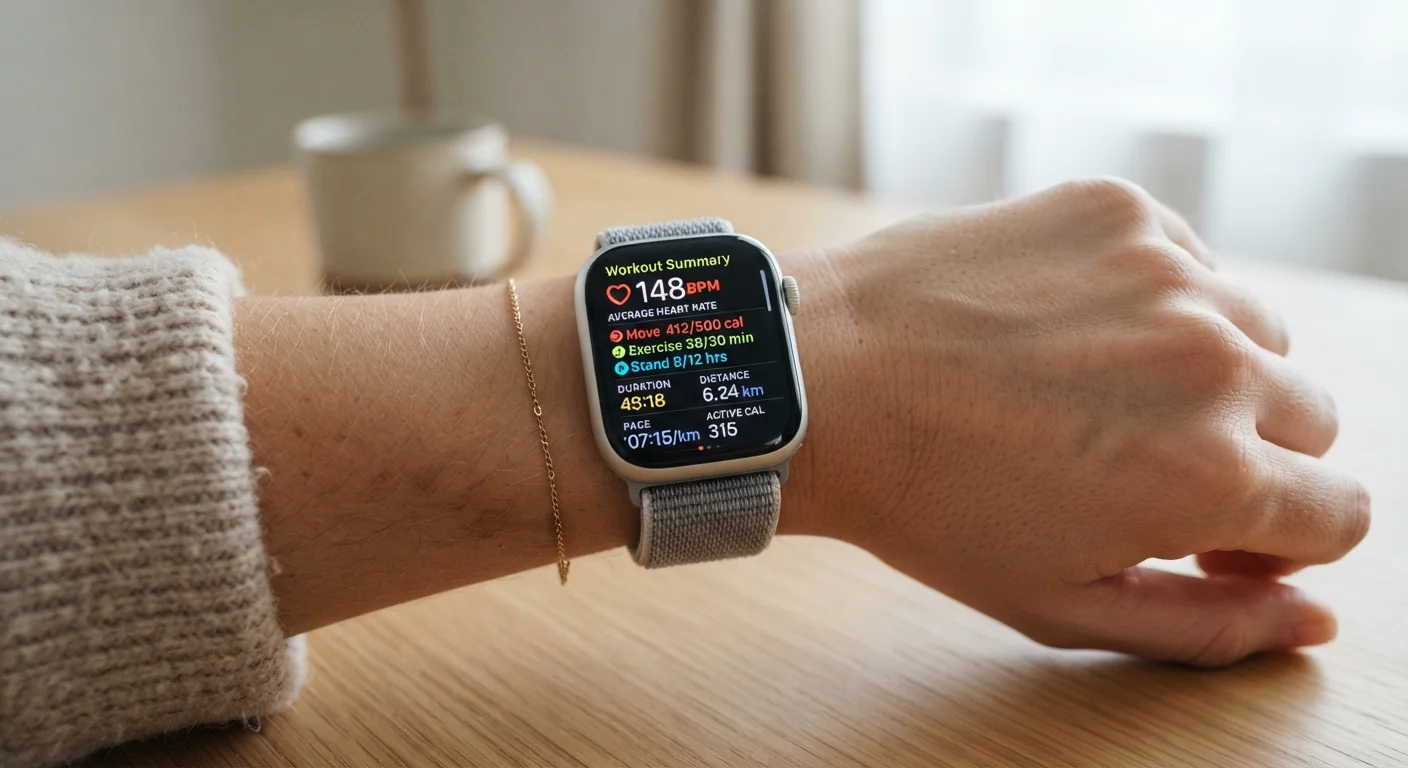
During exercise, wrist-based optical sensors estimate heart rate by detecting blood flow changes. This method works reasonably well at steady-state efforts but can lose accuracy during high-intensity intervals or activities involving wrist movement (such as cycling or weightlifting). If precise zone training matters to you, a chest strap heart rate monitor tends to be substantially more accurate than a wrist sensor during dynamic exercise.
Heart rate zones-typically numbered 1 through 5-divide effort intensity into bands relative to your maximum heart rate. The catch: most devices estimate your max heart rate using a population formula (commonly 220 minus your age), which carries a meaningful margin of error for individuals. This means your device's zone assignments may not accurately match your actual physiological zones. For a deeper look at how low-intensity zone training pays off, see Zone 2 Training: Why Low-Intensity Cardio Delivers High-Impact Results.
| Common heart rate zone model | 5 zones (50-60% up to 90-100% of max HR) (American College of Sports Medicine) |
| Max HR formula margin of error | ±10-12 beats per minute for individuals (Journal of Exercise Physiology research consensus) |
| Wrist sensor accuracy vs. chest strap | Generally within 5 bpm at rest; less reliable at high intensity (Multiple independent device validation studies) |
| Consumer wearable sleep stage accuracy | More reliable for total sleep time than individual stage classification (Sleep Medicine Reviews, comparative validation studies) |
| HRV measurement standard | RMSSD (root mean square of successive differences) is most common in consumer devices (European Heart Journal guidelines) |
VO2 Max Estimates, Recovery Scores, and Sleep Data
VO2 max is the gold standard measure of aerobic capacity-the maximum rate at which your body can consume oxygen during intense exercise. Lab measurement requires controlled protocols with respiratory equipment. Wearable VO2 max estimates are calculated from heart rate and pace data using algorithmic models; they are useful for tracking relative changes in your fitness over time but should not be treated as clinical measurements.
Recovery scores-sometimes called readiness scores or body battery readings-synthesize metrics like heart rate variability (HRV), RHR, and recent activity load. HRV, which measures the natural variation in time between heartbeats, is a legitimate research-backed indicator of nervous system state. However, consumer-grade HRV readings vary by device placement, measurement duration, and algorithm. Treat these scores as directional signals rather than precise diagnostics.
Sleep tracking broadly distinguishes light, deep, and REM stages using movement and heart rate patterns. Studies comparing consumer wearables to clinical polysomnography (sleep lab testing) consistently show that wearables estimate total sleep time reasonably well but are less reliable for specific sleep stage classification. If you regularly wake feeling unrefreshed despite your device reporting adequate sleep, prioritize how you actually feel over the number on the screen.
Resting Heart Rate (RHR)
The number of times your heart beats per minute while at complete rest. A useful long-term marker of cardiovascular fitness and recovery status.
Heart Rate Variability (HRV)
The variation in time intervals between consecutive heartbeats. Higher HRV generally reflects better autonomic nervous system balance and readiness for physical stress.
VO2 Max
The maximum volume of oxygen your body can utilize per minute per kilogram of body weight during intense exercise. A widely used indicator of aerobic fitness capacity.
Heart Rate Zones
Intensity bands-typically five-defined as percentages of your maximum heart rate. Each zone corresponds to a different physiological effect during training.
Optical Heart Rate Sensor
A light-based sensor on wrist wearables that detects blood volume changes to estimate heart rate. Convenient but less accurate than chest-strap electrocardiography during dynamic movement.
Polysomnography
A comprehensive sleep study conducted in a clinical setting, measuring brain waves, oxygen levels, and movement to classify sleep stages. Considered the gold standard for sleep assessment.
If you notice persistent fatigue or stalling progress even when your metrics look acceptable, consider reviewing the Signs Your Body Needs a Training Reset-your body often communicates what data cannot.
This article is for general informational and educational purposes only and does not constitute medical advice. Consult a qualified healthcare professional for personal health concerns, symptoms, or before making changes to your exercise routine.