

| Calories per gram of protein | 4 kcal (USDA Dietary Guidelines) |
| Calories per gram of carbohydrate | 4 kcal (USDA Dietary Guidelines) |
| Calories per gram of fat | 9 kcal (USDA Dietary Guidelines) |
| Number of essential amino acids | 9 (National Institutes of Health) |
| Fat-soluble vitamins requiring dietary fat for absorption | A, D, E, and K (Harvard T.H. Chan School of Public Health) |
What Are Macronutrients?
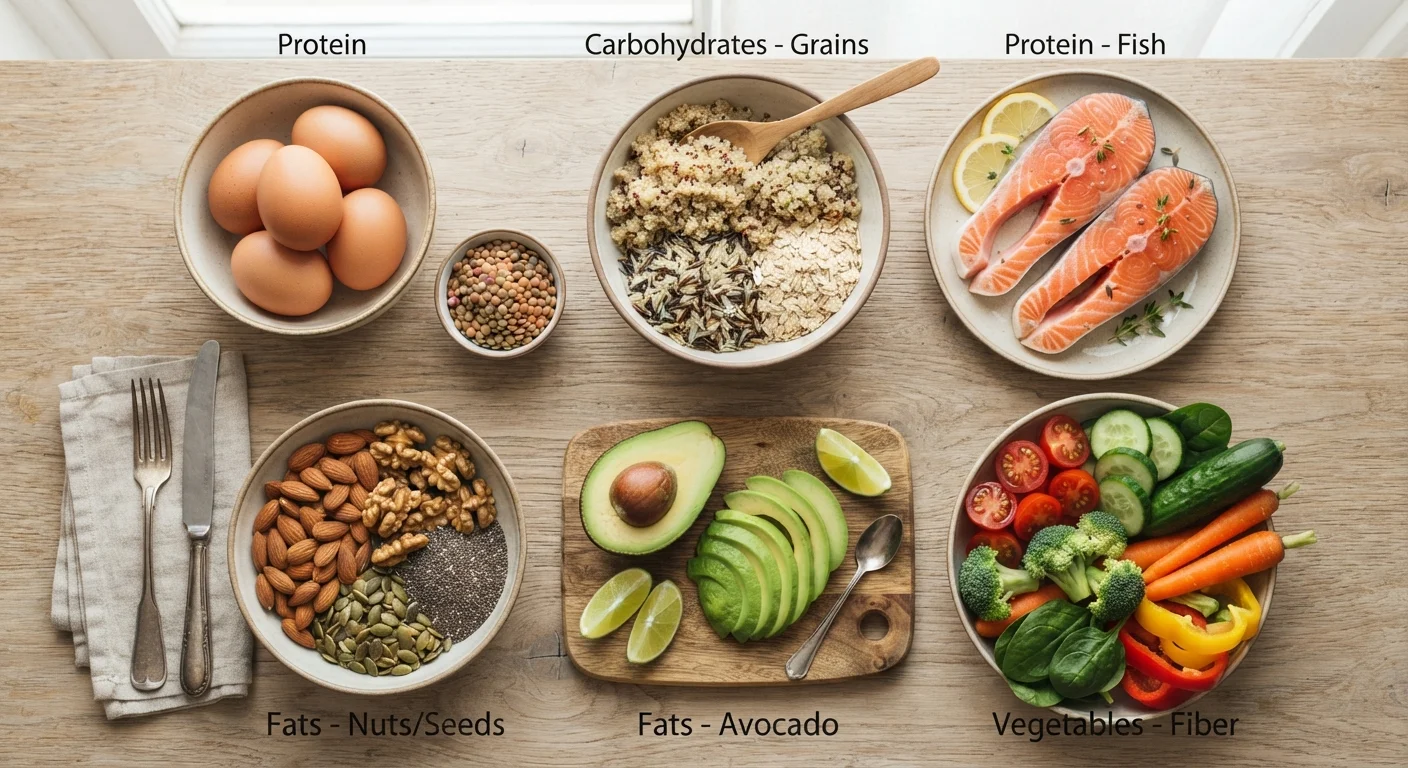
Macronutrients - often called "macros" - are the three classes of nutrients your body requires in relatively large amounts to function: protein, carbohydrates, and fat. Unlike micronutrients (vitamins and minerals), which are needed in trace quantities, macronutrients serve as your body's primary sources of energy and raw building material.
Macronutrient
Any of the three main nutrient classes - protein, carbohydrate, and fat - that provide energy and structural support in relatively large quantities. They are distinct from micronutrients, which are needed in smaller amounts.
Essential amino acids
The nine amino acids the body cannot synthesize on its own and must obtain from food. They are found in both animal and, through complementary combinations, plant-based foods.
Dietary fiber
A type of carbohydrate that resists digestion in the small intestine. It supports gut motility, blood sugar balance, and is linked to reduced risk of several chronic diseases.
Glycogen
The stored form of glucose held primarily in the liver and muscles. Glycogen serves as a readily accessible energy reserve, particularly during exercise.
Unsaturated fat
A category of dietary fat - including monounsaturated and polyunsaturated types - found in foods like olive oil, nuts, and fish. Broadly associated with cardiovascular health benefits in nutritional research.
Complete protein
A food source that supplies all nine essential amino acids in adequate proportions. Most animal-derived foods are complete proteins; some plant foods like soy and quinoa also qualify.
Each macronutrient provides a set number of calories per gram: protein and carbohydrates each supply about 4 calories per gram, while fat provides about 9. Understanding these basics helps contextualize why dietary fat, despite having more than twice the caloric density, is not inherently harmful - it's simply more energy-dense.
No single macronutrient is universally "good" or "bad." The quality of the source and the overall pattern of eating matter far more than isolating one nutrient for praise or blame.
Protein: Structure, Repair, and More
Protein is composed of amino acids, which act as the structural and functional backbone of virtually every cell in the body. The body uses protein to build and repair muscle tissue, produce enzymes and hormones, support immune function, and transport molecules through the bloodstream.
| Calories per gram of protein | 4 kcal (USDA Dietary Guidelines) |
| Calories per gram of carbohydrate | 4 kcal (USDA Dietary Guidelines) |
| Calories per gram of fat | 9 kcal (USDA Dietary Guidelines) |
| Number of essential amino acids | 9 (National Institutes of Health) |
| Fat-soluble vitamins requiring dietary fat for absorption | A, D, E, and K (Harvard T.H. Chan School of Public Health) |
There are 20 amino acids in total; nine are considered essential because the body cannot synthesize them and must obtain them through food. Animal sources such as poultry, fish, eggs, and dairy are complete proteins - they supply all nine essential amino acids. Many plant sources (legumes, grains, nuts) are incomplete on their own but can complement each other across the day to meet full amino acid needs.
General public health guidance suggests that most healthy adults benefit from distributing protein intake across meals rather than concentrating it in one sitting, which may support muscle maintenance and satiety. For personalized protein targets, consult a registered dietitian.
Carbohydrates: The Body's Preferred Fuel
Carbohydrates are the body's primary energy source - particularly for the brain and during higher-intensity physical activity. When consumed, most carbs are broken down into glucose, which cells use directly for fuel or store as glycogen in the liver and muscles for later use.
~45-65%
Recommended share of daily calories from carbohydrates
According to the Dietary Guidelines for Americans, most adults benefit from carbohydrates making up nearly half of daily caloric intake.
10-35%
Recommended daily calorie range from protein
The USDA Acceptable Macronutrient Distribution Range for protein in healthy adults spans from 10 to 35 percent of total daily calories.
20-35%
Recommended daily calorie range from fat
Current dietary guidelines suggest fat should account for roughly one-fifth to one-third of total daily caloric intake for most healthy adults.
Carbohydrates are broadly divided into simple and complex forms. Simple carbohydrates (sugars) are digested quickly and include both naturally occurring sugars in fruit and milk as well as added sugars in processed foods. Complex carbohydrates (starches and fiber) digest more slowly, supporting sustained energy and digestive health.
Dietary fiber - a type of carbohydrate the body cannot fully digest - deserves special mention. It promotes healthy gut function, supports blood sugar regulation, and is associated with reduced risk of several chronic conditions, according to mainstream nutritional science. Whole grains, legumes, vegetables, and fruits are rich fiber sources.
If you're curious how nutrition intersects with physical activity, see our guide to nutrition around exercise for an evidence-based look at fueling workouts.
Dietary Fat: Essential, Not the Enemy
Fat has a complicated public reputation, but it is indispensable. Dietary fat supports cell membrane integrity, enables the absorption of fat-soluble vitamins (A, D, E, and K), cushions organs, and helps regulate hormones.
A Note on Cutting Out Entire Macronutrients
Eliminating an entire macronutrient group - such as all carbohydrates or all dietary fat - can deprive the body of nutrients it genuinely needs. While some people follow structured dietary patterns under medical supervision, blanket elimination diets are not appropriate for everyone. If you're considering a significant dietary change, speak with a registered dietitian before starting.
Fats are categorized by their chemical structure. Unsaturated fats - found in olive oil, avocados, nuts, and fatty fish - are broadly associated with cardiovascular benefit in observational research. Saturated fats (found in red meat and dairy) are best consumed in moderation according to current dietary guidelines. Trans fats, largely phased out of the US food supply through regulatory action, are associated with adverse health outcomes and should be minimized.
Omega-3 fatty acids - a subtype of polyunsaturated fat found in fatty fish, walnuts, and flaxseed - are particularly studied for their role in heart health and inflammation. They are considered essential because the body cannot produce them independently.
This article is for general informational and educational purposes only and does not constitute medical or dietary advice. For guidance tailored to your individual health needs, please consult a qualified healthcare professional or registered dietitian.