

Key Takeaways
- Tomato cracking is almost always caused by inconsistent soil moisture, not disease or pests.
- Rapid fruit growth after heavy rain or irregular watering is the primary trigger.
- Mulching and consistent irrigation schedules are the most effective preventive measures.
- Some tomato varieties are genetically more crack-resistant than others.
- Harvesting fruit slightly early during high-risk weather can prevent post-rain cracking.
What's Actually Happening When Tomatoes Crack
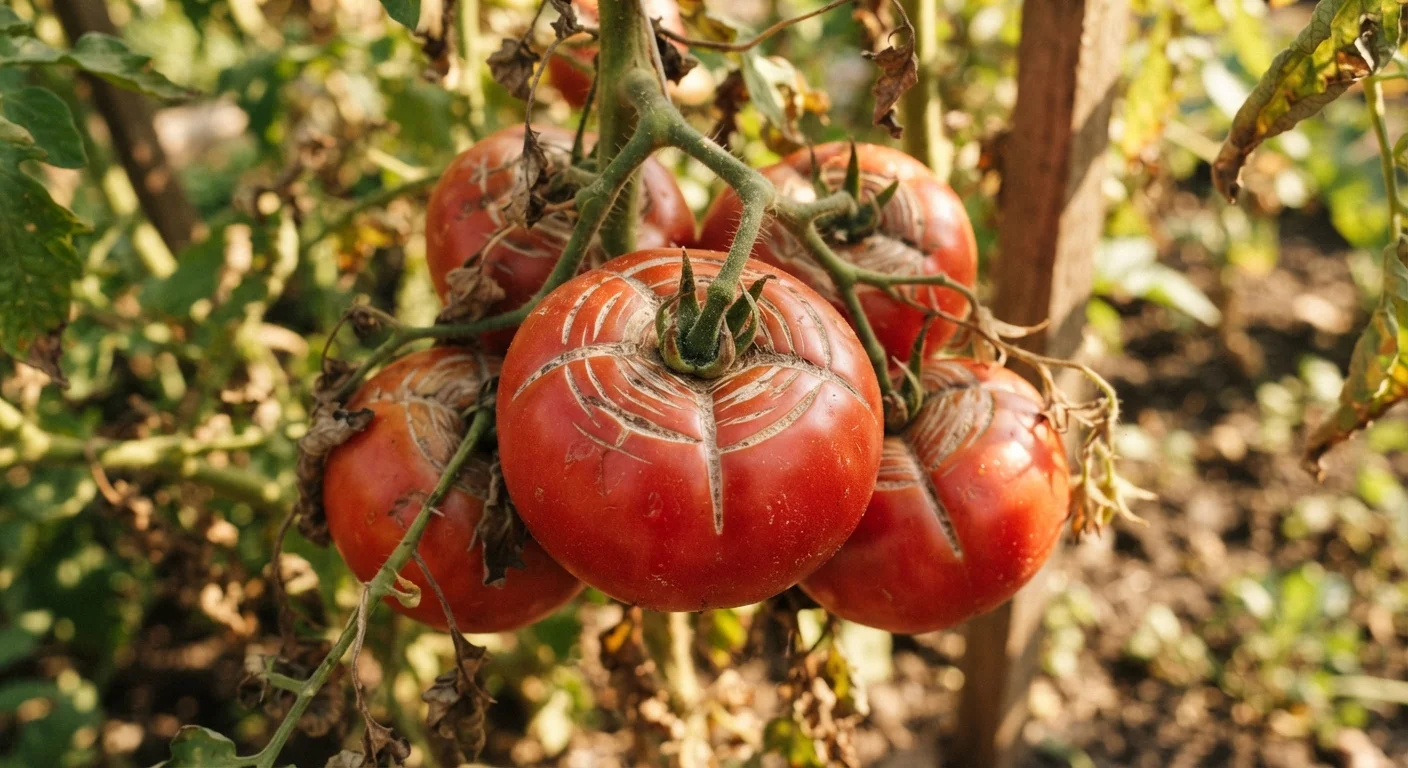
Tomato cracking falls into two main types: radial cracks, which run from the stem end downward, and concentric cracks, which circle the fruit horizontally near the shoulder. Both share the same underlying cause - the inner flesh of the tomato expands faster than the outer skin can accommodate.
This mismatch almost always traces back to water. When tomatoes experience a period of dryness followed by a sudden influx of moisture - whether from heavy rain or a generous deep watering - the plant absorbs that water rapidly. The flesh swells quickly while the skin, which has already begun to firm, can't keep pace. The result is a split.
It's worth noting that cracking is not a sign of disease, and it doesn't mean the fruit is inedible. Mildly cracked tomatoes are perfectly safe to eat as long as they're used quickly - the exposed flesh is vulnerable to mold and insects. Understanding that cracking is a physiological response rather than a pathological one is the first step toward preventing it. As with many garden frustrations, the fix lies in adjusting technique, not reaching for a spray bottle. You can find a broader look at misunderstood plant care in our guide to garden myths that may be hurting your plants.
2-3 inches
Recommended mulch depth around tomato plants
University extension horticulture programs consistently recommend this range for effective soil moisture retention around vegetable crops.
~1 inch
Water per week tomatoes typically need
Most cooperative extension services cite approximately one inch of water per week as a general guideline for tomatoes in typical summer conditions.
The Mistakes That Lead to Cracking - and How to Correct Them
Most cracking is preventable once you identify which habit or oversight is contributing to it in your garden. The mistakes below are the most common culprits, and each has a straightforward corrective action.
Watering irregularly - alternating long dry spells with heavy soaking.
Why it happens: Many gardeners water based on convenience or only when plants visibly wilt, creating boom-and-bust moisture cycles.
Leaving soil bare around tomato plants without mulch.
Why it happens: Gardeners often skip mulching to save time or because they're unaware of how dramatically it moderates soil moisture fluctuation.
Over-fertilizing with high-nitrogen fertilizer late in the season.
Why it happens: The assumption that more fertilizer means bigger, better tomatoes leads some gardeners to keep feeding plants well into fruiting, when the plant's needs have changed.
Ignoring weather forecasts and failing to harvest near-ripe fruit before heavy rain.
Why it happens: Gardeners naturally prefer vine-ripened fruit and may not think to harvest early, underestimating how quickly sudden rainfall triggers cracking.
Choosing crack-prone varieties without knowing the risk.
Why it happens: Variety selection is often based on flavor reputation or visual appeal, with crack resistance rarely appearing on seed packets or plant tags.
Don't Let Cracked Fruit Sit on the Vine
Once a tomato has cracked, the exposed flesh becomes an entry point for mold, bacteria, and insects. Harvest cracked fruit immediately and use or process it right away rather than leaving it to continue ripening on the plant. Leaving damaged fruit on the vine can also invite pests that will move to healthy fruit nearby.
Building a More Crack-Resistant Growing Routine
Prevention is more effective than any single intervention. The most crack-resilient tomato gardens share a few consistent practices: steady moisture through drip or soaker-hose irrigation, a reliable mulch layer, and attentive monitoring of the weather as fruit approaches maturity.
Soil health also plays a role. Well-amended, loamy soil with good organic matter content holds moisture more evenly than sandy or compacted soil. If your garden beds drain too quickly or pool water after rain, improving soil structure over time will reduce the amplitude of moisture swings your tomatoes experience.
Finally, consider that cracking tendency varies meaningfully by variety. If you've struggled repeatedly with the same heirloom or hybrid type, it may simply be more susceptible to skin splitting under your local climate conditions. Consulting your local cooperative extension service is a reliable way to find variety recommendations suited to your region's rainfall patterns and temperature swings - advice grounded in local field trials rather than general marketing claims.