

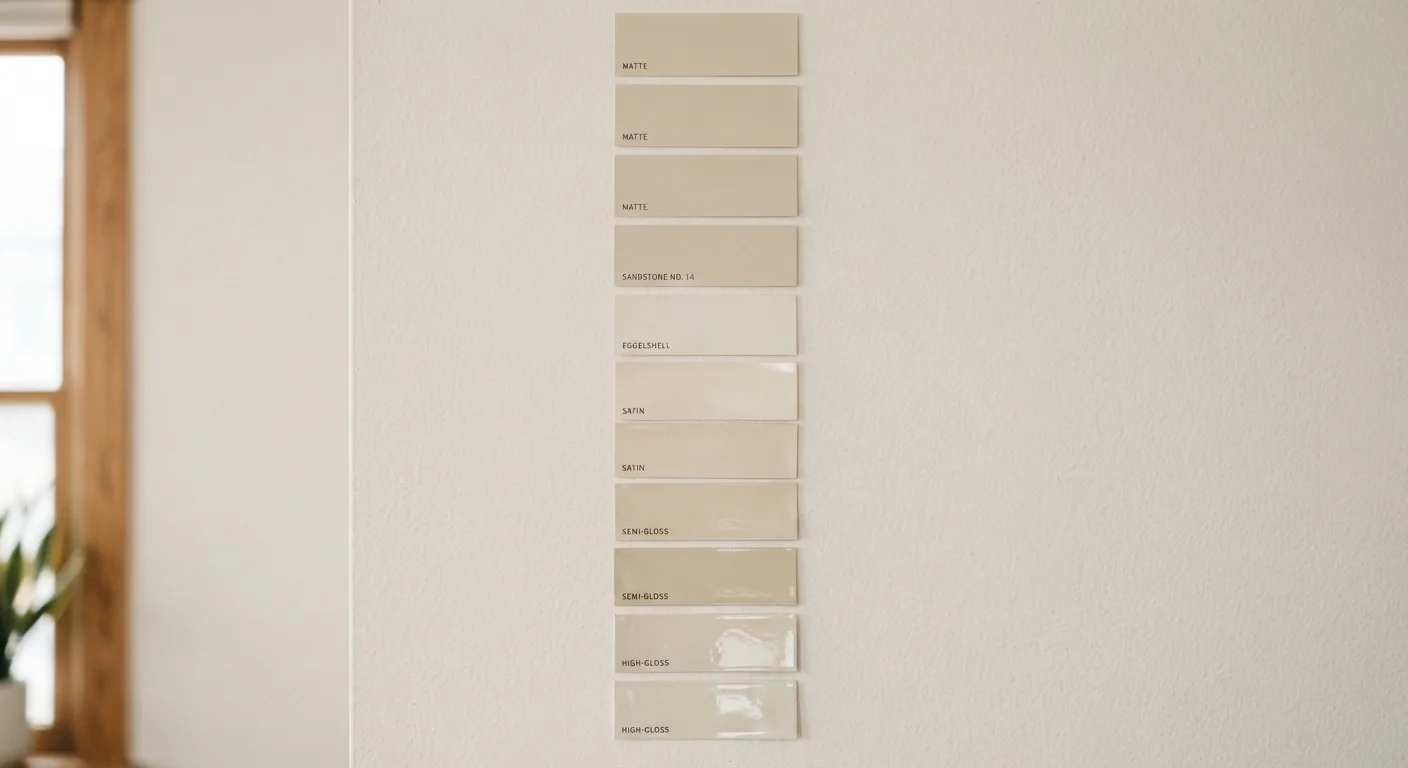
| Flat / Matte - Best For | Ceilings, low-traffic adult bedrooms |
| Eggshell - Best For | Living rooms, dining rooms, adult bedrooms |
| Satin - Best For | Hallways, family rooms, children's bedrooms |
| Semi-Gloss - Best For | Kitchens, bathrooms, interior trim and doors |
| High-Gloss - Best For | Cabinetry, exterior and interior doors, accent trim |
| Flat / Matte - Washability | Low - spot-clean only; avoid scrubbing |
| Satin - Washability | Good - handles light scrubbing and mild cleaners |
| Semi-Gloss - Washability | Very good - moisture and stain resistant |
Why Paint Sheen Matters as Much as Color
Color receives most of the attention during paint selection, but sheen - the level of light reflectivity in a dried paint film - has an equally significant impact on how a room looks and how long a painted surface holds up.
At one end of the spectrum, flat and matte finishes absorb light and minimize the visibility of surface imperfections. At the other end, high-gloss finishes bounce light dramatically and amplify every texture and flaw.
Sheen also determines practical performance. Higher-sheen paints form a harder, denser film that resists moisture, repels stains, and withstands repeated cleaning. Lower-sheen finishes are more porous - excellent for disguising rough drywall or older plaster, but less forgiving when a child drags a crayon across the wall.
The right finish depends on three factors: how much traffic the surface sees, how critical a flawless appearance is, and how often you expect to clean it.
| Flat / Matte - Best For | Ceilings, low-traffic adult bedrooms |
| Eggshell - Best For | Living rooms, dining rooms, adult bedrooms |
| Satin - Best For | Hallways, family rooms, children's bedrooms |
| Semi-Gloss - Best For | Kitchens, bathrooms, interior trim and doors |
| High-Gloss - Best For | Cabinetry, exterior and interior doors, accent trim |
| Flat / Matte - Washability | Low - spot-clean only; avoid scrubbing |
| Satin - Washability | Good - handles light scrubbing and mild cleaners |
| Semi-Gloss - Washability | Very good - moisture and stain resistant |
The Five Finishes, Defined
Sheen
The degree of light reflectivity in a dried paint film. Sheen ranges from flat (virtually no reflectivity) to high-gloss (maximum reflectivity), and it affects both visual appearance and the surface's practical durability.
Light Reflectance Value (LRV)
A measure of how much visible light a surface reflects, expressed as a percentage from 0 (absorbs all light) to 100 (reflects all light). Paint manufacturers sometimes reference LRV when describing finish sheen levels.
Flat / Matte Finish
A paint finish with no perceptible sheen. It absorbs light rather than reflecting it, which helps disguise wall imperfections, but it has low washability and is best suited to low-traffic surfaces such as ceilings and adult bedrooms.
Eggshell Finish
A finish with a subtle, low-luster sheen resembling the surface of a real eggshell. More durable and washable than flat paint, it is a popular choice for living rooms, dining rooms, and similar everyday spaces.
Satin Finish
A finish with a smooth, velvety sheen that falls between eggshell and semi-gloss. Satin offers a strong balance of durability, washability, and soft visual warmth, making it well-suited to high-traffic rooms.
Semi-Gloss Finish
A finish with a noticeable shine and strong moisture resistance. It is the standard choice for kitchens, bathrooms, and architectural trim because it withstands repeated cleaning and resists humidity.
High-Gloss Finish
The most reflective paint finish available. Extremely durable and easy to clean, high-gloss magnifies surface imperfections and is typically reserved for trim, cabinetry, and accent doors where the surface has been carefully prepared.
Most paint lines organize their offerings into five distinct finishes. Here is how each one performs in practice:
Flat and matte are effectively the same category. They reflect almost no light and deliver a seamless, velvety appearance on walls and ceilings. Because they absorb rather than reflect, they are forgiving of surface irregularities - but they mark easily and are not designed to be scrubbed.
Eggshell introduces a barely perceptible glow, similar to the soft sheen of a real eggshell. It is the finish most commonly recommended for main living areas: enough durability for everyday life, without the glare of higher sheens.
Satin steps up the sheen and durability noticeably. It handles humidity better than eggshell and tolerates more aggressive cleaning, making it a strong choice for rooms that see continuous family traffic.
Semi-gloss is the workhorse of kitchens, bathrooms, and trim. Its moisture-resistant surface cleans up reliably and holds up to grease, steam, and fingerprints.
High-gloss is the most durable and reflective option. Because it magnifies every dent, seam, and brush mark, it demands meticulous surface preparation. Its typical domain is architectural trim, interior doors, and cabinetry.
Practical Tips Before You Paint
Even the ideal finish will underperform on a poorly prepared surface. A few principles worth keeping in mind:
- Sand between coats when applying satin or higher sheens. Higher reflectivity amplifies surface texture, so smoothing between coats matters considerably.
- Prime consistently. A uniform primer base helps paint adhere, hides stains, and ensures the sheen reads evenly across the entire surface - not blotchy or uneven.
- Test a sample patch. Sheen can look noticeably different depending on lighting conditions and time of day. A small test area lets you evaluate both color and reflectivity in your specific room before committing to the full wall.
- Consider traffic patterns. A hallway connecting the front door to the rest of the house benefits from a more durable finish than a rarely used guest room.
- Mix finishes within a room. Many homeowners use flat or matte on ceilings, eggshell on walls, and semi-gloss on trim - layering visual depth while matching durability to each surface type.
Note: If your home was built before 1978, any sanding or stripping of existing painted surfaces may disturb lead-based paint. Consult local guidelines and, if needed, contact a qualified contractor before proceeding.