

Key Takeaways
- A personal learning plan works best when it connects a specific skill to a concrete, real-world goal.
- Breaking learning into weekly time blocks prevents the all-or-nothing thinking that derails most plans.
- Choosing one primary resource before you start reduces decision fatigue and builds consistency.
- Regular progress reviews - not just motivation - are what keep a learning plan alive long-term.
- Adjusting your plan when life changes is a feature of good planning, not a sign of failure.
What you will need
Why Most Learning Plans Fail Before They Start
Most people abandon learning plans not from lack of motivation, but from lack of structure. A goal without a schedule is just an intention. A schedule without milestones has no way to signal progress. And a plan built around an ideal week - rather than a realistic one - collapses the moment ordinary life intervenes.
Research in self-regulated learning, a field that examines how people monitor and control their own study behavior, consistently identifies goal specificity and self-monitoring as the two strongest predictors of follow-through. A personal learning plan, done well, builds both of those into the process.
Specificity Is Non-Negotiable
Vague goals like 'learn Spanish' or 'get better at Excel' almost always fail. Your plan must define what proficiency looks like, why it matters to you, and by when you want to reach it. Without this specificity, you have a wish, not a plan.
Before working through the steps below, consider using the pre-commitment checklist to clarify your goal and assess whether you have the resources to begin. That groundwork makes every step in this guide more effective.
What you will need
How to Build Your Plan Step by Step
The six steps below walk you through the full planning process, from writing a workable goal to scheduling reviews that keep your plan alive. Work through them in order - each step builds on the one before it.
Notebook or digital document
Record your goal, schedule, resource choices, and progress notes in one place.
Calendar app or planner
Block specific learning sessions into your weekly schedule to treat them as fixed commitments.
Progress tracker (spreadsheet or habit app)
Log completed sessions and measure cumulative study time against your target.
Define a specific, outcome-linked goal
Start by writing a one-sentence goal that names the skill, the desired outcome, and a realistic timeframe. Instead of "learn data analysis," write: "Build enough Python proficiency to clean and visualize a dataset for my job by the end of three months." That specificity tells you what to learn, how much, and why it matters - making every subsequent decision easier.
Audit your available time honestly
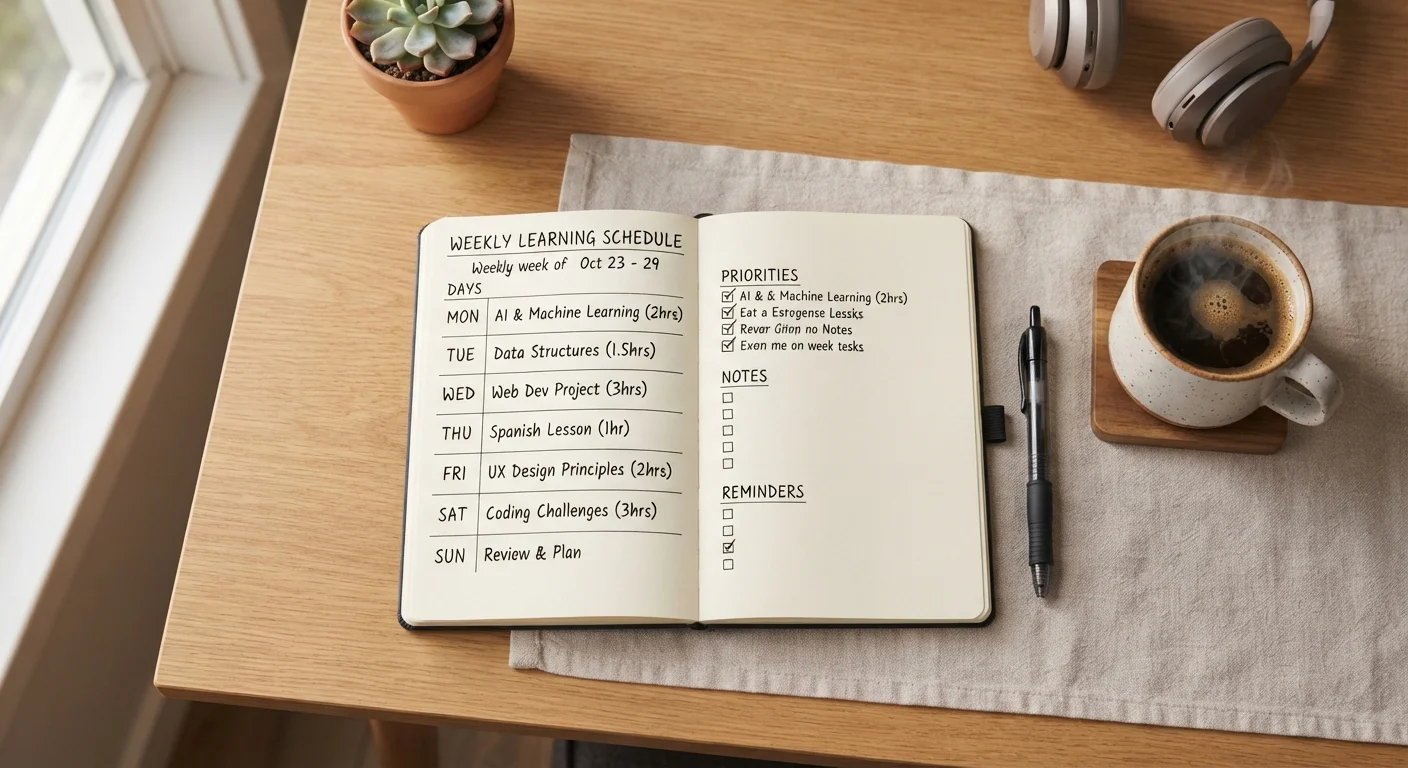
Look at a typical week and identify time slots that are genuinely available - not theoretically available. Account for commuting, family obligations, and recovery time. Most people find three to five realistic learning windows per week, not the daily sessions they initially imagine. Write down those specific slots: days, times, and durations.
Choose one primary learning resource
Resist the urge to collect courses, books, and YouTube channels simultaneously. Select a single primary resource that matches your goal and your preferred learning style. If you're unsure whether a self-directed format or a structured course suits you better, the self-directed vs. structured courses guide can help you weigh those trade-offs before committing.
Break the skill into sequential milestones
Divide your overall goal into three to five milestones - intermediate checkpoints that represent genuine progress. For the Python example: understand basic syntax → write a loop → import and clean a dataset → build a simple chart → complete an end-to-end project. Assign rough timeframes to each milestone based on your weekly availability. This transforms a distant goal into a series of near-term targets.
Schedule and protect your learning sessions
Add your learning slots to your calendar as recurring events. Treat them with the same commitment as a work meeting. If a session gets displaced, reschedule it in the same week rather than skipping it entirely. The self-paced learning trade-offs article explains why this kind of self-imposed structure is what separates people who finish from those who drift.
Build in a regular review cadence
Schedule a brief weekly check-in and a more thorough monthly review. In the weekly check-in, note which sessions you completed and flag any obstacles. In the monthly review, assess whether your milestones are still realistic, whether your resource is serving the goal, and whether the goal itself still matters to you. Adjusting your plan is not failure - it's how a plan stays relevant.
Review Weekly, Revise Monthly
A five-minute weekly check-in - marking what you completed and what you skipped - gives you the data to adjust your plan meaningfully. Monthly, step back and ask whether the goal itself still reflects your priorities. Plans that adapt are plans that survive.
Avoid Over-Scheduling at the Start
Committing to two hours of daily study in week one is a common mistake. Research on habit formation consistently shows that smaller, sustainable commitments outperform ambitious schedules that collapse under normal life pressure. Start conservatively, then expand once the routine is established.
Once your plan is running, the next challenge is building habits that outlast your initial enthusiasm. The skill-building habits guide offers strategies for sustaining consistent practice well beyond the first few weeks - a natural next read once your plan is in motion.