

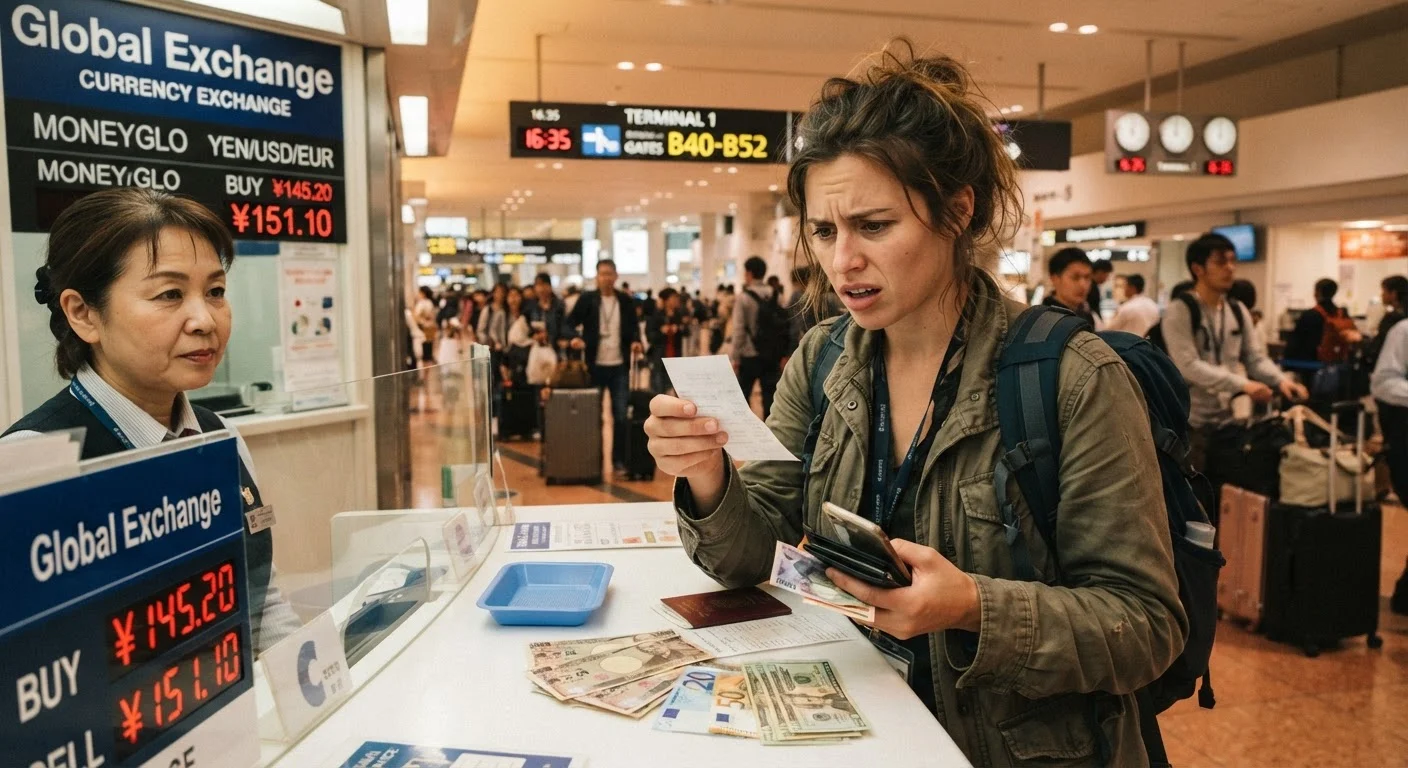
Key Takeaways
- Airport and hotel exchange counters typically charge the highest fees and worst rates.
- The mid-market rate is your benchmark — any quote significantly worse signals a bad deal.
- Dynamic currency conversion at card readers quietly locks in unfavorable exchange rates.
- Local ATMs in your destination country usually offer more competitive rates than exchange kiosks.
- Always check the total cost including fees, not just the advertised exchange rate.
Why Currency Exchange Is So Easy to Get Wrong
For most US travelers, currency exchange feels like a chore to knock out quickly — grab some euros at the airport, hand over dollars, and move on. That casual attitude is exactly what exchange operators count on. The spread between the rate you receive and the actual mid-market rate (the real interbank rate used by financial institutions) is where providers make their money, and that spread varies wildly depending on where you exchange.
If you're building a realistic travel budget, currency exchange deserves its own line item. As our guide on where your travel money actually goes explains, small fees compound quickly across a trip. A poor exchange rate on $1,000 USD can quietly cost you $50–$100 or more before you've bought a single coffee.
Understanding the most common mistakes — and why they happen — puts you back in control.
Exchanging currency at the airport as your primary strategy.
Why it happens: Airports feel like the logical first stop — you've just landed and need local cash immediately. Exchange kiosks are prominently placed and feel official.
Accepting dynamic currency conversion (DCC) when paying by card abroad.
Why it happens: Card readers at shops, restaurants, and ATMs offer to charge you in US dollars as a "convenience." It sounds simpler, but the conversion rate applied is set by the merchant, not your bank — and it's almost always worse.
Ignoring the fee structure and focusing only on the advertised exchange rate.
Why it happens: Exchange counters often display a competitive-looking rate prominently while burying a flat commission fee in small print. The rate looks good; the total doesn't.
Using hotel front desks or resort exchange services for large amounts.
Why it happens: Convenience drives this choice — the desk is steps away and it feels safe. Hotels do offer legitimate exchange, but they apply some of the largest markups in the industry.
Failing to notify your bank before traveling, then losing card access abroad.
Why it happens: Many travelers forget this step or assume modern fraud detection will recognize travel patterns. Banks may still flag foreign transactions and temporarily freeze your card.
How to Read an Exchange Rate (Before You Hand Over Cash)
The mid-market rate is freely available from sources like Google, XE.com, or your bank's app. Pull it up before you travel and use it as your baseline. Any quote more than 3–5% worse than the mid-market rate is worth scrutinizing — especially once fees are added on top.
Watch for two common sleights of hand: a rate that looks competitive but carries a flat service fee, and a rate that buries the markup entirely in the exchange figure with no explicit fee disclosed. Neither practice is illegal, but both make comparison difficult. Always ask: "What is the total amount of foreign currency I will receive for X US dollars, after all fees?" That single question cuts through most of the confusion.
Dynamic Currency Conversion: Say No Every Time
When a card terminal or ATM abroad asks whether you want to pay in USD instead of the local currency, declining is almost always the right move. DCC locks in a rate set by the merchant or ATM operator, not your card network. The markup can be 3–7% above what your bank would charge. The prompt is designed to feel helpful — treat it as a red flag instead.
If you're heading overseas for the first time, our first international trip guide walks through currency fundamentals alongside visas, customs, and safety basics — a useful companion before you land.
Also keep in mind that unfavorable exchange rates are just one category of destination expense that surprises travelers. Hidden destination costs like tourist taxes and tipping norms can compound the impact of poor financial decisions made at the currency counter.