

Key Takeaways
- Most premature battery failures stem from driver habits, not manufacturing defects.
- Extreme temperatures, short trips, and parasitic drains are the leading causes of early battery death.
- Corroded terminals and infrequent maintenance dramatically shorten battery lifespan.
- A typical car battery lasts three to five years; certain habits can cut that in half.
- Simple preventive checks can add meaningful months or years to battery life.
Battery Life Isn't Just About Age
A car battery rated for five years can fail at two-and one rated for three can still be going strong at four. The difference usually comes down to how the vehicle is used and maintained, not the battery itself. Understanding what quietly depletes a battery's capacity is the first step toward protecting it.
The average lead-acid automotive battery stores and delivers power through a chemical reaction. Every charge and discharge cycle, every temperature swing, and every unchecked drain chips away at that capacity. The good news: most of the factors that kill batteries early are well within a driver's control. The mistakes below are among the most common-and the most preventable.
For a broader look at how battery health fits into your overall vehicle upkeep, see your car's full maintenance schedule.
Common Mistakes That Kill Batteries Early
Recognizing these patterns in your own driving habits is more valuable than any single product or fix. Each mistake compounds over time, gradually reducing the battery's ability to hold a full charge.
Taking too many short trips without allowing the battery to recharge fully.
Why it happens: Drivers often underestimate how much power a cold start consumes. A two-minute drive to a nearby errand barely gives the alternator time to replenish what was used.
Leaving lights, chargers, or accessories running when the engine is off.
Why it happens: Interior lights left on, phone chargers plugged into always-on ports, and aftermarket accessories with poor installation can all draw power continuously-known as parasitic drain.
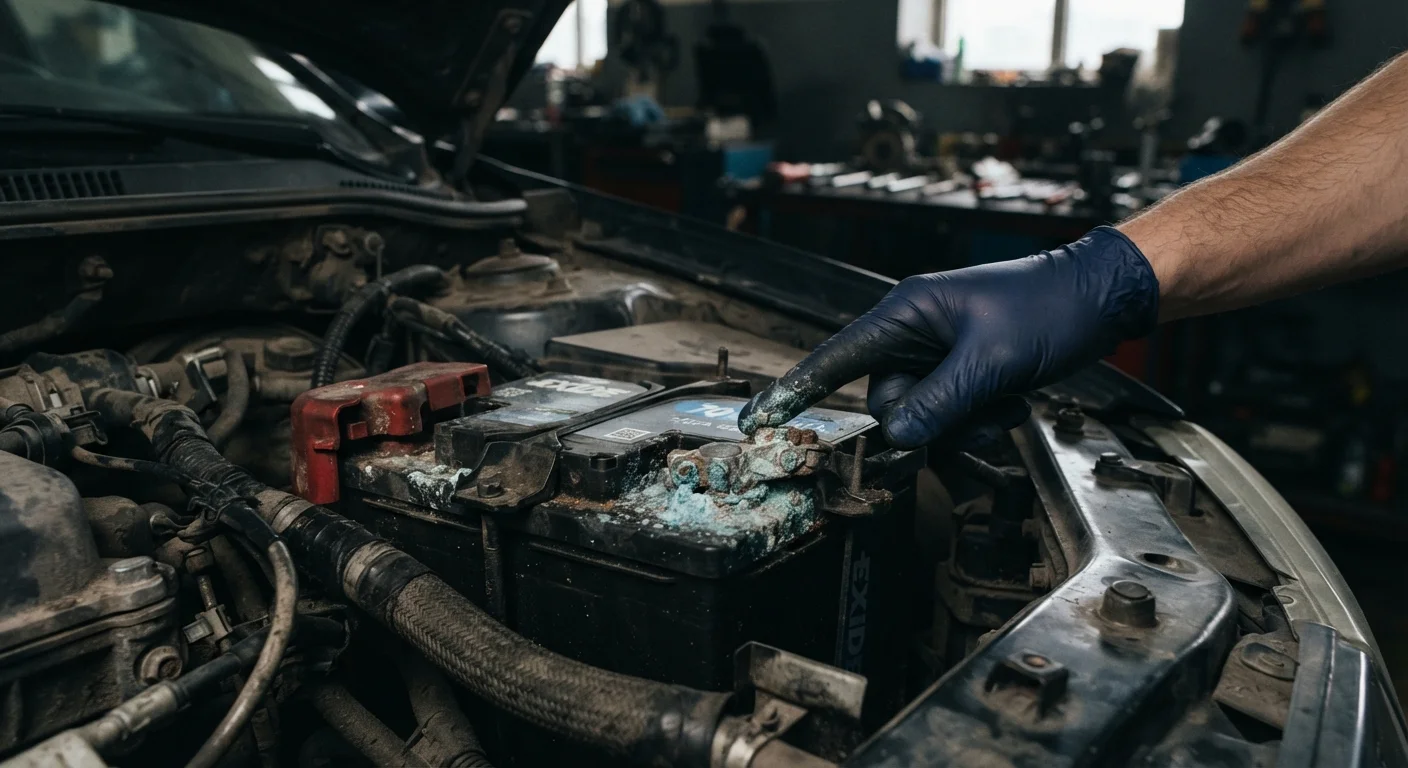
Ignoring corroded or loose battery terminals.
Why it happens: Terminal corrosion-the white or blue-green crust that builds up around battery posts-develops gradually and is easy to overlook during routine visual checks.
Letting the battery sit deeply discharged for extended periods.
Why it happens: Vehicles left unused-during travel, storage, or seasonal downtime-slowly self-discharge. Lead-acid batteries that drop below a certain charge threshold can suffer permanent sulfation, a condition where sulfate crystals harden on the plates.
Skipping annual battery load testing.
Why it happens: Because a battery can show adequate voltage on a simple meter while still lacking the capacity to handle a demanding cold start, many drivers assume their battery is fine right up until it isn't.
Don't Ignore Slow or Labored Engine Starts
A sluggish start-where the engine cranks slowly before catching-is one of the clearest early warnings of a weakening battery. Many drivers dismiss this as a cold-weather quirk and miss the window to address it proactively. Have the battery tested promptly if you notice this symptom; waiting until the car won't start at all often means a more inconvenient and costly situation.
How Temperature Makes Everything Worse
Heat is actually harder on batteries than cold. High ambient temperatures accelerate the internal chemical reactions inside a battery, which speeds up plate corrosion and fluid evaporation-permanently reducing capacity. Cold weather, meanwhile, thickens engine oil and increases the power demand at startup, forcing a weakened battery to work even harder.
33%
Battery capacity loss at 0°F vs. 80°F
Engineering research consistently shows that a fully charged lead-acid battery delivers roughly a third less cranking power at freezing temperatures compared to moderate conditions.
3-5 years
Typical car battery lifespan
Under average driving conditions and proper maintenance, most automotive lead-acid batteries are designed to last within this range before capacity degrades significantly.
This is why preparing your car for seasonal changes should include a battery inspection. A battery at 80% capacity in mild weather may simply not have enough reserve to start reliably when temperatures drop below freezing.
Where possible, parking in a garage during extreme heat or cold gives your battery a meaningful advantage. Even an unheated garage provides a buffer against the most damaging temperature extremes.
Building Habits That Protect Battery Health
No single action will double your battery's lifespan, but a combination of small, consistent habits compounds into real results. Combine longer drives with periodic terminal cleaning, address electrical accessories promptly, and schedule a battery load test annually-especially before winter. A load test measures not just voltage but the battery's ability to deliver current under stress, giving a truer picture of remaining capacity than a simple voltage check.
If you're newer to vehicle ownership, this guide for new drivers covers these fundamentals alongside other essential checks worth making a routine. Keep in mind that a failing battery also stresses the alternator and starter motor, turning one worn component into a more expensive repair cascade-a cost that, like vehicle depreciation, is easy to underestimate until it appears on a repair bill.
Battery Work Carries Real Safety Risks
Car batteries contain sulfuric acid and produce hydrogen gas during charging-both of which are hazardous. Terminal cleaning, jump-starting, and battery replacement should be approached with care: always wear eye protection and gloves, work in a ventilated area, and follow your vehicle manufacturer's instructions. When in doubt, have a qualified mechanic handle battery-related tasks. Incorrect procedures can cause injury or damage to sensitive vehicle electronics.