

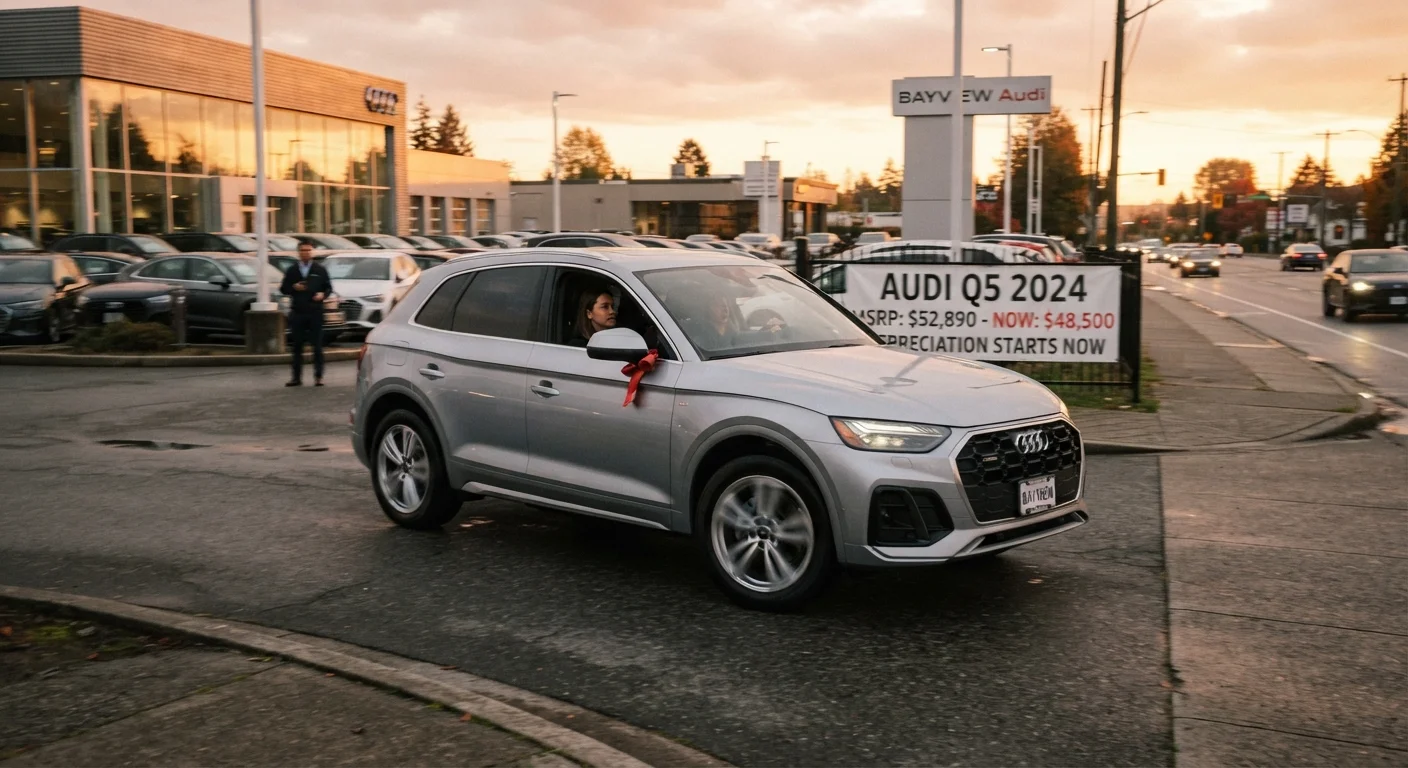
Key Takeaways
- New cars typically lose 15-25% of their value in the first year of ownership.
- Depreciation is usually the largest single cost of owning a vehicle, surpassing fuel and insurance.
- Mileage, condition, brand reputation, and market demand all directly influence how fast a car depreciates.
- Keeping up with scheduled maintenance can meaningfully slow the rate of value loss.
- Used vehicles depreciate more slowly, making them a financially efficient choice for many drivers.
Vehicle Depreciation
Vehicle depreciation is the reduction in a car's market value over time. It begins the moment a new car is driven off the dealership lot and continues throughout the vehicle's life. Depreciation is not a fee or a charge - it is the difference between what you paid and what the car is worth at any given point.
In accounting terms, depreciation is a non-cash expense that reflects the consumption of an asset's useful life. For personal vehicles, it is typically calculated as the difference between purchase price and current market value.
Why Depreciation Starts Before You Get Home
The phrase "drives off the lot" is not just an expression - it describes a genuine financial event. When a dealer sells you a new car, it leaves their inventory as a new vehicle. The moment you take ownership and register it, that same car becomes a used vehicle in the eyes of the market. No buyer will pay the full new-car price for a car that already has an owner, regardless of how many miles are on it.
This initial drop reflects the structural difference between new and used car markets. Dealers can sell new cars at manufacturer-suggested retail prices; the private and used-car markets apply different standards. That gap is the first and often steepest phase of depreciation.
Beyond the first day, vehicles tend to lose value most rapidly during their first three years. Industry data consistently shows that new cars lose roughly 15-25% of their value in year one alone, with total losses reaching 40-50% by the end of year five. After that, the rate of decline typically slows - which is one reason older vehicles can represent strong value for buyers who plan to hold them for several years.
Understanding this curve matters because it shapes every major ownership decision, from when to buy to when to sell. It is also a central component of total vehicle ownership cost, often exceeding what drivers spend on fuel or insurance over the same period.
~20%
Average first-year new car value loss
Industry analysts broadly estimate new vehicles lose approximately 15-25% of their value within the first year of ownership.
~50%
Value loss by year five
Many new vehicles retain only around half their original purchase price after five years, making depreciation the dominant cost of ownership for most drivers.
#1
Depreciation as a cost of ownership
Transportation cost analyses, including those from AAA, consistently rank depreciation as the largest annual expense for new-car owners.
The Factors That Accelerate - or Slow - Value Loss
Depreciation is not the same for every vehicle. Several factors determine how quickly a particular car loses value, and understanding them gives owners more control than they might expect.
Mileage
Annual mileage is one of the strongest predictors of resale value. Vehicles accumulating significantly more than the average 12,000-15,000 miles per year tend to depreciate faster, because buyers associate higher mileage with more wear and a shorter remaining useful life.
Condition and Maintenance History
A vehicle with documented service records - showing oil changes, brake inspections, and other scheduled maintenance performed on time - commands a higher resale price than one with gaps in its history. Keeping up with routine maintenance is one of the most practical steps an owner can take to protect long-term value. A full service record signals to buyers that the vehicle was cared for, reducing their perceived risk.
Brand and Model Reputation
Some brands carry stronger reputations for reliability, and their vehicles tend to depreciate more slowly as a result. Models known for long-term durability often hold a higher percentage of their original value compared to models with less favorable reliability histories.
Market Demand and Fuel Prices
External conditions matter too. When fuel prices rise sharply, demand for large trucks and SUVs can soften, accelerating their depreciation. Conversely, vehicles that align with current consumer preferences - whether for fuel efficiency, cargo capacity, or technology features - tend to hold value better.
Color and Configuration
Neutral colors like white, silver, and gray generally depreciate more slowly than unusual or polarizing colors, simply because they appeal to a broader pool of buyers. Trim levels and optional features also influence resale, though their impact varies by segment.
Protect Resale Value from Day One
Keep a physical or digital folder of every service receipt and inspection record from the time you take ownership. When it comes time to sell, a complete maintenance history is one of the most persuasive tools you have to justify your asking price and reduce buyer hesitation.
How Depreciation Affects Your Ownership Decisions
Depreciation is not just an abstract number - it shapes practical decisions at every stage of owning a car.
When deciding whether to buy new or used, the depreciation curve is central to the analysis. A vehicle that is two to three years old has already absorbed its steepest value loss. Buying at that point means someone else financed the sharpest drop, while you still receive a relatively modern car with significant useful life remaining.
When considering repairs on an older vehicle, depreciation defines the financial context. If a car is worth $6,000 and requires $3,000 in repairs, the equation looks different than the same repair on a car worth $18,000. Understanding the maintenance math on high-mileage vehicles helps clarify when continued investment makes sense and when replacement becomes the more rational choice.
For owners approaching a sale or trade-in, depreciation directly affects how much equity they have in the vehicle. Drivers who financed a new car with a long loan term can find themselves in a situation where they owe more than the car is worth - sometimes called being "underwater" or "upside-down" on the loan. Understanding vehicle equity before selling or trading in can prevent costly surprises during that transaction.
What You Can Do About It
While depreciation cannot be eliminated, thoughtful decisions at purchase and throughout ownership can meaningfully reduce its financial impact.
Choosing a vehicle with a strong reliability reputation and broad market appeal gives you a structural advantage from day one. Keeping mileage reasonable, following the manufacturer's recommended maintenance schedule, and maintaining the vehicle's appearance - interior and exterior - all contribute to stronger resale value when the time comes to move on.
If you are buying primarily for transportation rather than the experience of driving new, a used vehicle in the two-to-four-year age range often represents a strong balance between modern features, remaining useful life, and a price that reflects someone else's depreciation losses rather than your own.
Finally, factoring depreciation into your purchase decision upfront - rather than discovering it at trade-in time - puts you in a far better position. A car that costs less to buy but depreciates rapidly can end up being more expensive to own than a more expensive vehicle that holds its value. Looking at the full picture of what a car actually costs to own - including depreciation - is the clearest way to evaluate any vehicle purchase with confidence.
Depreciation Varies Widely by Vehicle Type
Luxury vehicles, sports cars, and some electric vehicles can depreciate at rates significantly different from mainstream sedans and trucks. If you are evaluating a specific vehicle type, it is worth researching historical depreciation patterns for that segment rather than relying on averages alone. Resale value data from vehicle history and valuation services can provide useful reference points.