

Key Takeaways
- Stress triggers real, measurable changes in the body - not just in how you feel emotionally.
- Short-term (acute) stress and long-term (chronic) stress have very different effects on health.
- Cortisol, the primary stress hormone, plays a central role in how your body responds to pressure.
- Chronic stress is linked to elevated risk for cardiovascular, immune, and mental health issues.
- Stress and sleep are deeply intertwined - each one affects the other in a feedback loop.
- Recognizing your personal stress signals is the first step toward managing them effectively.
Stress Response
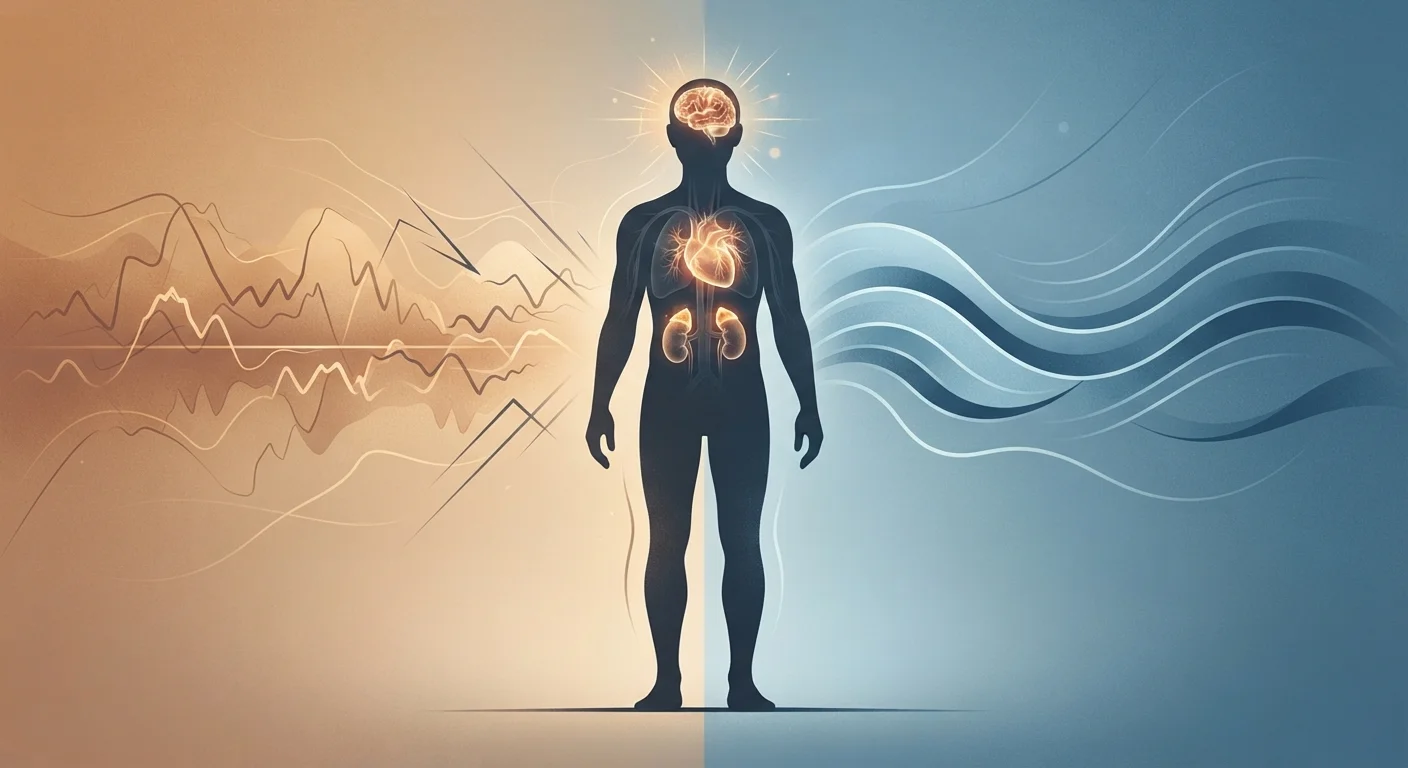
The stress response is the body's automatic reaction to a perceived threat or demand. It triggers a cascade of hormonal and physiological changes - including elevated heart rate, increased alertness, and muscle tension - designed to prepare you to act quickly. Acute stress is short-lived and often manageable, while chronic stress persists over time and can affect overall health.
The stress response is primarily mediated by the hypothalamic-pituitary-adrenal (HPA) axis and the sympathetic nervous system, releasing cortisol and adrenaline (epinephrine) as key signaling hormones.
The Biology Behind the Feeling
When your brain detects a threat - whether it's a car that cuts you off or a difficult conversation at work - it triggers an immediate alarm. The hypothalamus, a small region deep in the brain, signals the adrenal glands to release adrenaline and cortisol. Within seconds, your heart beats faster, your breathing quickens, and your muscles prime for action.
This is the classic fight-or-flight response, and it is genuinely useful in genuinely dangerous situations. The problem is that the same system activates for psychological and social pressures - things that don't require sprinting or fighting, but that the brain still registers as threats.
“Stress is not what happens to us. It is our response to what happens. And response is something we can choose.”
— Maureen Killoran, Wellness educator and stress researcher
Understanding that stress is a biological process - not a personal failing - is an important foundation. The response evolved to help humans survive. The challenge today is that many modern stressors are persistent rather than brief, which changes what the response does to the body over time.
Acute vs. Chronic Stress: Why Duration Matters
Not all stress is harmful. Acute stress - the kind tied to a single event or short window of time - tends to resolve on its own and can even sharpen focus and performance. Athletes, surgeons, and performers often rely on a degree of acute stress to perform at their best.
Chronic stress is a different matter. When the stress response stays activated for weeks or months, the body's systems are essentially running on high alert continuously. Cortisol levels that are helpful during a crisis become problematic when they stay elevated. Research consistently links chronic stress to:
- Elevated blood pressure and cardiovascular strain
- Disrupted immune function, making the body more vulnerable to illness
- Digestive problems, including changes in gut motility
- Sleep disruption - and poor sleep, in turn, amplifies stress sensitivity
- Increased risk for anxiety and depression
It's worth noting that burnout differs from stress in important ways - burnout typically involves emotional exhaustion and detachment that go beyond the heightened arousal of acute stress.
77%
Adults reporting physical stress symptoms
According to the American Psychological Association's Stress in America survey, a substantial majority of US adults report experiencing physical symptoms they attribute to stress.
3×
Increased cardiovascular risk with chronic stress
Research published in general cardiology literature suggests sustained psychological stress is associated with meaningfully elevated cardiovascular risk, though individual factors vary considerably.
43%
Of adults who say stress has increased
The APA's ongoing Stress in America research has consistently found that large proportions of American adults report their overall stress levels have risen in recent years.
What Stress Does to the Mind
The brain is not immune to the effects of chronic stress. The prefrontal cortex - involved in decision-making, impulse control, and rational thinking - becomes less effective under sustained stress. Meanwhile, the amygdala, the brain's threat-detection center, grows more reactive. This is partly why chronic stress can make people feel emotionally volatile, easily overwhelmed, or stuck in negative thinking patterns.
Memory and concentration are also affected. Cortisol, while useful in short bursts, can interfere with the hippocampus - the area of the brain central to forming and retrieving memories. People under sustained stress often report difficulty focusing, forgetting things, or feeling mentally foggy.
Notice the Physical Before the Emotional
Many people recognize stress emotionally only after it has already been showing up physically - in tight shoulders, a clenched jaw, or a racing heart. Checking in with your body several times a day can help you catch the stress response earlier, when it's generally easier to address. Even a brief pause to notice physical sensations builds self-awareness over time.
Stress and sleep have a tightly linked bidirectional relationship: stress disrupts sleep, and poor sleep makes stress harder to manage. For a deeper look at that cycle, see our article on how sleep and mental health are more connected than most people realize.
Recognizing Your Personal Stress Signals
Stress doesn't always announce itself clearly. Many people normalize the symptoms or attribute them to something else. Common signals worth paying attention to include:
- Physical: Headaches, jaw tension, muscle tightness, frequent illness, fatigue, stomach upset
- Emotional: Irritability, anxiety, feeling overwhelmed, low motivation, emotional numbness
- Cognitive: Difficulty concentrating, indecisiveness, forgetfulness, racing thoughts
- Behavioral: Changes in eating or sleeping patterns, withdrawing socially, increased reliance on caffeine or alcohol
Stress responses are genuinely individual. Understanding your own patterns is part of the full picture of mental wellness - which includes not just stress, but sleep, relationships, and environment.
If your stress feels unmanageable or is affecting your daily functioning, speaking with a healthcare or mental health professional is a meaningful and appropriate step. General information can raise awareness; personalized care addresses your actual situation.
For those curious about what stress-relief practices are actually doing at a physiological level, our coverage of stress management habits and their mechanisms offers evidence-based context.
This article is for general informational and educational purposes only and is not a substitute for professional medical or mental health advice. If you have concerns about your health, please consult a qualified healthcare provider.