

Key Takeaways
- Paying yourself first prioritizes saving before any discretionary spending occurs.
- Automation is the most reliable way to implement this strategy consistently.
- Even small, consistent amounts can build meaningful savings over time.
- This approach works alongside - not against - traditional budgeting methods.
- High-interest debt may need to be weighed against immediate savings goals.
Paying Yourself First
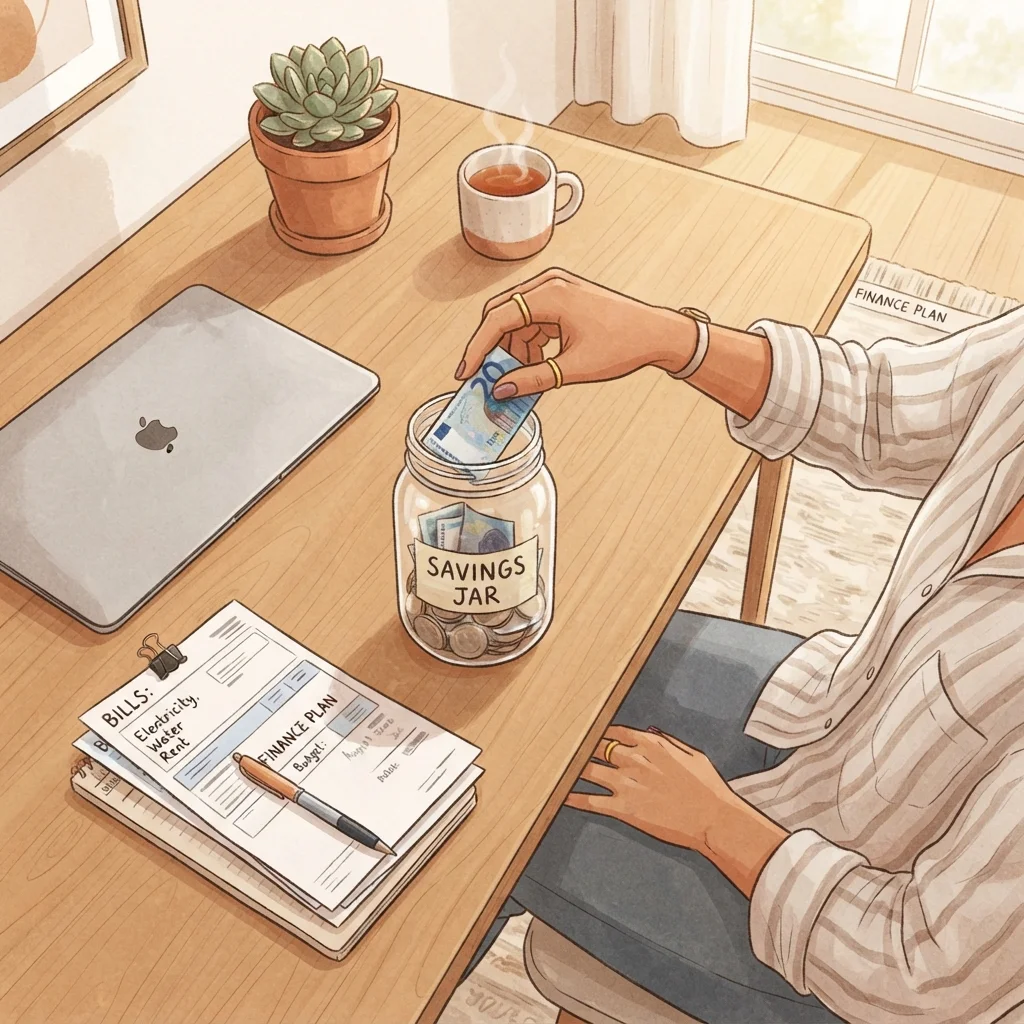
"Paying yourself first" is a savings strategy where you set aside a portion of your income for savings or investments before spending on anything else - including bills, groceries, or entertainment. Rather than saving whatever is left at the end of the month, you treat saving as the first and non-negotiable line item in your budget. This approach shifts savings from a passive afterthought to an active financial priority.
In practice, this often involves automating transfers to a savings or retirement account immediately upon receiving each paycheck, reducing the likelihood that the funds are redirected to discretionary spending.
The Core Idea: Reverse the Order of Spending
Most people budget by paying their bills and living expenses first, then saving whatever remains at month's end. The problem: discretionary spending often expands to absorb available cash, leaving little or nothing to save. Paying yourself first flips that sequence entirely.
Under this model, a predetermined amount moves into savings immediately after income arrives - before rent, utilities, or groceries are paid. Only after that transfer does the remaining balance become available for everyday spending. The effect is that saving becomes automatic and non-negotiable rather than optional and residual.
This is not a new concept. Financial educators have promoted it for decades precisely because it sidesteps the willpower problem: when money is already moved, you cannot spend it on impulse. The strategy reflects a straightforward behavioral insight - systems outperform intentions.
Start Small to Build the Habit
If saving a large percentage feels daunting, begin with an amount so small it is barely noticeable - even $20 per paycheck. The goal in the early stages is to establish the behavioral pattern, not to reach a specific dollar target. Once the habit is automatic, gradually increase the amount over time.
How It Works in Practice
Implementation typically falls into two categories:
- Employer-directed contributions: If your employer offers a retirement plan such as a 401(k), contributions are deducted from your paycheck before the remainder hits your bank account. This is paying yourself first in its most seamless form - you never see the money, so you adjust your budget around what remains.
- Automated bank transfers: If no employer plan is available, or for savings goals beyond retirement, you can schedule an automatic transfer from your checking account to a dedicated savings account on payday. Setting the date to match your pay cycle removes the decision entirely.
The account destination matters less than the habit itself. Whether funds go to an emergency fund, a retirement account, or a savings account earmarked for a specific goal, the key is that the transfer happens first and consistently. For those exploring investing fundamentals, this same discipline forms the foundation of long-term wealth building.
57%
Americans unable to cover a $1,000 emergency
According to a Bankrate survey, more than half of U.S. adults could not pay an unexpected $1,000 expense from savings alone - underscoring the stakes of consistent saving habits.
~14%
Average personal savings rate during COVID-19 peak
The U.S. Bureau of Economic Analysis recorded a dramatic spike in the personal savings rate in 2020, illustrating how behavioral shifts - even forced ones - can rapidly change saving outcomes.
3.5%
U.S. personal savings rate in recent years
The Federal Reserve's data shows the U.S. personal savings rate has historically hovered in the low single digits, reflecting how easy it is to deprioritize saving when it is left until last.
Where This Strategy Fits in a Broader Budget
Paying yourself first is a sequencing principle, not a complete financial plan. You still need to account for fixed expenses, variable costs, and debt obligations with the income that remains. Common budget frameworks - such as allocating percentages of income to needs, wants, and savings - can easily incorporate this approach by treating the savings allocation as the first deduction rather than the last.
One practical consideration: if high-interest debt is part of your picture, allocating some of your "pay yourself first" amount toward debt repayment can make financial sense. Carrying a 20% APR credit card balance while saving at 4% is a net loss. A balanced approach might direct a portion to a starter emergency fund and a portion to debt elimination. Our overview of saving and debt strategies explores these trade-offs in more detail.
The strategy also scales. Starting with 1% or 2% of take-home pay is entirely valid - consistency matters more than the initial amount. Over time, as raises occur or expenses shift, the saved percentage can increase incrementally.
Variable Income Requires Flexibility
If your income fluctuates - due to freelance work, hourly shifts, or commission-based pay - a fixed monthly savings amount may not always be feasible. Consider saving a consistent percentage of each payment received rather than a flat dollar figure. This keeps the "first" principle intact while accommodating income variability.
This article is for general informational and educational purposes only and does not constitute personalized financial, investment, or tax advice. Consult a qualified financial professional before making decisions specific to your situation.