

Key Takeaways
- Cats are territorial by nature — a rushed introduction increases stress and lasting conflict.
- A scent-first, sight-second approach mirrors how cats naturally assess unfamiliar animals.
- The full adjustment period can span two to four weeks or longer, depending on each cat's temperament.
- Separate resources — litter boxes, food stations, and resting spots — reduce competition during integration.
- Hissing and posturing are normal early behaviors; sustained aggression is a signal to slow the process down.
- Senior cats and resident cats with health issues may need extra time and veterinary input.
What you will need
Why Cat Introductions Require a Structured Approach
Unlike dogs, cats are not obligate social animals. In the wild, most cats are solitary hunters who interact primarily to mate or compete for territory. Domestic cats can and do form bonds with other cats — but those bonds develop on the cats' own terms. Forcing proximity before either cat is ready triggers defensive aggression that can become a lasting pattern in the household.
The structured introduction process described here is built around feline behavioral science: cats communicate primarily through scent and body language, they need time to assess perceived threats at their own pace, and they respond poorly to environments where they feel they cannot escape or control their space. Respecting these instincts is not optional — it's the mechanism by which a successful multi-cat household is built.
This process also applies whether you're bringing home a kitten or an adult cat. Adult cats may take longer to accept a newcomer, particularly if they've lived alone for years. For a broader look at what responsible cat ownership involves at every life stage, see The Complete Cat Owner's Handbook.
Vet Check Before Any Introduction
Before the new cat enters your home, ensure both animals have had a recent veterinary examination. Respiratory infections, parasites, and contagious illnesses can spread quickly between cats sharing a space. A clean bill of health for both cats is the essential starting point — not an optional step.
What to Expect During Each Phase
Understanding what is normal versus what signals a genuine problem will help you stay patient and make sound decisions throughout the process.
Normal behaviors to expect
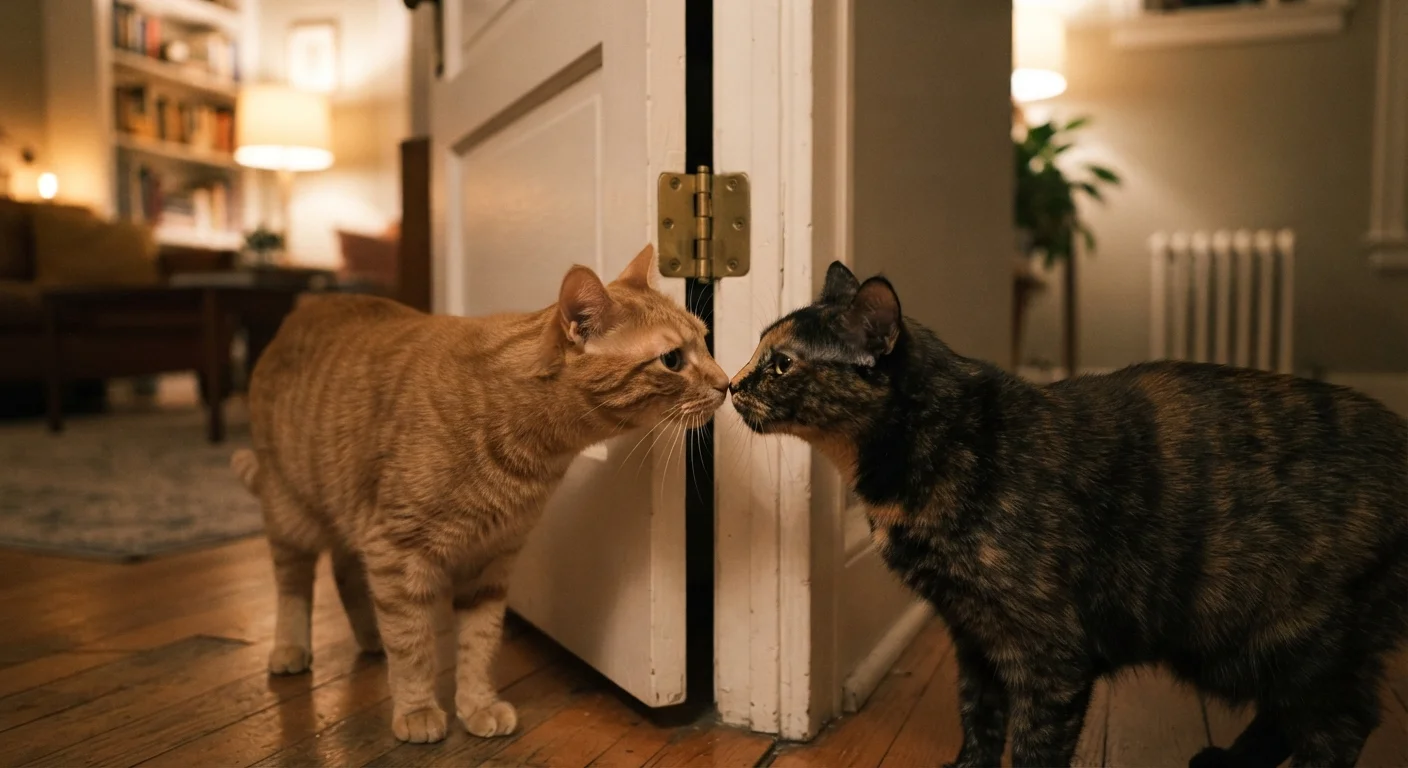
- Hissing, growling, or swatting at the closed door — both cats know the other is there
- The resident cat appearing unsettled, over-grooming, or spending more time in elevated spots
- The new cat hiding for the first day or two, then gradually emerging
- Staring contests and puffed tails during early barrier sessions
Signs the process needs to slow down
- Either cat stops eating or using the litter box
- Sustained, escalating vocalization from one or both cats
- Redirected aggression toward people in the household
- Physical injuries after any face-to-face contact
If stress behaviors are severe or prolonged, consult a veterinarian or a certified cat behavior consultant before continuing. Some cat pairs benefit from short-term anti-anxiety support — a conversation your vet can help guide.
Use Feeding Time to Build Positive Associations
During the scent-swap and door-feeding phases, time each cat's meals so they eat simultaneously on opposite sides of the barrier. Pairing the smell of the other cat with something enjoyable — food — can meaningfully accelerate positive associations. Keep portions consistent so neither cat feels resource-deprived.
For households where the resident cat spends time outdoors, the adjustment may differ; indoor-only environments allow more controlled management of shared territory. For background on how environment shapes feline behavior and wellbeing, see Indoor vs. Outdoor Cats: Weighing the Trade-Offs.
Never Force Physical Contact Early On
Placing cats in the same room before they've exchanged scents and shown relaxed body language can trigger fear-based aggression that is difficult to reverse. If either cat is growling, flattening ears, or refusing to eat, the process needs to be slowed down — not pushed forward.
Setting Up Your Home for Long-Term Harmony
Once both cats are sharing space, the physical environment plays a significant role in whether the peace holds. Key principles:
- Litter boxes: The standard recommendation is one box per cat, plus one extra. Place boxes in different locations so no cat can be ambushed or blocked from access.
- Feeding stations: Feed cats in separate locations permanently. Even cats that seem to get along can develop resource guarding over food.
- Vertical space: Cat trees, shelves, and window perches allow cats to establish social hierarchy through height rather than physical conflict. Multiple elevated options reduce tension.
- Escape routes: Ensure every room has multiple exit paths so neither cat can be cornered during a tense moment.
These environmental adjustments are not temporary measures for the introduction period — they are the ongoing structure that supports a stable multi-cat household. Think of them the same way you'd think about the setup checklist for any new animal: foundational, not optional. (For contrast, see how first-week setup differs for small pets in The Small Pet Owner's First-Week Checklist.)
What you will need