

Key Takeaways
- Cats hide stress signals instinctively — early signs are often subtle and behavioral.
- Chronic feline stress can suppress immunity and trigger serious conditions like idiopathic cystitis.
- Environmental predictability and control are central to feline psychological wellbeing.
- Hiding, over-grooming, and litter box avoidance are among the most reliable stress indicators.
- A veterinarian should always be consulted when stress symptoms appear, as they may mimic illness.
Feline Stress
Feline stress is a physiological and behavioral response cats experience when they perceive a threat to their safety, comfort, or sense of control over their environment. Unlike dogs, cats are both predator and prey species, making them acutely sensitive to environmental changes. Stress becomes a health concern when it persists long enough to suppress immune function or alter normal behavior.
Chronic activation of the hypothalamic-pituitary-adrenal (HPA) axis in cats elevates cortisol levels, which can impair immune response, disrupt digestive function, and contribute to conditions such as feline idiopathic cystitis (FIC).
Why Cats Conceal Stress So Effectively
Cats are solitary hunters who evolved to mask vulnerability. In the wild, showing weakness invites predation — so domestic cats carry that same biological drive to appear composed even when distressed. This instinct means stress often goes unnoticed until it has already become chronic.
Unlike dogs, cats rarely vocalize distress in ways owners recognize. Instead, they retreat, alter routines, or express discomfort through physical symptoms that can look unrelated to emotional state. Understanding this concealment strategy is the first step toward catching stress early.
Stress and Illness Can Look Identical
Many stress symptoms in cats — lethargy, appetite changes, litter box avoidance — overlap closely with signs of medical conditions. Never assume a symptom is purely behavioral without a veterinary evaluation. A physical exam helps rule out disease before focusing on environmental management.
Behavioral Signs Owners Frequently Miss
The most reliable early stress indicators in cats are behavioral — and many are easy to dismiss as quirks or mood. Key signals include:
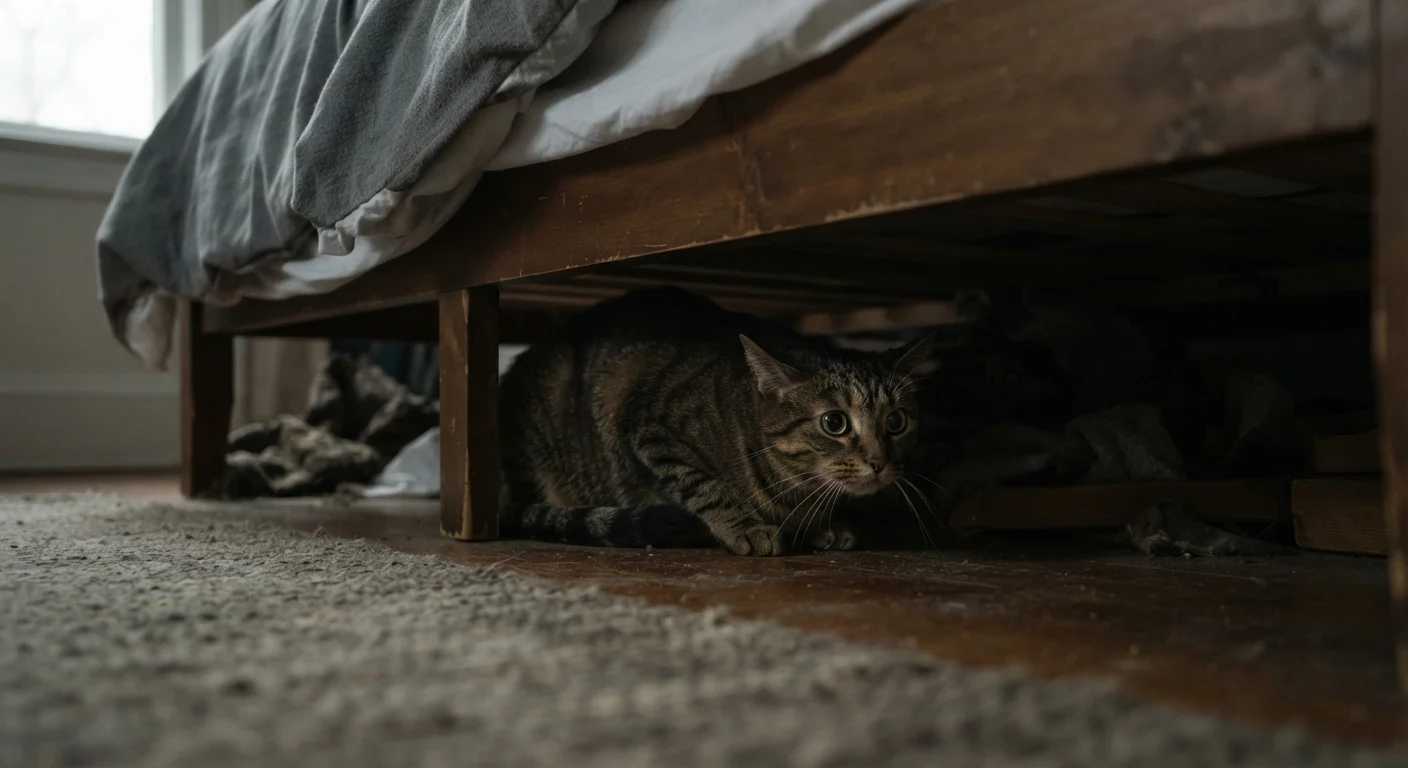
- Increased hiding: Seeking out enclosed spaces more than usual, especially after environmental changes.
- Over-grooming or under-grooming: Stress-related grooming disruption can cause bald patches or a dull, matted coat.
- Litter box avoidance: Eliminating outside the box is often stress-driven. See our article on why cats stop using the litter box for context.
- Changes in appetite: Both undereating and stress-eating can signal anxiety.
- Redirected aggression: A cat startled by an outdoor cat through a window may lash out at a nearby housemate or person.
It's also worth knowing that purring isn't always a sign of contentment — stressed or unwell cats purr too. Our piece on decoding purring explains the nuance.
~30%
of cats in multi-cat homes show chronic stress indicators
Behavioral research suggests that resource competition and social tension in multi-cat households are among the most prevalent drivers of feline stress.
FIC
idiopathic cystitis is stress-linked in cats
Feline idiopathic cystitis — which accounts for roughly half of all feline lower urinary tract disease cases — has a recognized association with psychosocial stress, particularly in indoor cats.
Up to 70%
of FIC cases resolve without treatment but recur
Without addressing underlying environmental stressors, feline idiopathic cystitis tends to recur, underscoring the importance of identifying and reducing stress triggers rather than treating episodes in isolation.
How Chronic Stress Harms Cat Health
When stress becomes sustained rather than situational, it moves from a behavioral issue to a physiological one. Prolonged cortisol elevation can disrupt gastrointestinal function, reduce disease resistance, and trigger feline idiopathic cystitis (FIC) — a painful bladder condition with no identifiable infectious cause, closely linked to psychosocial stress in cats.
Stress-related immune suppression also makes cats more susceptible to upper respiratory infections and can slow healing. In senior cats, whose immune reserves are already reduced, environmental stress carries heightened risk.
If your cat develops physical symptoms — particularly urinary changes, vomiting, or unexplained weight loss — consult a veterinarian promptly. These symptoms can reflect both stress-driven conditions and unrelated illnesses that require diagnosis. Our guide on common cat health symptoms covers which signs warrant urgent attention.
Support Predictability to Reduce Stress
Maintaining consistent feeding times, litter box locations, and daily routines gives cats the environmental certainty they depend on. When change is unavoidable — such as a move or a new household member — introduce transitions gradually and provide accessible hiding spots and vertical spaces where your cat can retreat and observe safely.
Common Environmental Triggers
Cats thrive on predictability and spatial control. Disruptions to either create the conditions for stress. The most common environmental drivers include:
Even changes that seem minor from a human perspective — rearranged furniture, a new cleaning product's scent, or altered feeding times — can register as significant threats to a cat's established sense of order. Indoor lifestyle factors in particular require owners to be proactive about enrichment and safe retreat spaces.
This article is for general informational purposes only and does not constitute veterinary advice. Always consult a licensed veterinarian regarding your cat's specific health and behavioral needs.