
Grooming Needs Across Coat Types: Double Coats, Curly Coats, and Everything Between

Key Takeaways
- Double-coated dogs should not be shaved — it can interfere with the coat's natural temperature-regulating function.
- Curly-coated dogs shed minimally but require trimming every six to eight weeks and regular brushing to prevent mats.
- Smooth coats demand the least grooming time but still benefit from weekly sessions and skin checks.
- Wire coats need hand-stripping rather than clipping to preserve proper texture and protective qualities.
- No single grooming schedule fits all dogs — coat structure determines the right tools, frequency, and professional care needs.
Our Verdict
Coat type is one of the most consequential factors in a dog's ongoing care requirements. Owners who understand what their dog's coat demands before acquiring the dog are far better positioned to provide consistent, appropriate care and avoid preventable issues like matting, skin irritation, and counterproductive grooming practices.
| Best for | Recommended |
|---|---|
| Owners with limited grooming time or those new to dog care | Smooth Coat |
| Owners comfortable with frequent brushing and seasonal shedding management | Double Coat |
| Households sensitive to pet hair who can commit to regular professional grooming appointments | Curly or Wavy Coat |
| Experienced owners interested in maintaining breed-standard coat texture through hand-stripping | Wire Coat |
Why Coat Type Shapes the Entire Grooming Picture
A dog's coat is more than an aesthetic feature — it is a functional system shaped by genetics, climate adaptation, and breed history. Two dogs similar in size can have completely different grooming demands depending on coat structure. Understanding those differences helps owners invest time and effort in the right places rather than following generic advice that may not apply to their specific dog.
If you are evaluating a breed before bringing a dog home, our guide for first-time dog owners covers how grooming fits within broader day-one care decisions and what to realistically expect.
Double Coats: Insulating by Design
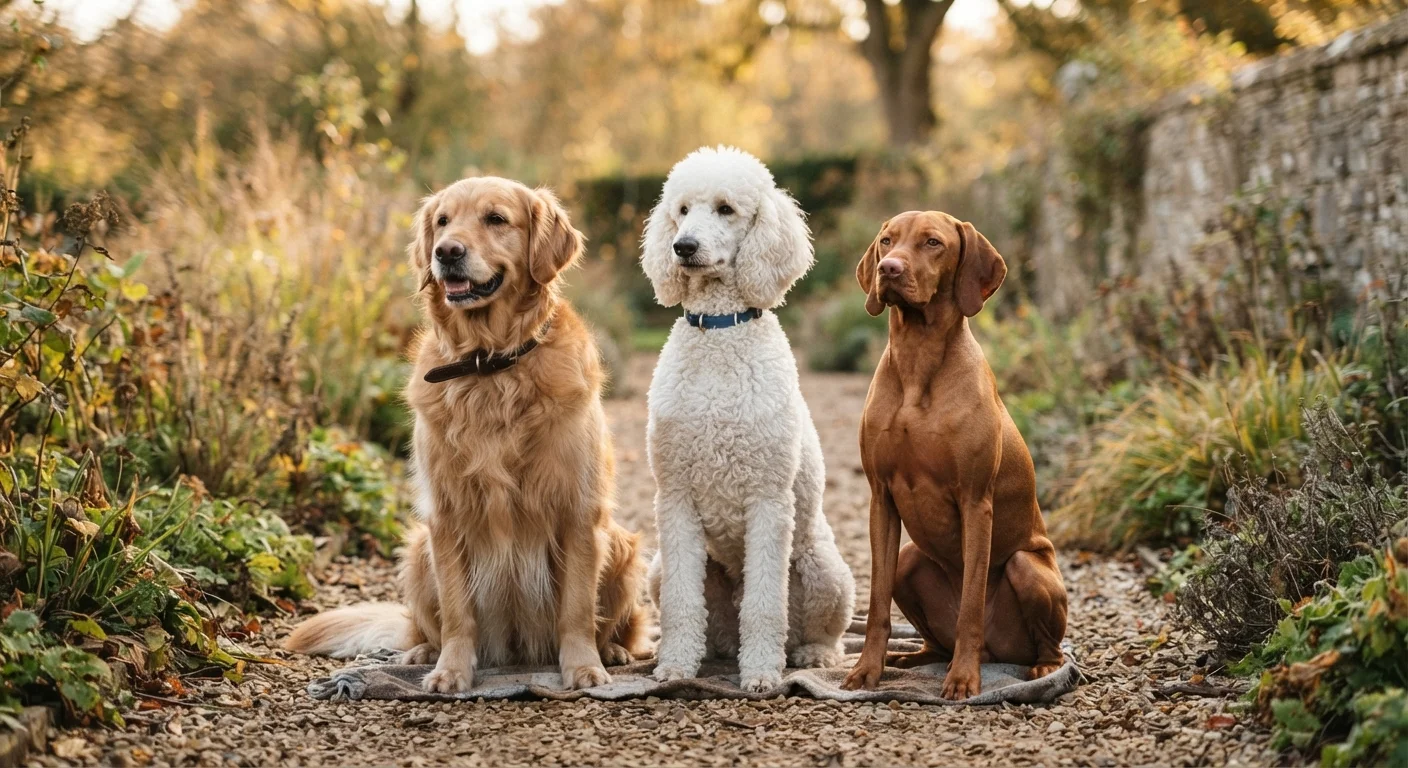
Double-coated breeds — including huskies, golden retrievers, German shepherds, and corgis — have two distinct layers: a dense, insulating undercoat and a longer outer coat of guard hairs. This structure regulates temperature in both heat and cold, which is why shaving these breeds is broadly discouraged among veterinary and grooming professionals.
Don't Shave a Double-Coated Dog
Shaving a double-coated breed is widely discouraged by veterinary and grooming professionals. The undercoat plays a role in both insulating the dog in cold weather and helping manage heat in summer by trapping cool air near the skin. Shaving can also disrupt the coat's natural growth cycle, sometimes resulting in a condition called post-clipping alopecia where the coat does not regrow normally. If shedding or warmth is the concern, consistent de-shedding brushwork is the recommended approach — not clipping to the skin.
Consistent brushing, often several times per week, removes loose undercoat before it mats or accumulates indoors. During seasonal coat blows — typically in spring and fall — daily brushing becomes necessary. Undercoat rakes and slicker brushes are common tools, though the ideal choice depends on the individual dog's coat density and length.
Curly and Wavy Coats: Low Shedding, High Commitment
Poodles, many doodle-type mixes, and Portuguese water dogs grow hair rather than fur, meaning the growth cycle is slower and natural shedding is minimal. This quality makes these dogs appealing to households sensitive to pet hair — but it comes with a significant grooming trade-off. Hair that does not shed must be trimmed regularly, typically every six to eight weeks for dogs maintained in a fuller style, and the curly texture traps debris and forms mats quickly without consistent brushing.
Mats that develop close to the skin can cause discomfort and skin irritation, making early intervention important. Most owners of curly-coated dogs rely on a professional groomer on a regular schedule rather than managing all coat maintenance at home.
Start Grooming Habits Early
Regardless of coat type, introducing grooming tools and handling during puppyhood builds tolerance and cooperation for life. Even a puppy with a smooth coat benefits from gentle weekly brushing sessions that establish grooming as a calm, routine experience. Early habituation makes adult grooming significantly easier — and less stressful for both dog and owner.
Smooth, Wire, and Middle-Ground Coats Compared
Smooth-coated dogs — such as beagles, boxers, and Doberman pinschers — represent the lower end of grooming demands. A weekly rub-down with a grooming mitt removes loose hair and supports skin health. Wire-coated breeds, including many terriers and schnauzers, have a coarse outer coat that ideally requires hand-stripping rather than clipping. Clipping a wire coat over time softens the texture and can diminish the coat's weather-resistant qualities. Some breeds occupy middle ground: medium-length, moderately dense coats that need regular brushing but fall short of full double-coat or curly-coat intensity.
| Smooth Coat | Double Coat | Curly/Wavy Coat | Wire Coat | |
|---|---|---|---|---|
| Shedding level | Low to moderate | High, especially seasonal | Minimal | Low to moderate |
| Brushing frequency | Weekly | Several times per week | 3–5 times per week | Weekly to biweekly |
| Professional grooming | Occasional | Occasional to seasonal | Every 6–8 weeks | Every 8–12 weeks |
| Mat risk | Low | Moderate (undercoat) | High without brushing | Low to moderate |
| Key grooming challenge | Skin and coat condition checks | Undercoat management | Regular trimming required | Hand-stripping vs. clipping |
Building a Routine That Matches Your Dog's Coat
Grooming is a recurring commitment, not a one-time task — and the right approach varies significantly by coat structure. A complete owner's reference across every life stage can help you build grooming milestones alongside health, nutrition, and training timelines. All dogs, regardless of coat type, also benefit from regular nail trims, ear checks, and dental hygiene as part of routine care.
Coat type often correlates with breed size and working history — and small and large breeds differ in care needs in ways that extend well beyond grooming. Factoring professional grooming costs and time into your planning before selecting a breed supports more sustainable, consistent care across the dog's lifetime.