

Key Takeaways
- Small breeds typically outlive large breeds by 4–8 years, shifting the timing of senior care.
- Large-breed puppies need controlled calcium and phosphorus intake to reduce developmental joint risks.
- Small breeds have higher metabolisms relative to body weight and may benefit from more frequent meals.
- Common joint vulnerabilities differ: patellar luxation in small breeds, hip and elbow dysplasia in large breeds.
- Small dogs are often undertrained; consistent positive reinforcement matters regardless of size.
- Large breeds may be classified as seniors as early as age 5–7, requiring earlier proactive veterinary screening.
Option A
Small Breeds
Longer-lived companions often adaptable to a wide range of living environments.
Best for: Owners with smaller homes or limited outdoor space who prefer a dog with a typically longer average lifespan.
Option B
Large Breeds
Physically capable dogs built for active, space-rich lifestyles.
Best for: Active owners with room for high daily exercise demands and readiness for earlier senior care planning.
If you want a longer-lived companion that adapts to smaller living spaces
Small Breeds
Small breeds typically live 12–16 years and can adjust to a variety of home sizes, making them well-suited to apartment or urban living.
If you lead an active outdoor lifestyle and want a working or sporting companion
Large Breeds
Many large breeds were developed for high-endurance tasks and thrive with substantial daily exercise alongside a handler who can match their energy.
If you want to minimize complex orthopedic challenges in later life
Small Breeds
While small breeds carry their own joint risks, the hip and elbow conditions common in large breeds tend to be more physically limiting and often require intensive veterinary management.
Size Changes Everything — Starting With Lifespan
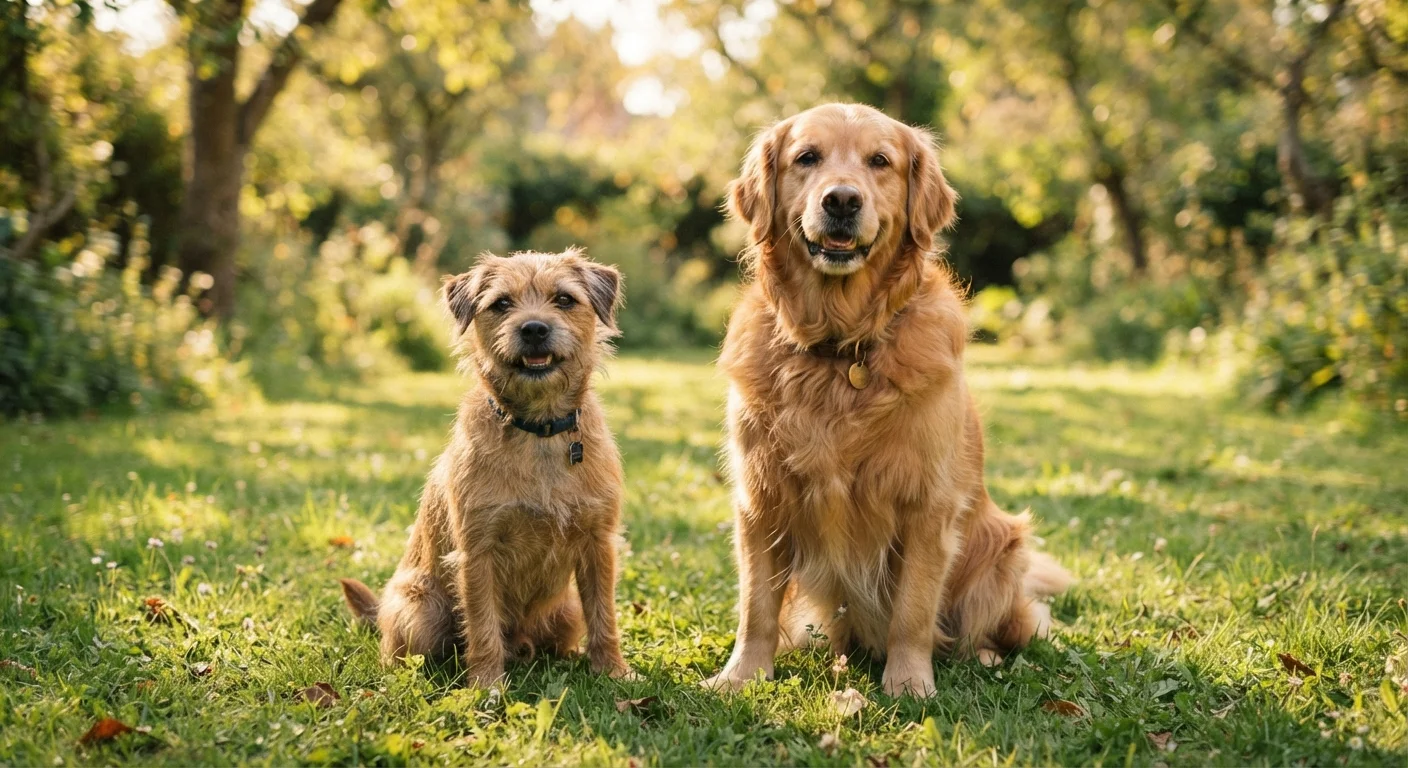
Small-breed dogs (generally under 20 pounds) and large-breed dogs (typically over 50 pounds) aren't just different in stature — their biology, aging trajectories, and care requirements diverge in ways that affect everyday ownership decisions.
The most striking difference is longevity. Small breeds routinely live 12–16 years, while large breeds typically fall in the 8–12 year range. Giant breeds — including Great Danes, Saint Bernards, and Mastiffs — may have lifespans under 8 years. This compressed timeline means large-breed owners face earlier decisions about senior care, joint support, and end-of-life planning. A large dog may need age-adapted nutrition and mobility support starting around age 5 or 6. For practical guidance on supporting an aging dog, see our article on keeping a senior dog comfortable.
Nutrition: Caloric Density, Kibble Size, and Growth Management
| Criterion | Small Breeds | Large Breeds |
|---|---|---|
| Typical lifespan | 12–16 years | 8–12 years |
| Senior status onset | Around 10–11 years | As early as 5–7 years |
| Calories needed per pound | Higher (faster metabolism) | Lower per pound of body weight |
| Common joint conditions | Patellar luxation, IVDD | Hip dysplasia, elbow dysplasia |
| Puppy nutrition focus | Caloric density, meal frequency | Controlled mineral ratios |
| Daily exercise demands | Moderate; varies by breed | High; varies widely by breed |
Nutrition needs split sharply along size lines. Small breeds have faster metabolisms relative to their body weight, meaning they typically require more calories per pound than larger dogs. They also benefit from smaller kibble sizes suited to their jaw structure, and some veterinarians recommend multiple small meals daily to reduce the risk of blood sugar drops — particularly in toy breeds.
Large-breed puppies present a distinct challenge: rapid growth must be carefully managed. Diets too high in calcium and phosphorus can accelerate bone development in ways linked to developmental orthopedic conditions. Foods formulated for large-breed puppies deliberately moderate these minerals to support more controlled skeletal growth.
Regardless of size, individual caloric needs depend on activity level, age, reproductive status, and overall health. Your veterinarian is the right resource for confirming the appropriate daily intake for your specific dog.
Joint Health: Different Vulnerabilities by Body Type
Breed Matters as Much as Size
Even within size categories, individual breed genetics significantly influence which health conditions a dog is predisposed to. A Cavalier King Charles Spaniel and a Chihuahua are both small breeds but face quite different health profiles. A Standard Poodle and a Saint Bernard are both large, yet carry distinct risks. Always discuss your dog's specific breed history with a veterinarian rather than relying on size category alone as a health predictor.
Joint problems appear in both size categories, but the conditions that arise most often differ by breed and body structure. Large and giant breeds are disproportionately affected by hip and elbow dysplasia — conditions where joints develop improperly, leading to pain and reduced mobility over time. Excess body weight and accelerated growth in puppyhood are both established risk factors.
Small breeds, particularly those with long backs or shortened limbs, carry a higher risk of patellar luxation (kneecap dislocation) and intervertebral disc disease (IVDD). Dachshunds are a widely recognized example, but many small and toy breeds share this elevated susceptibility.
Weight management is protective across both groups. Regular veterinary checkups allow for early detection of joint changes before symptoms become severe. If you notice stiffness, reluctance to jump, or changes in gait, a veterinary examination is the appropriate next step — not home management alone.
Training, Behavior, and Day-to-Day Enrichment
One persistent misconception is that small dogs need less training because their behaviors are easier to manage physically. In practice, undertrained small dogs are prone to the same anxiety, reactivity, and resource-guarding problems that affect dogs of any size — the behaviors are simply easier to overlook when a 10-pound dog is involved.
Large breeds, especially those developed for working, herding, or guarding roles, tend to have higher energy and cognitive demands. Without structured exercise and mental enrichment, behavioral problems — including destructive chewing and persistent barking — become more likely. Daily activity requirements vary considerably even within the large-breed category, so researching your dog's specific lineage matters as much as knowing their general size class. For environment considerations that affect dogs of all sizes, the indoor vs. outdoor dog debate offers a grounded look at what dogs genuinely need.
Both groups respond well to positive reinforcement methods, though training contexts differ. Our complete puppy-to-adult reference covers training milestones across breeds and life stages.
This article provides general information about dog care and is not a substitute for professional veterinary advice. Always consult a licensed veterinarian for guidance specific to your dog's health and needs.