

Key Takeaways
- Most dogs eat grass occasionally, and the behavior is generally considered normal.
- Vomiting after eating grass is less common than widely assumed — studies suggest fewer than 25% of dogs vomit afterward.
- Grass-eating can reflect boredom, dietary gaps, instinct, or gastrointestinal discomfort.
- Sudden, compulsive grass-eating paired with other symptoms warrants a veterinary evaluation.
- Pesticide- or herbicide-treated grass poses a real safety risk and should be avoided.
Dogs Eating Grass
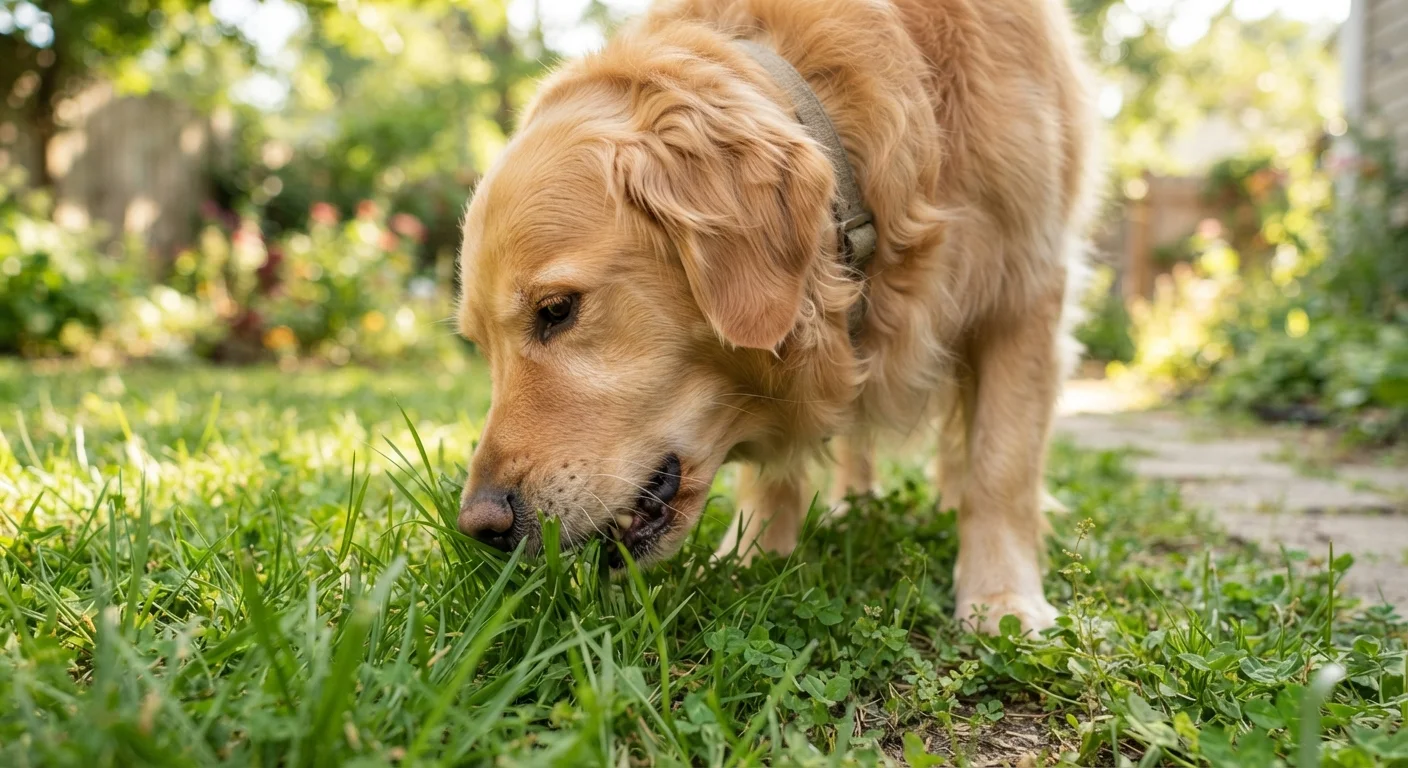
Grass-eating, known scientifically as pica when it involves non-food items, is a behavior observed in the majority of domestic dogs at some point in their lives. Dogs may graze occasionally or habitually, and the behavior does not consistently signal illness. Most dogs that eat grass do not vomit afterward, and most appear otherwise healthy.
The specific evolutionary or physiological trigger for grass consumption in dogs is not fully established. Current evidence does not support a single dominant cause, suggesting the behavior is likely multifactorial.
What the Research Actually Says
The idea that dogs eat grass specifically to induce vomiting is one of the most persistent myths in canine care. A study published in the journal Applied Animal Behaviour Science surveyed owners of grass-eating dogs and found that fewer than 25% reported their dog vomiting afterward, and fewer than 10% appeared ill before eating grass. This challenges the widespread assumption that grass functions as a self-administered remedy.
The reality is more nuanced. Dogs are opportunistic omnivores, and ancestral canids consumed plant matter as part of their diet — including the stomach contents of prey animals. Grass-eating may be an inherited behavioral tendency rather than a response to any specific need. Some researchers also suggest it could be a form of instinctive intestinal parasite control, though evidence for this in modern domestic dogs remains limited.
<25%
Dogs that vomit after eating grass
A survey-based study in Applied Animal Behaviour Science found fewer than one in four grass-eating dogs vomited afterward.
~79%
Dog owners who report grass-eating
The same study found the vast majority of dog owners observed their pets eating grass or other plants at some point.
<10%
Dogs appearing ill before grazing
Fewer than 10% of dogs in the study showed signs of illness prior to eating grass, undermining the 'upset stomach' theory as the primary driver.
Common Reasons Dogs Graze
While no single explanation covers every case, several plausible triggers have been identified:
- Boredom or under-stimulation: Dogs left alone or without adequate exercise and enrichment may graze as a displacement behavior. This is especially common in high-energy breeds like Border Collies, Australian Shepherds, and Labrador Retrievers.
- Dietary fiber: Some dogs appear to seek out grass when their diet is low in fiber or roughage. Switching to a higher-fiber food sometimes reduces grazing frequency.
- Taste and texture: Dogs explore the world through their mouths, and some simply enjoy the texture or flavor of certain grasses, particularly young, tender spring growth.
- Mild gastrointestinal discomfort: Though not the dominant reason, some dogs do appear to graze more when experiencing gas, bloating, or mild nausea.
For guidance on what a nutritionally balanced dog diet looks like, see our breakdown of dog food labels and nutrition.
Enrichment Can Reduce Boredom Grazing
If your dog seems to graze most when under-stimulated, structured exercise, sniff walks, and food puzzle toys can meaningfully reduce the behavior. High-energy and working breeds especially benefit from mental challenges alongside physical activity. Rotating toys and introducing training sessions during downtime are low-cost interventions worth trying before assuming a medical cause.
When Grass-Eating Becomes a Warning Sign
Context is everything. Occasional, calm grazing in an otherwise healthy dog is rarely concerning. The behavior becomes medically relevant when it changes in character or occurs alongside other symptoms.
Contact your veterinarian if you notice:
- A sudden onset of frequent or compulsive grass-eating in a dog that didn't previously do this
- Repeated vomiting — especially if it includes bile, blood, or undigested food
- Concurrent diarrhea, lethargy, or significant appetite changes
- Weight loss without a clear dietary explanation
- Restlessness, abdominal distension, or signs of pain
These combinations can indicate conditions ranging from inflammatory bowel disease and gastric reflux to intestinal parasites or foreign body ingestion. Early veterinary assessment leads to better outcomes in most cases. For a useful parallel, our guide on recognizing illness in small pets illustrates how behavioral changes often precede obvious physical symptoms across species.
Behavioral Changes Often Come First
Dogs rarely display dramatic symptoms at the onset of illness. A shift in routine behaviors — including sudden changes in grazing habits — is often the earliest signal that something is off. Keeping a brief log of when and how often your dog eats grass can give your veterinarian useful context during an exam.
Keeping Grass-Eating Safe
If your dog grazes and you're not concerned about the behavior itself, the primary safety consideration is what's on the grass. Pesticides, herbicides, and synthetic fertilizers used on lawns can be genuinely harmful to dogs. Symptoms of chemical exposure include excessive drooling, vomiting, tremors, or neurological changes — and require immediate veterinary attention.
Practical steps to reduce risk include:
- Know whether your lawn or nearby areas have been treated, and keep your dog away for the recommended re-entry period on any product label.
- Identify the plants growing in your yard — some common lawn weeds and ornamental plants are toxic to dogs.
- Consider growing a small patch of dog-safe grass or herbs (like wheatgrass) if your dog is a committed grazer and you want to offer a controlled option.
Nutrition is another lever worth reviewing. Just as feeding myths affect small pet owners — as explored in our article on common small pet feeding myths — assumptions about what dogs need can lead to unintentional dietary gaps. A veterinarian or board-certified veterinary nutritionist can assess whether your dog's current diet is meeting their needs.
This article is for general informational purposes only and does not constitute veterinary medical advice. Always consult a licensed veterinarian for guidance specific to your dog's health and circumstances.