

Key Takeaways
- Seeds alone are nutritionally incomplete for most pet birds and can contribute to serious health problems.
- Iceberg lettuce offers almost no nutrition for rabbits and may cause digestive upset in large amounts.
- Guinea pigs cannot produce their own vitamin C and require fresh dietary sources every day.
- Hamsters should not receive sugary fruits as a dietary staple — portion size and frequency matter greatly.
- Fresh water is essential for all small pets, including species often assumed to need little hydration.
- Pelleted diets are not always superior to whole-food diets — species context determines the right approach.
Why Small Pet Nutrition Myths Persist
Small and exotic pets — rabbits, guinea pigs, hamsters, gerbils, parakeets, and others — are often thought of as low-maintenance animals whose diets require little attention. That assumption is one reason feeding myths spread so easily. Pet store packaging, outdated care guides, and word-of-mouth advice have all contributed to misinformation that, in some cases, genuinely harms these animals over time.
The good news is that veterinary and animal nutrition research has advanced considerably. Exotic animal veterinarians and organizations like the Association of Exotic Mammal Veterinarians now offer species-specific guidance that challenges many popular beliefs. Understanding what your small pet actually needs — rather than what seems convenient or intuitive — is the foundation of responsible ownership. If you're just getting started, our Small Pet Owner's First-Week Checklist covers diet basics alongside enclosure and handling essentials.
Myth
A seed-only diet is perfectly fine for pet birds like parakeets and cockatiels.
Fact
Seeds are high in fat and deficient in many essential nutrients; they should make up only a small portion of most pet birds' diets.
Wild birds eat seeds opportunistically — they are not a year-round dietary staple. For companion birds, a seed-heavy diet is associated with vitamin A deficiency, fatty liver disease, and shortened lifespan. Avian veterinarians generally recommend a base of formulated pellets supplemented with fresh vegetables, leafy greens, and limited fruit. Seeds can remain as enrichment or training rewards, not a dietary foundation. For more on keeping birds thriving, see our article on bird enrichment that actually works.
Myth
Rabbits can eat iceberg lettuce as a regular leafy green.
Fact
Iceberg lettuce is mostly water, offers negligible nutritional value, and may cause loose stools in rabbits when fed in quantity.
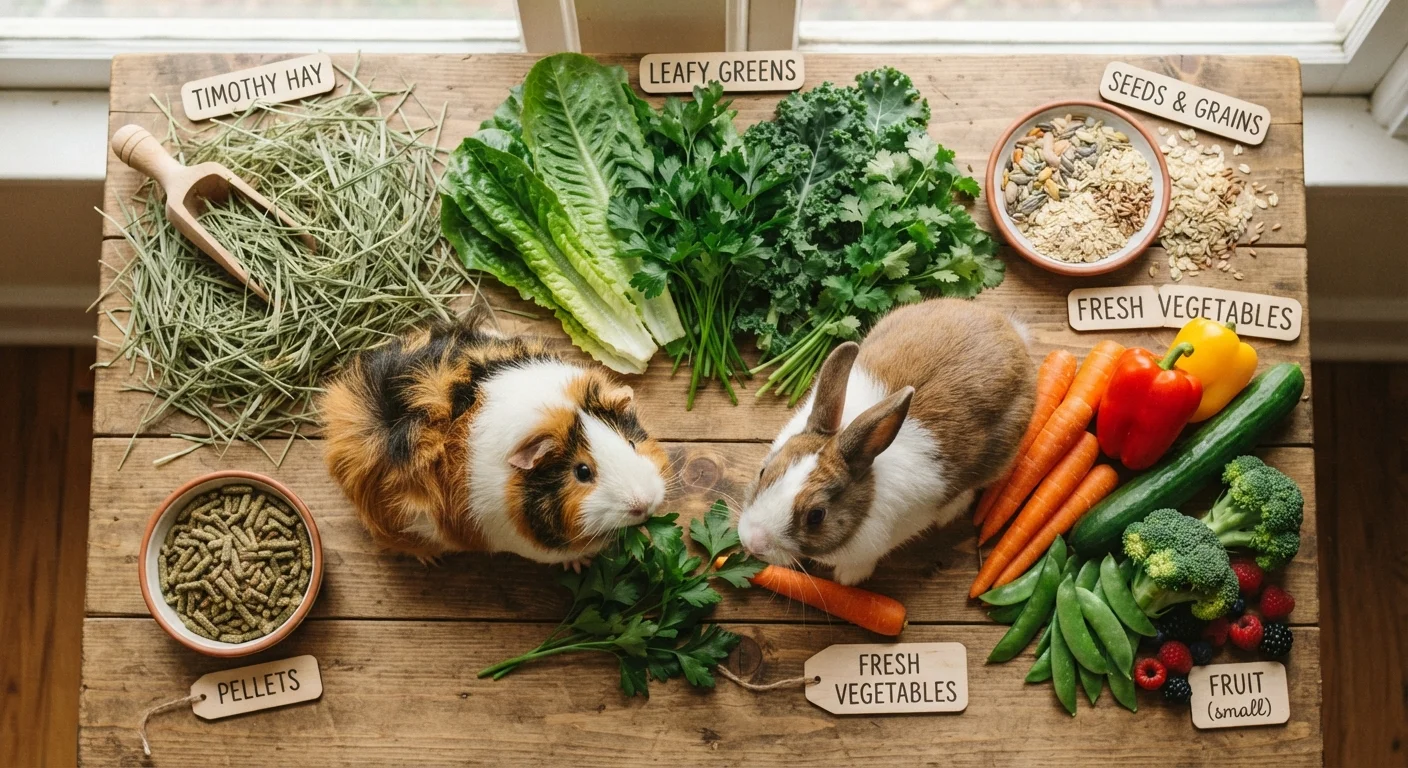
Rabbits do need leafy greens, but variety and nutritional density matter. Dark, leafy greens such as romaine lettuce, cilantro, and flat-leaf parsley are far more appropriate choices. The bulk of a rabbit's diet — roughly 80 percent or more — should be high-quality timothy or grass hay, which supports digestive health and dental wear. Pellets should be used in moderation, and sugary treats kept to a minimum. Understanding a rabbit's full environmental and dietary needs is essential; our article on why rabbits need more space than owners realize pairs well with this nutritional guidance.
Myth
Guinea pigs can get all the vitamin C they need from a standard pellet diet.
Fact
Guinea pigs are one of the few mammals that cannot synthesize vitamin C internally and require reliable daily intake from fresh food sources.
Unlike most animals, guinea pigs (like humans) lack the enzyme needed to produce vitamin C from glucose. Pellets do contain added vitamin C, but this nutrient degrades rapidly — particularly when pellets are stored at room temperature for weeks. Relying solely on pellets creates genuine risk of scurvy, a condition that causes joint pain, lethargy, and poor wound healing. Fresh bell peppers, leafy greens, and small amounts of citrus are practical, reliable sources. Fresh food should be offered daily, not occasionally.
Myth
Hamsters can eat fruit freely since it is a natural food.
Fact
Hamsters are prone to diabetes — especially dwarf species — and should receive fruit only in very small, infrequent amounts.
While hamsters may eat fruit in the wild on occasion, domesticated hamsters — particularly dwarf breeds such as Campbell's and Winter White — have a documented susceptibility to diabetes mellitus. High-sugar foods, including fruit, can accelerate or worsen this condition. Appropriate hamster diets center on a quality mixed seed and grain food or species-appropriate pellets, with small amounts of fresh vegetables and protein sources like a tiny piece of cooked egg. Fruit, if offered at all, should be an occasional treat in pea-sized portions.
Myth
Small pets like gerbils and hamsters don't need much water because they come from dry environments.
Fact
All small mammals require constant access to fresh, clean water regardless of their wild origin; dehydration is a genuine welfare concern.
The logic seems intuitive — desert-origin animals must need less water — but it is incorrect. Captive conditions differ fundamentally from wild ones. Domesticated gerbils and hamsters are often fed dry foods with lower moisture content than what they would encounter foraging in the wild. A water bottle or sipper tube should be checked and refreshed daily, and the nozzle inspected regularly to ensure it isn't blocked. Owners who feed wet foods or cucumbers may notice reduced water bottle use, but fresh water should always be available regardless.
Nutrition Across Life Stages and Species
Even owners who understand the basics can be tripped up when their pet's needs shift. A juvenile guinea pig, a pregnant rabbit, and a senior hamster all have meaningfully different nutritional requirements. Blanket feeding advice — the same pellets, the same portions, for the life of the animal — can result in deficiencies or obesity as the animal ages. Our guide on small pet care across lifespan stages explores how dietary needs evolve over time.
Species differences matter just as much as life stage. A gerbil's natural diet in the wild looks nothing like a rabbit's. Applying care advice meant for one species to another — feeding a rabbit like a hamster, for instance — can cause real harm. Always verify that any feeding guidance you follow is species-specific and sourced from a qualified exotic animal veterinarian or accredited animal welfare organization.
Never Assume One Species' Rules Apply to Another
Feeding advice written for rabbits does not apply to guinea pigs, hamsters, or gerbils — and vice versa. Each species has distinct metabolic needs, digestive systems, and dietary sensitivities. Applying the wrong guidance can cause deficiencies, toxicity, or organ stress over time. When in doubt, consult an exotic animal veterinarian rather than generalizing from another species' care sheet.
This article is for general informational purposes only and is not a substitute for veterinary nutritional advice. Always consult a qualified exotic animal veterinarian for guidance tailored to your specific pet.