

Key Takeaways
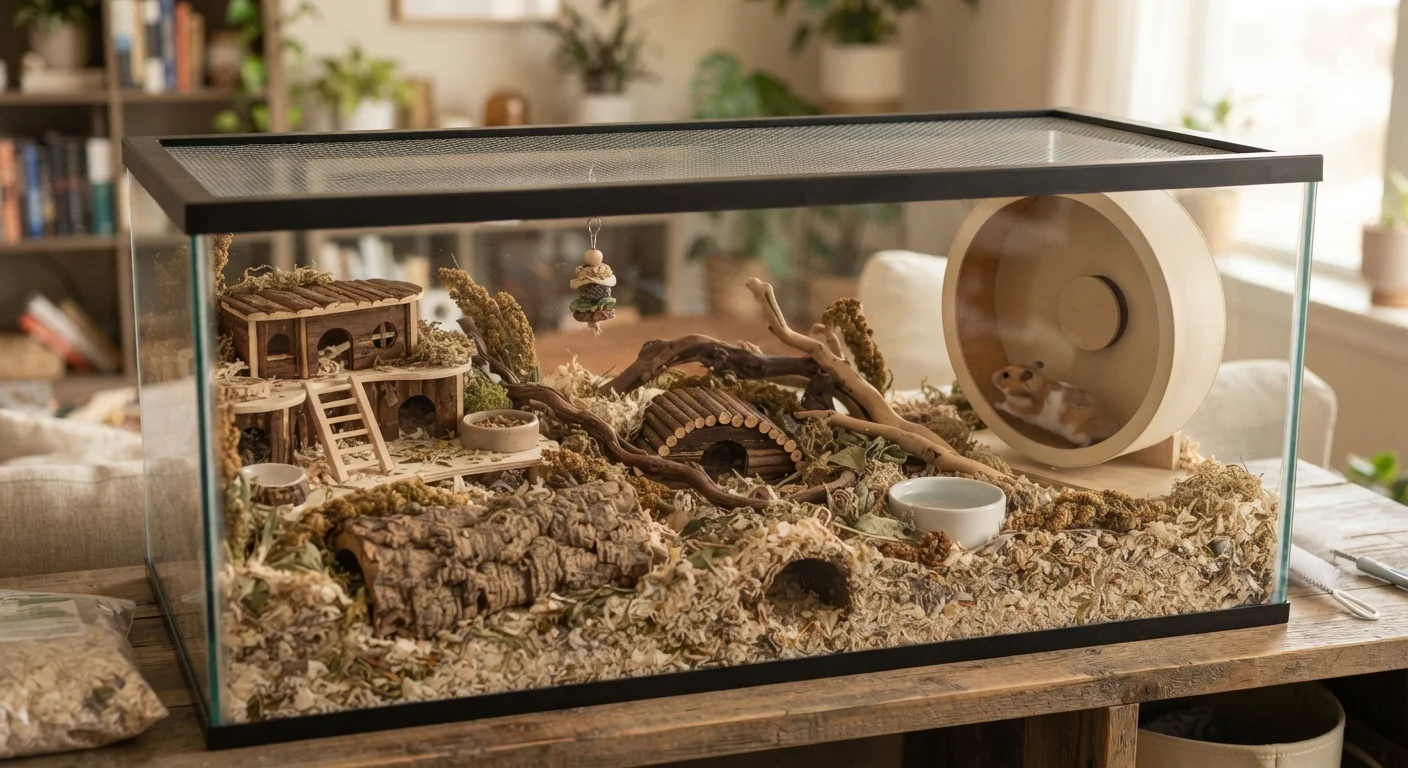
- Glass tanks or deep-sided enclosures are safer and more suitable than standard wire cages for gerbils and dwarf hamsters.
- Bedding depth of at least 6 inches is essential for burrowing, a core behavioral need for both species.
- Solid-surface running wheels, hides, and chew items are required enrichment — not optional extras.
- Gerbils are social and typically need a same-sex companion; dwarf hamsters vary by species in their social needs.
- Enclosure placement away from drafts, direct sunlight, and loud noise significantly reduces stress.
What you will need
Why Enclosure Setup Matters More Than Most Owners Expect
Gerbils and dwarf hamsters are often marketed as low-maintenance starter pets, but this framing understates how precisely their housing must match their natural behavioral repertoire. Both species are highly active, burrowing animals with specific needs for space, substrate depth, temperature stability, and cognitive stimulation. An inadequate enclosure — even a clean, well-intentioned one — can produce chronic stress, stereotypic behaviors, and shortened lifespans.
Gerbils are native to semi-arid desert regions and are built to excavate complex tunnel systems. Dwarf hamster species — including Roborovski, Campbell's, and Winter White — originate from steppe environments and rely heavily on burrowing for thermoregulation and security. Meeting those instincts in captivity requires deliberate setup choices, not just a cage from a pet store shelf.
If you are still deciding whether a gerbil or dwarf hamster is the right fit for your household, or comparing them to other small exotic animals, our article on exotic pets for beginners offers grounded context on care complexity across species.
Wire Cage Floors Cause Injury
Wire mesh or grid flooring poses a serious risk of bumblefoot (pododermatitis) and leg injuries in both gerbils and dwarf hamsters. Always choose enclosures with solid, flat floors. If you have a wire cage, cover all mesh surfaces with solid panels or thick cardboard as a temporary measure while sourcing an appropriate replacement.
The steps below walk you through every stage of enclosure preparation, from selecting the right tank to the final safety check before your animal moves in.
What you will need
Gather your tools and materials before you begin:
Glass aquarium or large plastic bin cage
Provides a safe, escape-proof enclosure with solid flooring and sufficient depth for burrowing bedding.
Paper-based or aspen bedding
Forms the deep substrate layer essential for burrowing behavior and insulation.
Solid-surface running wheel
Allows nightly exercise without risk of tail or limb injury from wire rungs.
Hideout or shelter
Gives the animal a secure retreat for sleeping and reducing stress.
Water bottle with metal sipper tube
Provides continuous access to fresh water without risk of bedding contamination.
Mesh or ventilated lid
Keeps the enclosure secure while allowing adequate airflow to prevent humidity buildup.
Wooden chew items or cork bark
Supports dental health and environmental enrichment through natural gnawing behavior.
Thermometer / hygrometer
Monitors temperature and humidity inside the enclosure to maintain safe living conditions.
Ongoing Maintenance and Monitoring
Setting up the enclosure correctly is the foundation, but consistent daily and monthly habits are what sustain your animal's health over time.
Spot-Clean Daily, Deep-Clean Monthly
Remove soiled bedding and uneaten fresh food every day to keep ammonia levels low and prevent respiratory issues. A full enclosure clean — washing all surfaces, hides, and accessories with mild, pet-safe soap and rinsing thoroughly — should happen roughly once a month. Over-cleaning can stress small rodents by erasing familiar scent markers.
Watch for behavioral changes that may signal a problem with the enclosure environment: excessive bar-chewing or digging at corners can indicate the space is too small or the bedding too shallow; lethargy during active hours may point to temperature extremes or illness. Small rodents are prey animals and often mask discomfort, so close, regular observation is your most reliable monitoring tool.
As your gerbil or hamster ages, care requirements will shift — bedding accessibility, wheel placement, and food texture may all need adjustment. Our guide on small pet care across lifespan stages covers how to adapt housing and routines as your animal moves from juvenile through senior life stages.
This article provides general educational information about small pet housing. It is not a substitute for guidance from a veterinarian experienced with small mammals. If you observe signs of illness or injury in your pet, seek professional veterinary care promptly.