
Exotic Pets for Beginners: An Honest Look at Hedgehogs, Chinchillas, and Sugar Gliders

Key Takeaways
- Hedgehogs, chinchillas, and sugar gliders are legal in most US states, but not all — always verify local laws first.
- All three species require an exotic-animal veterinarian, who may be harder to find than a general small-animal vet.
- Sugar gliders need colony-level social interaction; keeping a single glider alone is generally considered harmful.
- Chinchillas can live 15 or more years — longer than many dogs — making them a significant long-term commitment.
- Hedgehogs are nocturnal and typically handle-shy at first; bonding takes patience and consistent, calm effort.
- None of these animals are ideal starter pets for young children without close, consistent adult supervision.
Start here
What Makes a Pet 'Exotic'?
Next
Hedgehogs: Solitary, Nocturnal, and Surprisingly Particular
Then
Chinchillas: Long-Lived, Dust-Bathing, Temperature-Sensitive
When you're ready
Sugar Gliders: Social, Vocal, and Genuinely Demanding
Before you decide
Legal Status, Veterinary Access, and What to Do Before You Commit
What Makes a Pet 'Exotic'?
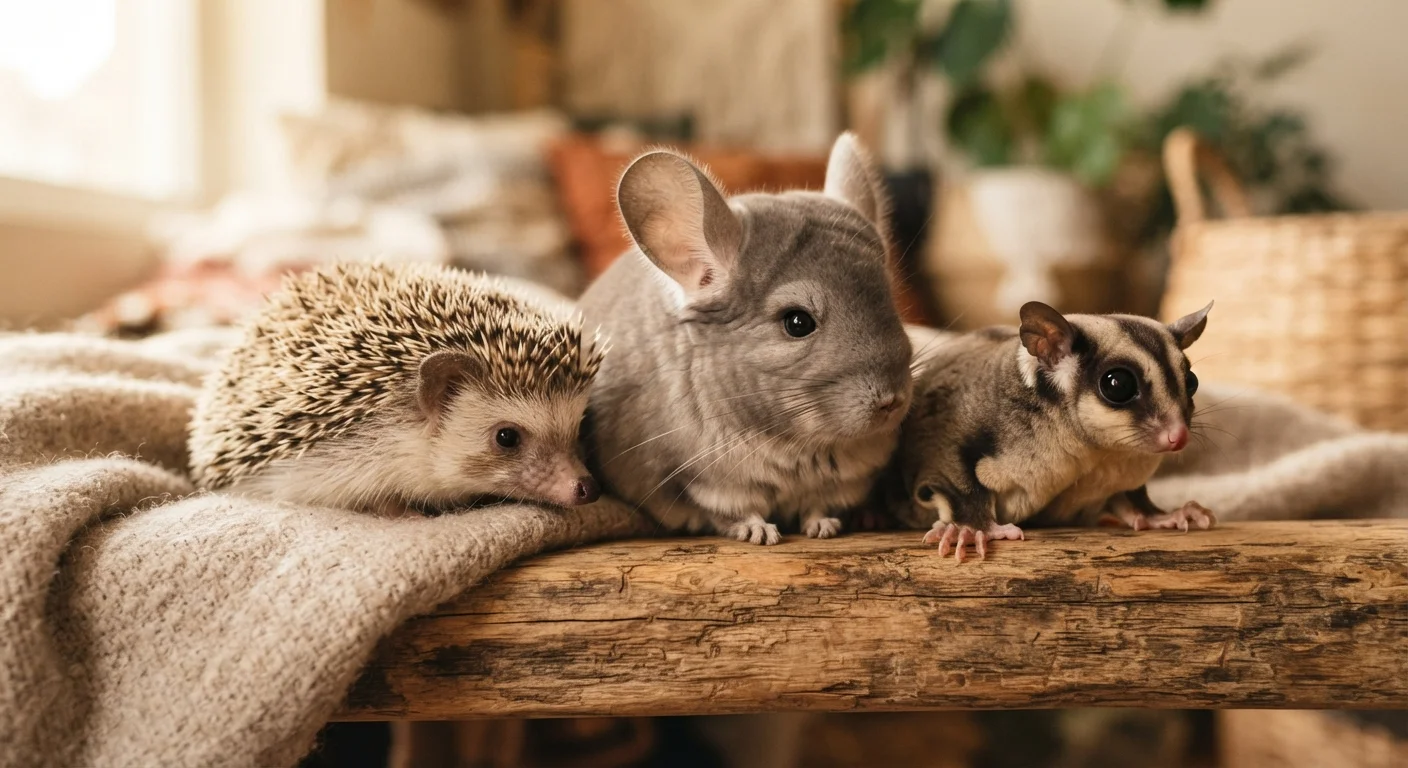
In pet-care contexts, exotic typically refers to any species that hasn't been selectively domesticated over centuries the way dogs and cats have. Hedgehogs, chinchillas, and sugar gliders all fall into this category — they retain many of their wild behavioral patterns, have highly specific environmental needs, and present care challenges that standard pet advice simply doesn't cover.
That distinction matters practically. An exotic animal's stress responses, dietary requirements, and veterinary needs differ sharply from those of a hamster or guinea pig. If you're weighing your first small pet, it's worth comparing these options against more established choices — our look at guinea pigs and rabbits covers two species that tend to be more forgiving for first-time owners.
Exotic pet
Any domestically kept animal that has not been bred over generations for life with humans the way dogs or cats have, and that retains largely wild behavioral and physiological traits.
Crepuscular
Most active during dawn and dusk hours rather than strictly during the day or night. Some hedgehogs show this pattern, though many lean nocturnal.
Patagium
The thin membrane of skin that extends from the wrist to ankle on a sugar glider, allowing it to glide through the air between perches.
Dust bathing
A behavior in chinchillas where they roll in fine, dry powder to absorb excess oils from their extremely dense fur — a required part of their grooming routine.
Exotic animal vet
A veterinarian with additional training and experience in species beyond cats and dogs, such as small mammals, reptiles, or marsupials.
Wobbly Hedgehog Syndrome
A progressive, inherited neurological disease seen in African pygmy hedgehogs that causes increasing muscle weakness and loss of coordination.
Hedgehogs: Solitary, Nocturnal, and Surprisingly Particular
African pygmy hedgehogs (Atelerix albiventris) are the species most commonly kept as pets in the US. They are small — typically 6 to 8 inches long — and their quills, while not barbed or venomous, are stiff enough to discourage casual handling. Bonding with a hedgehog is a slow process built on repetition and calm presence rather than immediate affection.
Key care considerations include:
- Activity schedule: Hedgehogs are crepuscular to nocturnal. They sleep most of the day and become active at night, which may conflict with a typical family schedule. This is a dynamic familiar to owners of other nocturnal small mammals — for a parallel, see our article on why hamsters are nocturnal and what that means for care.
- Temperature sensitivity: Hedgehogs are prone to hibernation attempts in cooler environments, which can be dangerous in captivity. Ambient temperatures between 72°F and 80°F are generally recommended.
- Diet: A high-quality, low-fat insectivore or hedgehog-specific diet supplemented with live insects forms the foundation of good nutrition. Obesity is a common health problem.
- Solitary nature: Hedgehogs are not social animals and should generally be housed alone.
Common health concerns include dental disease, obesity, and a genetic neurological condition called Wobbly Hedgehog Syndrome. Finding a vet experienced with hedgehogs before you bring one home is essential.
Chinchillas: Long-Lived, Dust-Bathing, Temperature-Sensitive
Chinchillas (Chinchilla lanigera) are native to the Andes mountains and have a coat so dense — roughly 60 hairs per follicle — that they cannot get conventionally wet. Instead, they bathe in fine volcanic dust to keep their fur conditioned. This is not optional enrichment; it is a genuine physiological need.
What makes chinchillas genuinely demanding is the combination of their longevity and environmental requirements:
- Lifespan: 10 to 15 years, and sometimes longer. This is a commitment comparable in duration to many dog breeds.
- Temperature: Chinchillas are highly susceptible to heat stroke. Temperatures above 75°F can become dangerous quickly. Air conditioning in warmer months is often a necessity, not a luxury.
- Diet: A high-fiber, low-sugar diet centered on timothy hay is critical. Rich treats — even fruit — can cause digestive upset and dental problems.
- Housing: They need tall, multi-level enclosures with solid flooring (wire floors damage their feet) and ample opportunity to jump and climb.
Give Chinchillas Room to Move Vertically
Chinchillas are natural climbers and jumpers that need multi-level enclosures rather than flat, wide cages. Solid ramps and platforms — not wire shelves — protect their feet. A tall enclosure with varied perching heights will do more for their well-being than almost any other single investment.
Chinchillas can be social with same-sex companions, though introductions must be handled carefully. For a broader look at how housing decisions affect small animal welfare, see our piece on solo vs. paired housing for small animals.
Sugar Gliders: Social, Vocal, and Genuinely Demanding
Sugar gliders (Petaurus breviceps) are small marsupials — not rodents — native to Australia and Indonesia. They have a membrane called a patagium that stretches from wrist to ankle, allowing them to glide between trees. In captivity, that instinct doesn't disappear; they need height, space, and social contact to stay psychologically healthy.
Several care demands set them apart from the other two species:
- Social requirements: Sugar gliders are colony animals. A single glider kept alone is at high risk of depression and self-mutilation. Most exotic animal vets recommend keeping at least two.
- Diet complexity: Replicating a balanced sugar glider diet in captivity is genuinely difficult. Several evidence-informed feeding plans exist in the exotic pet community, but none are as simple as buying a bag of pellets. Nutritional imbalance is a leading cause of illness in captive gliders.
- Vocalizations: They communicate loudly — including at night — with sounds ranging from barking to hissing. Prospective owners in apartments or shared housing should factor this in.
- Bonding pouches: Many owners carry their gliders in a cloth pouch during the day to encourage social bonding, which is time-intensive but behaviorally important.
Sugar Gliders Are Not Impulse Pets
Sugar gliders are frequently sold at mall kiosks and fairs with minimal care information provided. Their social, dietary, and environmental needs are substantial, and inadequate care leads to serious health and behavioral problems. Commit to thorough research from exotic-pet-specific sources — and consult an experienced exotic vet — before making any acquisition decision.
Because of this care complexity, sugar gliders are widely considered unsuitable for first-time exotic pet owners without significant prior research and access to an experienced exotic vet.
Legal Status, Veterinary Access, and What to Do Before You Commit
Before researching enclosures or diet plans, two non-negotiable steps apply to all three species: confirm legality and locate a vet.
Legal status varies significantly by state and even by city. Sugar gliders are banned in Alaska, California, and Hawaii. Hedgehogs are restricted in several states. Laws change, and online information can be outdated — contact your state's fish and wildlife agency or department of agriculture for the current rule in your jurisdiction.
Veterinary access is a practical barrier many prospective owners underestimate. General small-animal vets are not always trained in exotic mammal medicine. You need to identify a clinic with documented experience in your chosen species before an emergency happens, not during one. The Association of Exotic Mammal Veterinarians (AEMV) maintains a directory that can help with this search.
If you decide to move forward, the first week with any small animal has its own learning curve. Our first-week checklist for small pet owners covers enclosure setup, initial diet steps, and vet registration in practical detail.
Owning an exotic pet is a legitimate and rewarding choice for the right person — but it rewards those who research deeply and plan honestly rather than those who act on impulse. The animals covered here are not low-maintenance alternatives to cats or dogs; they are specialized creatures with needs that require real commitment to meet.
This article is for general informational purposes only and does not constitute veterinary advice. Always consult a qualified exotic-animal veterinarian for guidance specific to your pet's health and care needs.