

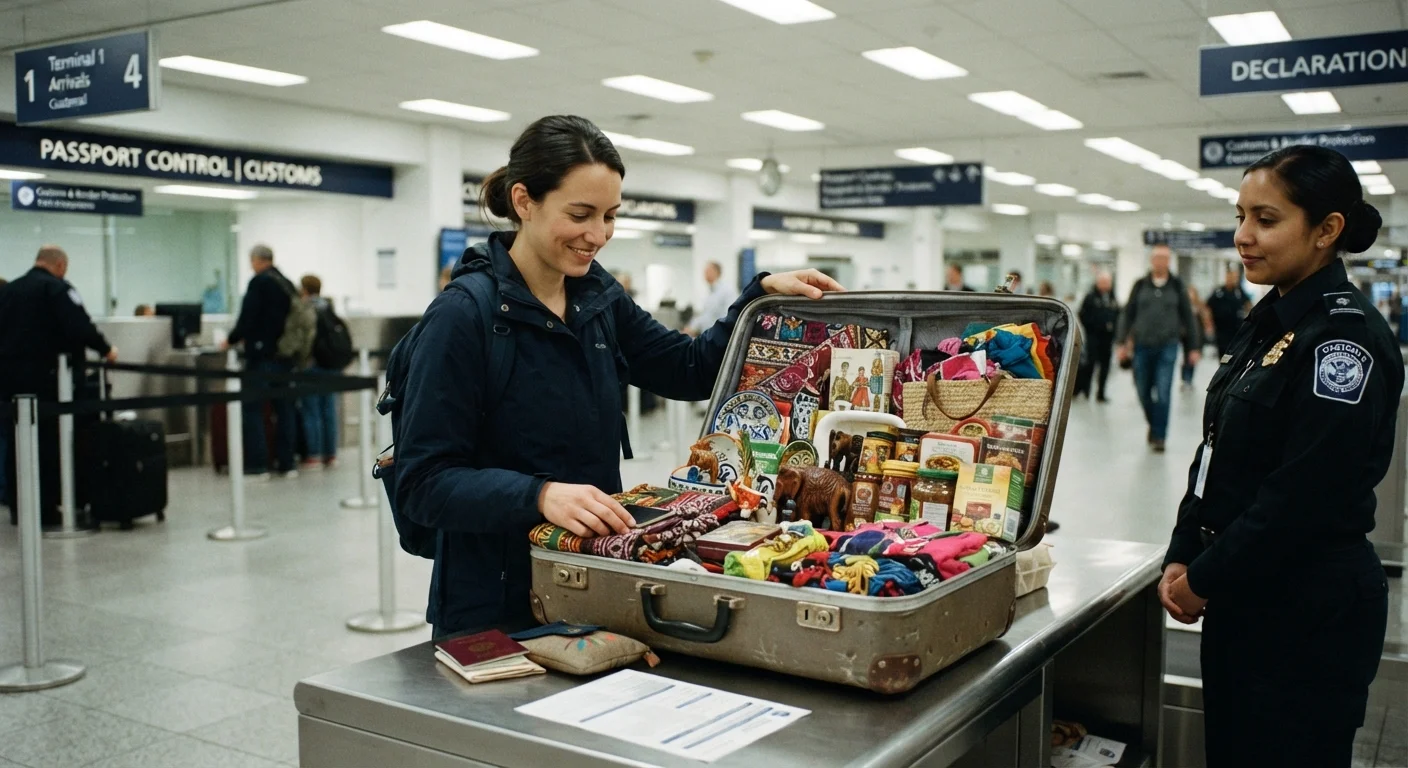
Your Duty-Free Allowance: The Basics
Every US citizen and resident returning from abroad is entitled to a duty-free exemption — the value of goods you can bring home without paying federal import duties. For most international trips, that exemption is $800 per person. If your purchases exceed $800, you'll owe duty only on the amount over the limit, not your entire haul.
A few nuances matter here. The $800 threshold applies to goods for personal or household use — not commercial resale. Family members traveling together can combine exemptions on a joint declaration. And if you've been in a US insular territory like the US Virgin Islands or Guam, your exemption bumps up to $1,600, reflecting special trade status those destinations carry.
Planning what to pack on the way home? Our guide to carry-on vs. checked luggage can help you think through how to fit your purchases without baggage headaches.
Alcohol, Tobacco, and Currency Rules
Specific categories have their own rules on top of the general exemption:
- Alcohol: One liter duty-free per adult (21+). You may bring more, but you'll pay duty and federal excise tax on anything above that. State laws still apply once you land.
- Tobacco: 200 cigarettes (one carton) and 100 cigars duty-free. Cuban cigars — once heavily restricted — are now included within the personal exemption, but commercial quantities remain prohibited.
- Cash and monetary instruments: There is no legal limit on how much currency you can carry into or out of the US, but you must declare amounts of $10,000 or more (or foreign equivalent) to US Customs and Border Protection (CBP). Failure to do so can result in seizure — even if the funds are entirely lawful.
State Alcohol Laws Still Apply
Even if CBP clears your imported alcohol at the federal level, individual state laws govern what you can bring across state lines. Some states restrict quantities transported by individuals, particularly for wine or spirits. Check your home state's regulations if you're carrying more than personal-use quantities.
What You Must Declare — and What's Outright Prohibited
The CBP declaration form (Form 6059B, or its electronic equivalent via the CBP One app or APC kiosks) asks about all items acquired abroad, regardless of value. Declare everything and let the officer determine dutiability. Failing to declare an item — even accidentally — can lead to seizure, fines, or more serious consequences.
Common items that require declaration:
- Gifts, whether for yourself or others
- Goods purchased or acquired abroad (including items used during the trip)
- Alterations or repairs made to items taken abroad
- Business merchandise or samples
- Any food items, including commercially packaged goods
Commonly prohibited or restricted items include:
- Fresh fruits, vegetables, and meats — most raw agricultural products from abroad face strict restrictions to protect US agriculture from pests and disease. Commercially canned or packaged versions are often permitted.
- Endangered species products — items made from ivory, certain reptile skins, coral, or other wildlife protected under CITES are prohibited or require permits.
- Counterfeit goods — fake luxury items can be seized regardless of value.
- Certain medications — some foreign pharmaceuticals aren't approved by the FDA. For more on this, see our article on traveling with prescription medications.
Always verify entry rules for specific items with official CBP resources before you travel. Our pre-departure checklist is a useful place to start building your preparation routine.
Practical Tips for a Smooth Customs Experience
A little advance organization goes a long way at the arrivals hall:
- Keep receipts. CBP officers may ask for proof of purchase value. Having receipts in a single folder — or photographed on your phone — speeds things up considerably.
- Use CBP's Mobile Passport Control or APC kiosks where available. Both can shorten wait times significantly at major US airports.
- Enroll in Global Entry if you travel internationally more than once a year. The program offers expedited customs screening for pre-approved travelers and includes TSA PreCheck.
- When in doubt, declare it. The downside of declaring something that turns out to be exempt is zero. The downside of not declaring a restricted item can be significant.
- Understand the "accompanying" rule. Your duty-free exemption generally applies only to goods physically with you — goods shipped separately are handled differently through import regulations.
For a fuller picture of what documentation to carry when re-entering the US — including proof of citizenship and visa status — see our field guide to travel document requirements.
This article provides general educational information about US customs rules. Regulations change, and individual circumstances vary. Always verify current requirements directly with US Customs and Border Protection (cbp.gov) before traveling.