

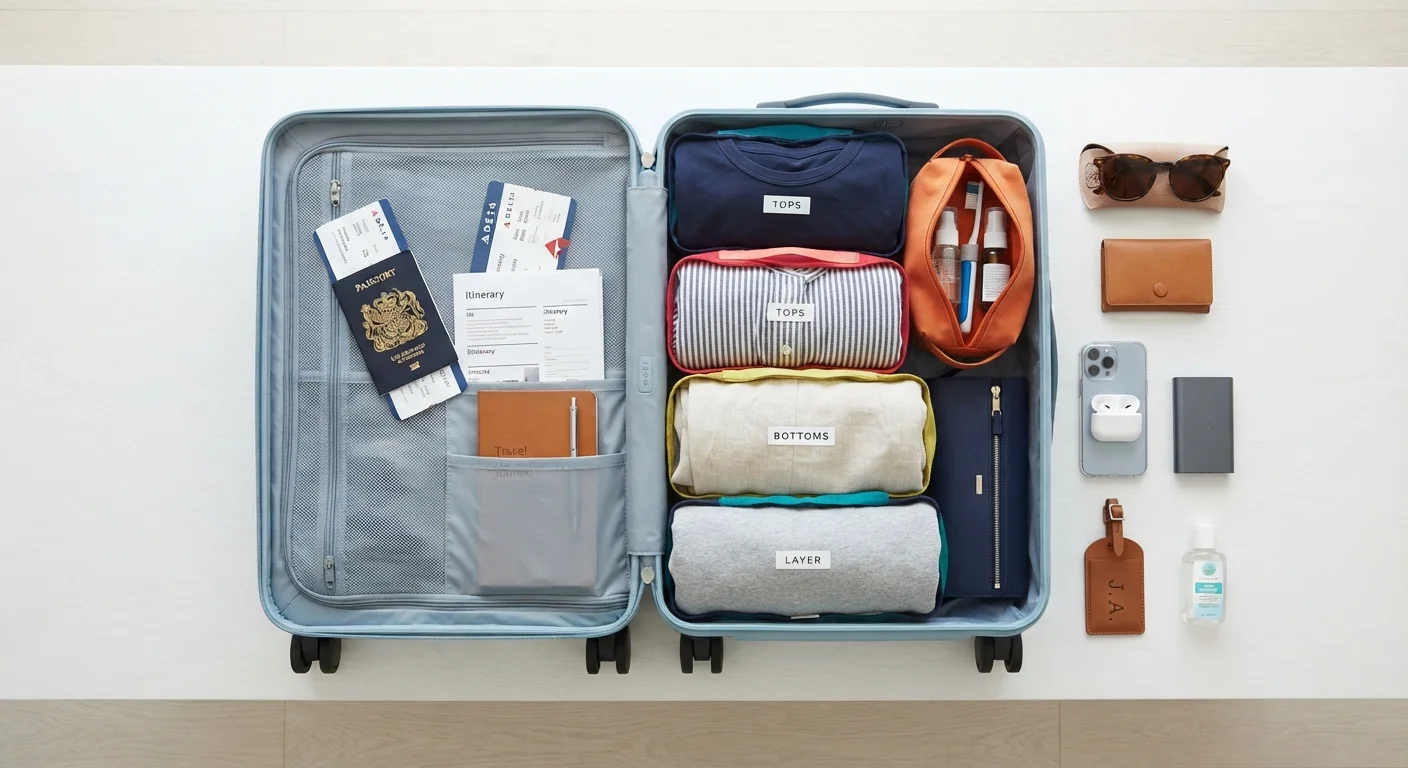
Key Takeaways
- Answer trip logistics questions — length, climate, luggage format — before selecting any items to pack.
- Planning specific outfits rather than individual clothing categories eliminates the extras that quietly add weight.
- Mission-critical items like documents and medications belong in your carry-on, not your checked bag.
- Interchangeable, neutral-toned pieces multiply outfit options without increasing overall pack weight.
- A test pack two to three days before departure prevents pressure-driven overpacking decisions.
Why Your Packing Instincts Are Working Against You
Most travelers pack by instinct — pulling items they think they might need and hoping the zipper cooperates. The predictable result is a bag that's too heavy, crammed with options that never get worn, and a security-line slowdown that could have been entirely avoided.
Experienced travelers approach packing from a different starting point. Instead of beginning with items, they begin with questions: How many days? What's the climate range? Will this bag be checked or carried on? That carry-on versus checked-bag decision shapes every packing choice that follows.
The strategies below aren't hacks or gimmicks — they're structural habits that well-traveled people return to repeatedly, whether they're gearing up for a solo international adventure or a straightforward domestic weekend trip. They work because they address the root causes of overpacking and under-preparation, not just the symptoms.
The Core Practices Experienced Travelers Rely On
Building a smarter packing system starts with one key mindset shift: from quantity-focused thinking to function-focused thinking. Every item in your bag should earn its place with a clear purpose — ideally more than one.
One of the most consistent habits among experienced travelers is planning by outfit rather than by individual item. Instead of packing shirts and pants as loose categories, they mentally assign combinations to specific days or activities. This reveals exactly how many of each type of item they actually need — and eliminates the phantom extras that quietly inflate pack weight.
Another structural shift worth adopting: treating your carry-on or personal item as the mission-critical zone. Medications, travel documents, one change of clothes, and any valuables belong with you in the cabin — not checked. This single habit has spared countless travelers from the real disruption of delayed or lost luggage.
For longer international trips, these habits carry even more weight. More days doesn't mean more clothes when your items are interchangeable across contexts. Many long-haul travelers rely on a handful of clothing pieces for multi-week trips, leaning on neutral tones and quick-dry fabrics that layer naturally across different settings.
One practical way to organize: divide your packing into five clear zones — clothing, toiletries, tech and cables, documents and money, and a day bag. Working zone by zone makes it nearly impossible to forget something important, and it means that when you're searching for your charger at 6 a.m., you know exactly where to look.
The structured practices below take these ideas further.
Plan specific outfits for days or activities, not just broad categories of clothing
Packing generic categories — shirts, pants — invites loose math that inflates your bag. Assigning clothing to actual moments on your itinerary reveals exactly what you need and makes redundancies obvious. Travelers who switch to this approach consistently find they carry fewer items without missing anything they actually use.
Do a deliberate remove-one-third pass after your initial pack
Most bags are overloaded after an intuitive first pack. A second-pass removal targeting items you'd only use in unlikely scenarios consistently brings bags to a more manageable weight without cutting genuine needs. The practice also trains you to distinguish real utility from anxious over-preparation.
Reserve your carry-on or personal item strictly for mission-critical contents
Checked luggage can be delayed, mislaid, or opened at inspection. Keeping medications, travel documents, one change of clothes, and valuables in your cabin bag ensures your trip can continue even if your checked bag doesn't arrive on schedule. This is one of the most universally practiced habits among frequent travelers.
Build your travel wardrobe around interchangeable, neutral-toned pieces
When every top works with every bottom, your effective wardrobe multiplies without adding physical weight. Neutral tones pack without showing visible wear, work across casual and slightly dressier occasions, and photograph versatilely across destinations. This principle pays off most on longer trips where laundry access varies unpredictably.
Test-pack two to three days before departure, not the night before
Last-minute packing creates time pressure that drives poor decisions: grabbing extras just in case and skipping the editing pass entirely. Packing early lets you live with your choices, spot missing items, and remove what you won't realistically use — all without the panic that comes with an imminent departure.
Include a packable day bag stored inside your main luggage
Carrying your full bag to a market, museum, or beach is impractical and marks you as conspicuous in crowded areas. A lightweight packable tote or daypack — compressed inside your main bag — gives you an everyday carry for outings without adding meaningful weight to your overall kit.
Before You Zip Up: Actions That Pay Off Immediately
Good packing habits are built one trip at a time, but you don't have to wait for trial and error to find what works. These concrete steps can make an immediate difference — not just in how your next bag comes together, but in how it performs across every leg of your journey.
A well-packed bag sets the tone for everything that follows. Pair these habits with a flexible, pressure-tested itinerary and you'll be ready to adapt — not scramble — when travel catches you off-guard. Planning a longer overseas trip? The guide on packing for long international travel goes even deeper on managing multi-week needs without overloading your bag.