
The Appalachian Trail Corridor: Understanding What Draws Millions of Hikers Each Year

Key Takeaways
- The AT passes through 14 states and takes most thru-hikers five to seven months to complete.
- Only about 25% of people who attempt a thru-hike complete the full trail in a single season.
- The trail is open to day hikers, section hikers, and thru-hikers, offering flexible ways to experience it.
- Shelters, water sources, and resupply towns are spaced along the route to support multi-day travel.
- Permits are required in some sections, including the Smokies and Baxter State Park.
The Appalachian Trail Corridor
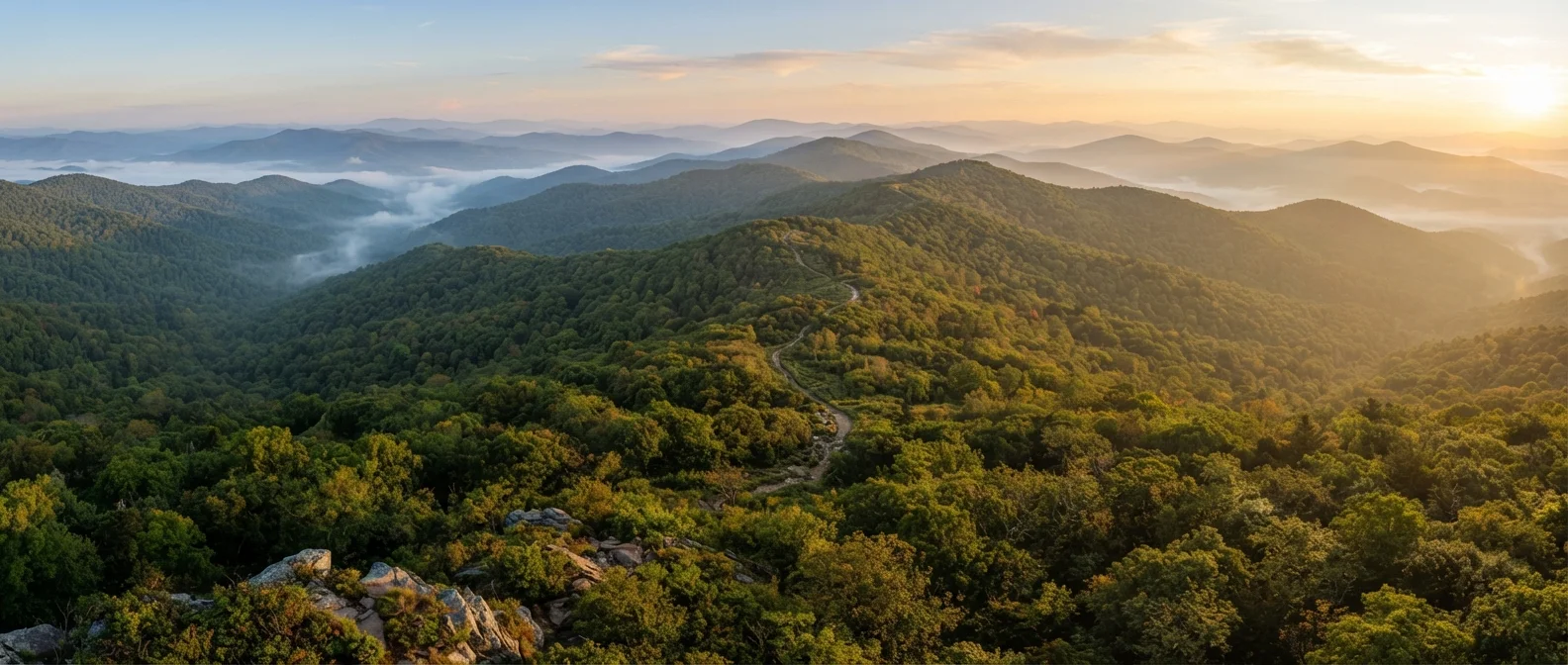
The Appalachian Trail (AT) is a continuous footpath stretching roughly 2,190 miles from Springer Mountain in Georgia to Mount Katahdin in Maine, passing through 14 eastern states. The 'corridor' refers not just to the trail itself, but to the protected strip of land — typically 1,000 feet wide — managed by the National Park Service and maintained by a network of volunteer clubs. This protected zone preserves natural habitat, shields the trail from development, and defines the experience hikers encounter along the route.
The corridor is federally protected under the National Trails System Act of 1968, which authorized land acquisition to create a buffer around the trail and ensure its long-term preservation.
What Makes the AT a Unique American Experience
Few trails in the world match the cultural weight of the Appalachian Trail. Conceived in the 1920s by forester Benton MacKaye as a refuge from urban life, the AT became a fully connected footpath in 1937 and has since grown into a living institution. The Appalachian Trail Conservancy estimates that roughly three million people visit some portion of the trail each year, ranging from afternoon strollers to dedicated thru-hikers carrying everything they own on their backs.
The appeal is layered. At its simplest, the AT is a well-marked, well-maintained trail through some of the eastern US's most beautiful forest, ridge, and mountain scenery. At its most complex, it's a community — with a shared culture of trail names, shelter logbooks, and the quiet camaraderie of people who've all chosen to walk the same ancient corridor through the Appalachians.
3M+
Annual trail visitors
The Appalachian Trail Conservancy estimates more than three million people visit some portion of the AT each year.
~25%
Thru-hike completion rate
Roughly one in four people who attempt a thru-hike complete the entire trail in a single season, according to trail conservancy estimates.
2,190+
Miles of continuous trail
The official certified length of the Appalachian Trail, spanning 14 eastern states from Georgia to Maine.
The Corridor: More Than Just the Path Underfoot
The term trail corridor is worth understanding before you go. The AT is not simply a dirt path — it's a narrow strip of protected land, typically around 1,000 feet wide, managed cooperatively by the National Park Service, the Appalachian Trail Conservancy, and more than 30 regional trail maintaining clubs. This corridor shields the trail from encroaching development and preserves the ecosystems hikers pass through.
Within that corridor, you'll encounter a remarkable range of terrain: the granite balds of the Southern Appalachians, the dense hardwood forests of Virginia's Shenandoah Valley, the rocky ridges of Pennsylvania, and the boreal spruce forests of northern New England. The variety is one reason section hikers return year after year — each region genuinely feels like a different trail.
The AT Is Managed Cooperatively
No single agency runs the entire Appalachian Trail. The National Park Service holds overall stewardship responsibility, but the Appalachian Trail Conservancy coordinates trail management, and more than 30 regional maintaining clubs handle day-to-day upkeep of specific sections. This volunteer-heavy model is part of what keeps the trail well-maintained despite its enormous length.
Ways to Experience the AT: Thru-Hiking, Section Hiking, and Day Trips
One of the AT's great strengths is its flexibility. You don't need five months and a leave of absence to experience it meaningfully. Here's how most people engage with it:
- Thru-hiking: Completing all 2,190+ miles in a single continuous journey, typically taking five to seven months. The majority of thru-hikers travel northbound (NOBO), starting in Georgia and finishing at Maine's Mount Katahdin.
- Section hiking: Tackling the trail in segments over multiple trips — sometimes over years. Many hikers complete the full AT this way without ever committing to a single long journey.
- Day hiking: Visiting accessible trailheads for a few hours. Popular entry points include Harpers Ferry, WV; Shenandoah National Park, VA; and the Delaware Water Gap, NJ.
If you're planning a broader journey through the region, the AT's southern end pairs naturally with a road trip through the region — the Blue Ridge Parkway, for instance, runs parallel to sections of the trail. See our guide to a multi-state Southern road trip for route ideas that complement a trail visit.
Start Small Before Committing to a Thru-Hike
If you're drawn to the idea of a long AT journey but haven't done much backpacking, start with two or three overnight section hikes before planning anything longer. This lets you test your gear, pace, and comfort level under real trail conditions. Many experienced AT hikers say a shakedown weekend in the Smokies or Shenandoah revealed crucial adjustments before a longer trip.
Practical Planning: Resupply, Shelters, and Permits
The AT's infrastructure is remarkably well developed for a wilderness trail. Approximately 260 three-sided wooden shelters (called lean-tos in New England) are spaced along the route, most within a day's hike of each other. Water sources — springs, streams, and piped sources — are marked on trail apps like Guthook/FarOut, which most hikers now rely on.
Resupply is usually handled by mailing food boxes to small towns near the trail — places like Damascus, VA; Hot Springs, NC; and Monson, ME have built entire economies around supporting AT hikers. Post offices, hostels, outfitters, and diners in these towns know the drill.
Permit requirements vary. Great Smoky Mountains National Park requires a permit and shelter reservation. Baxter State Park in Maine has its own access rules and limits the number of hikers who can summit Katahdin each day. Check directly with each managing agency well before your planned dates — rules evolve seasonally.
For hikers interested in comparing the AT's eastern woodland character with the high-desert and rainforest alternatives out west, our comparison of Mountain West and Pacific Northwest outdoor regions offers useful perspective.