

Key Takeaways
- Four fluids - engine oil, coolant, brake fluid, and transmission fluid - each require different checking methods and intervals.
- Color and consistency reveal as much as level; dark, cloudy, or milky fluid signals a problem beyond a simple top-off.
- Most checks can be done cold or warm, but knowing which matters prevents inaccurate readings.
- Low or contaminated brake fluid warrants immediate attention - do not delay a professional inspection.
- Keeping a simple fluid log helps you spot slow leaks or unusual consumption patterns early.
What you will need
Why Fluid Checks Matter Beyond Engine Oil
Most drivers know to change their engine oil - it's the most talked-about maintenance task on any vehicle. But four key fluids govern systems ranging from engine cooling to stopping power, and neglecting any of them can cause damage that far outpaces the cost of a simple check. The good news: inspecting all four takes under 30 minutes and requires no special tools beyond what you likely have in a kitchen drawer.
If you're new to vehicle ownership, this task pairs well with understanding your vehicle's broader service timeline. Our guide to what each service interval means explains how fluid checks fit into a full maintenance calendar - and how to avoid overspending on services you don't yet need.
What you will need
What You'll Need
No specialized equipment is required for these checks. The items below are all you need to perform a thorough inspection safely and accurately.
Owner's Manual
Identifies the exact location of each fluid reservoir and specifies the correct fluid type and grade for your vehicle.
Clean Lint-Free Rags
Used to wipe dipsticks clean before and after reading to get an accurate level measurement.
Flashlight or Phone Torch
Illuminates the engine bay so you can clearly read dipstick markings and inspect reservoir levels.
Nitrile Gloves
Protects skin from contact with engine oil, coolant, and brake fluid, all of which can irritate or stain.
Step-by-Step Fluid Inspection
Work through each fluid in sequence. If a level is low, consult your owner's manual for the correct specification before adding anything - using the wrong fluid type can cause more harm than running slightly low.
Park safely and prepare your workspace
Turn off the engine and park on a level surface. A sloped driveway can give a false low or high reading on dipsticks. For oil and transmission fluid, allow the engine to sit for 5-10 minutes so fluids settle back into their reservoirs. For coolant and brake fluid - both checked via translucent reservoirs - the engine can be checked cold or slightly warm.
Check engine oil level and condition
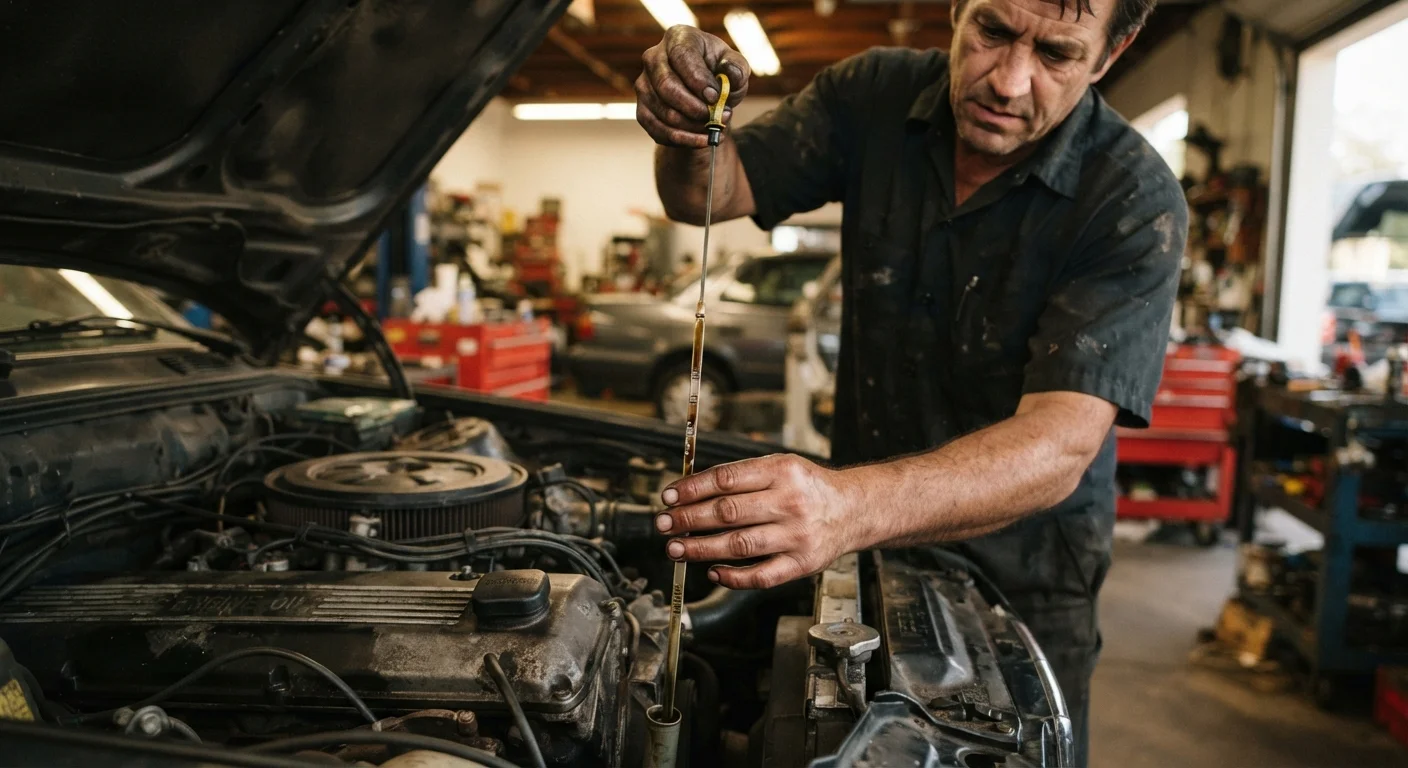
Locate the oil dipstick - typically marked with a bright yellow or orange handle. Pull it out, wipe it clean, reinsert it fully, then withdraw it again. The oil level should sit between the two marks (often labeled MIN and MAX or indicated by a crosshatch zone). Equally important is the oil's color: amber to light brown is normal; very dark or black suggests it's due for a change; milky or grey can indicate coolant mixing with oil, a serious issue requiring immediate professional assessment.
Inspect the coolant (antifreeze) level
Do not open the radiator cap. Instead, locate the translucent plastic coolant overflow reservoir, usually near the radiator. Check that the fluid level sits between the MIN and MAX lines marked on the side. Coolant should be bright green, orange, or pink depending on the type - never brown, rusty, or cloudy. Discoloration suggests contamination or degraded inhibitors, and the system may need a flush.
Check brake fluid level and color
The brake fluid reservoir is a small translucent plastic container mounted near the firewall on the driver's side, typically labeled with a brake icon. Without opening it, verify the level sits between MIN and MAX. Brake fluid should be clear to light yellow. Dark brown fluid indicates moisture absorption - brake fluid is hygroscopic and absorbs water over time, which lowers its boiling point and reduces braking performance. See the full picture of brake health for what else to monitor in this system.
Check transmission fluid (if applicable)
Many automatic transmissions have a dipstick similar to the oil dipstick - consult your owner's manual for its location, as some modern vehicles require a dealer-level scan tool to check transmission fluid level. If a dipstick is present, the engine typically needs to be warm and running, with the transmission in Park, for an accurate reading. Color matters here too: pink to light red is healthy; brown or burnt-smelling fluid signals degradation; foamy or dark red may indicate a leak or water contamination. Manual transmissions generally don't have a dipstick and require a professional to inspect fluid levels through a fill plug.
Brake Fluid Is a Safety-Critical System
Unlike other fluids, brake fluid directly controls your ability to stop. If the reservoir is consistently low, fluid appears dark brown or milky, or the brake pedal feels soft or spongy, have the system inspected by a qualified mechanic before driving further. Do not simply top off and continue if an underlying leak or moisture contamination is suspected.
Never Open a Hot Coolant Reservoir Cap
Coolant systems operate under pressure. Opening the radiator cap or overflow reservoir cap on a hot engine can cause scalding fluid to erupt suddenly. Always wait at least 30 minutes after driving before checking coolant, and use a rag over the cap when opening as an added precaution.
Interpreting What You Find and What to Do Next
A fluid check only pays off if you act on what you find. Low levels with no visible leaks on the ground may indicate internal consumption - something to flag to a mechanic at your next service. Discolored or contaminated fluids generally need a flush and refill, not just a top-off.
If a dashboard warning light accompanies any of your findings, address it promptly. Our plain-language guide to dashboard warning lights explains what each symbol means and how urgently to respond.
Keep a Simple Fluid Log
Jot down fluid levels and dates in a notes app or a small notebook kept in the glovebox. If you're adding oil every 500 miles or topping up coolant repeatedly, that pattern points to a leak or internal issue - information a mechanic needs to diagnose the root cause efficiently.
Building fluid checks into a seasonal habit is one of the most effective low-effort strategies for long-term reliability. The seasonal car maintenance guide covers what else to inspect before winter and summer driving conditions arrive. And if you're thinking about long-term vehicle value, consistent fluid maintenance is one of the habits covered in routine maintenance that protects resale value.