

| OBD-II Standard Required Since | 1996 (all US-market cars) (US Environmental Protection Agency) |
| Red Light Meaning | Immediate or urgent action required |
| Amber/Yellow Light Meaning | Attention needed soon; monitor closely |
| TPMS Mandate in New US Vehicles | Required since 2008 model year (National Highway Traffic Safety Administration (NHTSA)) |
| Flashing Check Engine Light | Active misfire - reduce speed, inspect promptly |
| Best Reference for Your Specific Lights | Vehicle owner's manual |
How Dashboard Warning Lights Work
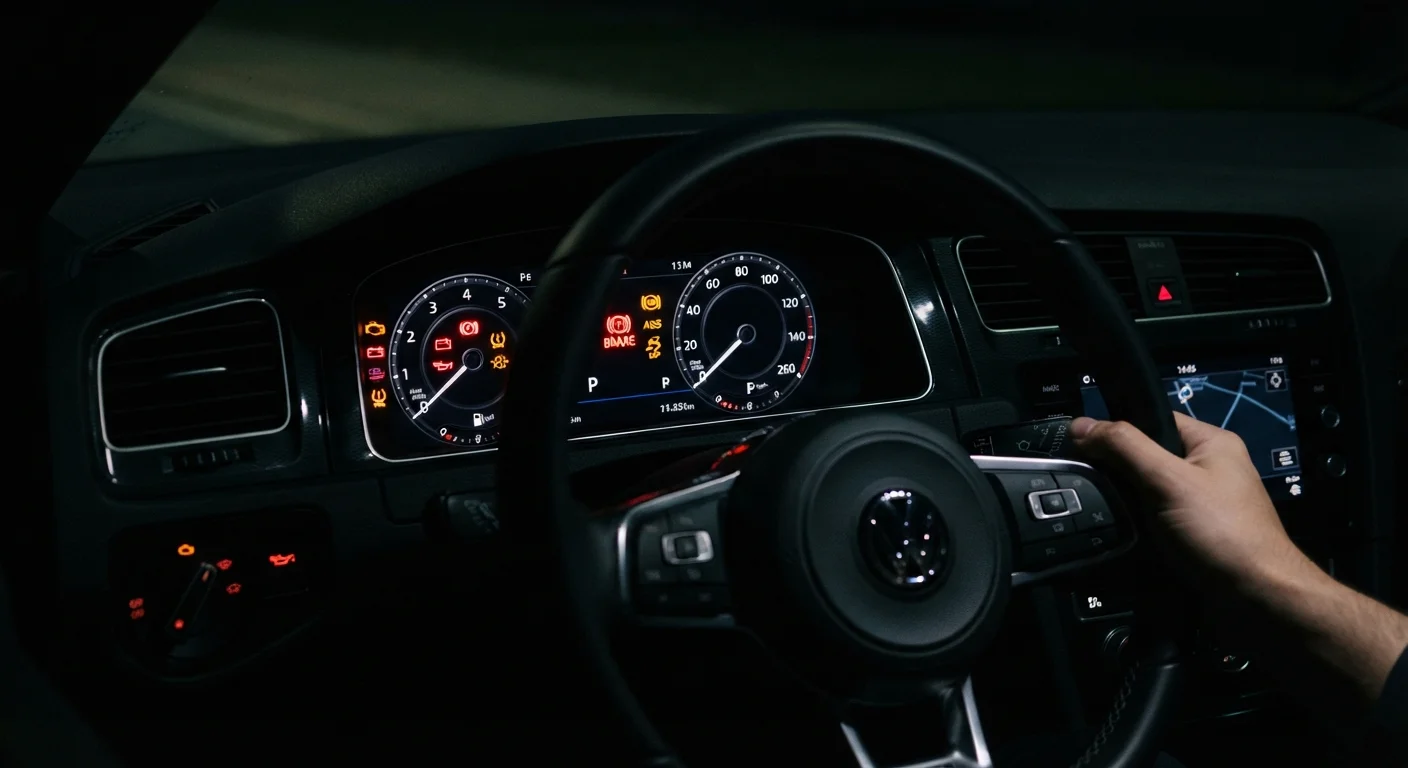
Modern vehicles use an onboard diagnostics system (known as OBD-II in cars made after 1996) to monitor dozens of sensors simultaneously. When a sensor reading falls outside a safe range, the system triggers a warning light on your instrument cluster. These lights are color-coded by urgency: red signals a serious or potentially dangerous condition requiring immediate attention, amber/yellow indicates a problem that needs attention soon but is not yet critical, and green or blue lights are simply informational - confirming a system is active.
No two automakers use identical icons, so your owner's manual remains the definitive reference for your specific vehicle. That said, a core set of symbols is standardized across most US-market cars, and understanding them helps you respond appropriately rather than either panicking or ignoring something serious.
| OBD-II Standard Required Since | 1996 (all US-market cars) (US Environmental Protection Agency) |
| Red Light Meaning | Immediate or urgent action required |
| Amber/Yellow Light Meaning | Attention needed soon; monitor closely |
| TPMS Mandate in New US Vehicles | Required since 2008 model year (National Highway Traffic Safety Administration (NHTSA)) |
| Flashing Check Engine Light | Active misfire - reduce speed, inspect promptly |
| Best Reference for Your Specific Lights | Vehicle owner's manual |
The Most Common Warning Lights Explained
Below are the warning lights drivers encounter most often, what they mean, and how urgently you should respond.
Check Engine (Amber Engine Outline)
This is arguably the most misunderstood light on any dashboard. It can signal anything from a loose gas cap to a misfiring cylinder. A steady check engine light generally means you can drive to a mechanic within a day or two for a diagnostic scan. A flashing check engine light indicates an active misfire that can damage your catalytic converter - reduce speed and have the vehicle inspected as soon as possible.
Oil Pressure Warning (Red Oil Can)
This light means oil pressure has dropped dangerously low, not necessarily that you're simply low on oil. Pull over safely and turn off the engine immediately. Continuing to drive can cause severe, often irreversible engine damage within minutes. Check the oil level; if it's adequate, do not restart the engine without a mechanic's assessment.
Battery / Charging System (Red Battery Outline)
When this appears while driving, the charging system - typically the alternator - is not supplying power to the battery. Your vehicle is running on reserve battery power only. Minimize electrical loads (turn off AC, radio) and drive directly to a service facility. The car may stall if the battery depletes.
Temperature Warning (Red Thermometer in Liquid)
Your engine coolant is overheating. Pull over safely, turn off the engine, and allow it to cool before opening the hood. Never open the radiator cap on a hot engine. Low coolant, a failing water pump, or a blocked radiator are common culprits. For a deeper look at fluid management, see our guide to fluid checks every driver should know.
TPMS (Amber Exclamation Point in Tire Cross-Section)
The Tire Pressure Monitoring System light means one or more tires has dropped significantly below the recommended PSI. Adjust pressure as soon as practical - underinflated tires affect handling, braking distance, and fuel economy. Our article on tire pressure, PSI, and TPMS covers the topic in full detail.
Brake Warning (Red Exclamation Point in Circle)
First, check that your parking brake is fully released. If the light remains on, brake fluid may be low or there is a fault in the hydraulic system. Either way, have the brakes inspected before driving further - this is not a light to defer.
OBD-II
On-Board Diagnostics II - a standardized system used in US vehicles since 1996 that monitors engine and emissions-related sensors and stores fault codes mechanics can read with a scan tool.
TPMS
Tire Pressure Monitoring System - a sensor-based system that alerts the driver when one or more tires drops significantly below the recommended inflation level.
Catalytic Converter
An emissions control device in the exhaust system that converts harmful combustion byproducts into less harmful gases. Prolonged engine misfires can overheat and damage this component.
Oil Pressure
The force at which engine oil circulates through lubrication passages. Dangerously low oil pressure means critical engine parts are not receiving adequate lubrication, which can cause rapid, severe damage.
Alternator
A generator driven by the engine that recharges the battery and powers the vehicle's electrical systems while the engine is running. A failing alternator triggers the battery warning light.
When to Stop Immediately vs. When to Schedule a Visit
Not every warning light demands you pull to the shoulder. The table below summarizes the appropriate response level for the lights described above.
| Light | Color | Response |
|---|---|---|
| Oil Pressure | Red | Stop immediately, engine off |
| Engine Temperature | Red | Stop immediately, engine off |
| Battery / Charging | Red | Drive directly to a shop; minimize electrics |
| Brake Warning | Red | Check parking brake; if still on, stop driving |
| Check Engine (flashing) | Amber | Reduce speed; inspect promptly |
| Check Engine (steady) | Amber | Schedule diagnostic scan within 1-2 days |
| TPMS | Amber | Adjust tire pressure at next safe opportunity |
If you're ever unsure about a light you haven't seen before, consulting your owner's manual or a qualified mechanic is always the right move. Ignoring warning lights - even amber ones - can escalate minor issues into costly repairs. To understand how warning-light follow-up fits into a broader vehicle care routine, our car maintenance schedule guide provides useful context.
Your Owner's Manual Is the Authority
Icon shapes and colors can vary between automakers and model years. Some manufacturers use unique symbols not covered by any general guide. Always cross-reference an unfamiliar light with your vehicle's owner's manual before drawing conclusions. If you've misplaced your manual, most automakers provide digital versions on their official websites.