

Key Takeaways
- A documented service history can meaningfully increase a vehicle's resale or trade-in value.
- Maintenance records are often required to support warranty and extended service contract claims.
- Consistent logging helps you spot patterns, catch recurring problems early, and avoid duplicate work.
- Digital apps and simple paper notebooks are both effective - consistency matters more than format.
- Keeping records is especially important for high-mileage vehicles where service history tells the whole story.
More Than a Reminder System
Most drivers think of a maintenance log - if they think about it at all - as a basic reminder tool: a nudge to change the oil every few months. In reality, a consistent service record is one of the most useful documents tied to vehicle ownership, affecting resale value, warranty protection, and your ability to make informed repair decisions.
The habit is straightforward to start and nearly effortless to maintain. The payoff, however, is disproportionately large. Whether you're a new driver building good habits from day one or a long-term owner managing an aging car, understanding why records matter changes how you approach the task entirely. If you're just getting started, our guide for new drivers covers the foundational maintenance habits worth logging from the beginning.
Best Practices for Keeping a Maintenance Log
A useful log isn't about perfection - it's about consistency. The following practices will help you build a record that's genuinely informative, not just a stack of receipts in a glove compartment.
Record every service event at the time it happens, not weeks later.
Memory fades quickly, and retroactive guessing undermines the log's credibility. A record entered the same day the work is done is far more useful when you need to reference it months or years later.
Include the odometer reading with every entry - not just the date.
Many maintenance intervals are mileage-based, not calendar-based. Without odometer readings, it's difficult to know when the next service is actually due or to demonstrate compliance with manufacturer schedules.
Keep physical copies of shop invoices alongside your log entries.
Your own notes are useful, but a printed invoice from a licensed shop carries more weight with warranty administrators, buyers, and insurers because it includes the technician's notes and part numbers.
Note any symptoms or concerns observed - not just completed work.
Logging a noise, vibration, or warning light - even if it wasn't addressed that day - creates a timeline that helps mechanics diagnose recurring issues and rules out unrelated causes.
Review your log at every fuel fill-up or at least monthly.
A log you never look at can't prompt action. A quick monthly glance lets you anticipate upcoming intervals, budget for larger services, and catch any gaps in your recording habit.
How Records Affect Resale Value and Warranty Claims
When it comes time to sell or trade in your vehicle, a documented service history signals to buyers and dealers that the car has been cared for responsibly. This matters because it reduces uncertainty - one of the biggest factors that drives down used car prices. A vehicle with verifiable oil changes, fluid top-ups, and scheduled inspections is simply a less risky purchase than an identical car with no paper trail.
Up to $500
Potential resale value added by documented service history
Industry observers and used-car appraisers commonly note that verifiable maintenance records can increase a vehicle's private-sale price, with estimates varying based on vehicle age and condition.
1 in 3
Used-car buyers who cite service history as a key purchase factor
Consumer surveys on used-vehicle purchases consistently show that documented maintenance history ranks among the top considerations for private buyers evaluating a used car.
Warranty protection is another area where records pay off directly. Manufacturers and extended service contract providers can - and sometimes do - deny claims when the owner cannot demonstrate that required maintenance was performed. A clear log eliminates that vulnerability.
For older vehicles, the stakes are even higher. As we cover in our article on maintaining high-mileage vehicles, service history becomes the primary evidence of how well a car has been treated past the 100,000-mile mark.
Digital Backup Is Worth the Two Minutes
If you prefer a paper logbook, photograph each completed page and email it to yourself or save it to cloud storage. Paper can be lost in a vehicle sale, a move, or a glove-compartment cleanout. A digital backup ensures your history survives no matter what happens to the physical copy.
Start Simple, Stay Consistent
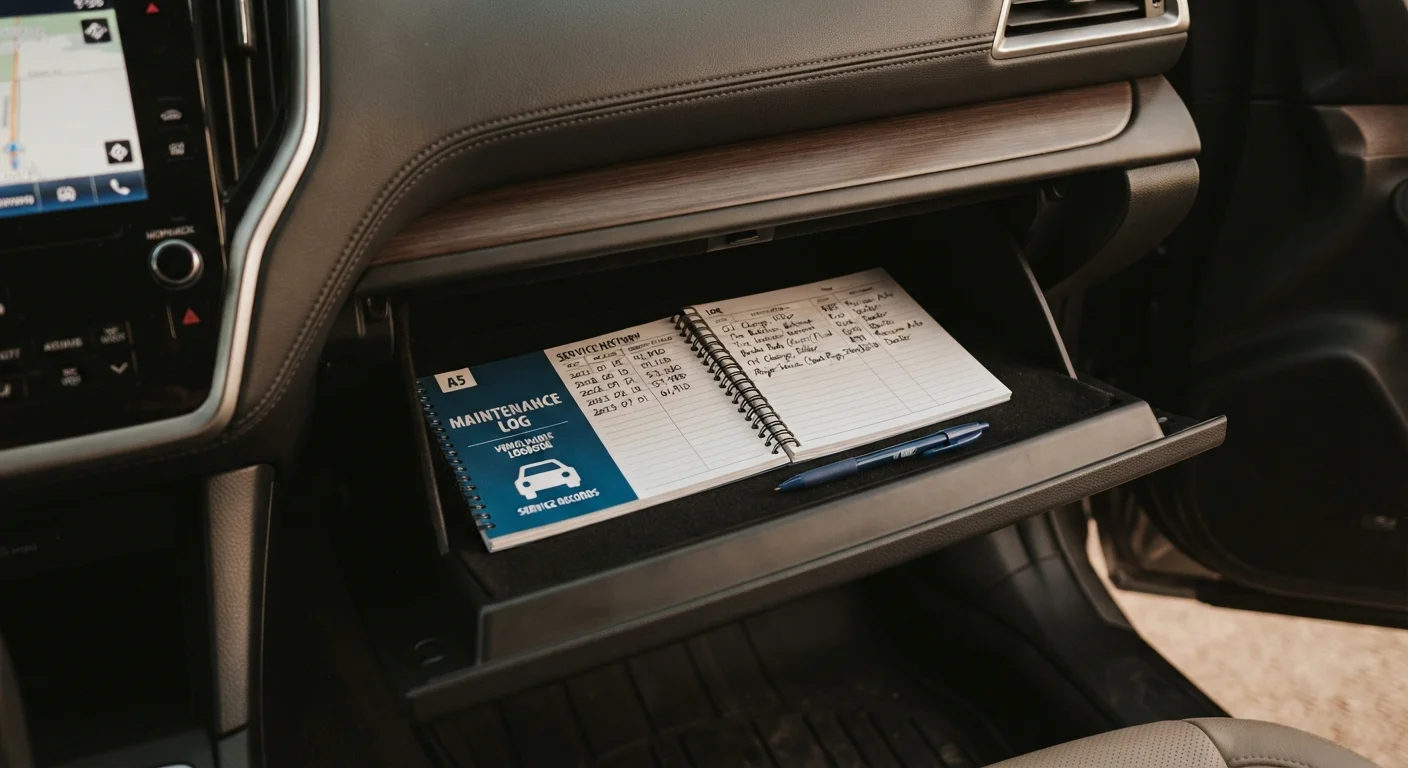
The format of your log matters far less than the habit of maintaining it. A dedicated notebook in the glove box, a spreadsheet saved to cloud storage, or a purpose-built mobile app all work - as long as entries are made promptly after each service.
At minimum, record the date, current odometer reading, the work performed, who did it (you or a shop), and any parts replaced. If you paid for the service, attach or scan the receipt. That combination covers nearly every situation where a record might be needed.
For drivers managing vehicles with significant mileage, maintaining a thorough log also informs the ongoing cost-benefit calculation of continued ownership. Our article on the maintenance math for high-mileage vehicles explains how service history factors into that decision. And for a broader view of which scheduled tasks do the most to protect your investment, see our guide on routine maintenance and long-term vehicle value.