

Key Takeaways
- Clearing out dead plant material before frost reduces overwintering pests and disease pressure.
- Amending soil in fall gives organic matter time to break down before spring planting.
- Mulching garden beds before the ground freezes protects roots and moderates soil temperature swings.
- Tender bulbs and container plants need to be moved or stored before the first hard freeze.
- Fall is the best window to plant spring-blooming bulbs and perform lawn overseeding.
Summary
18 items · 1.5-3 hours over one weekend
Why Fall Garden Prep Matters More Than Spring Cleanup
It's tempting to think of fall as the garden's off-season - a time to wind down and walk away. In reality, what you do between late September and your region's first hard frost has a direct impact on how well your garden bounces back the following year. Diseases overwinter in debris, weed seeds ripen in neglected beds, and tender roots exposed to freeze-thaw cycles can suffer irreversible damage.
Think of fall prep as an investment with a guaranteed spring dividend. Cleared beds, amended soil, and properly stored plants dramatically reduce the workload when the growing season returns - and they give your landscape a head start that no amount of spring scrambling can replicate. For a broader look at how seasonal timing affects both your lawn and garden, see our year-round lawn and garden maintenance overview.
Don't Compost Diseased Plant Material
Stems or foliage showing signs of fungal blight, powdery mildew, or rot should be bagged and discarded with household waste rather than added to a home compost pile. Most home compost heaps do not sustain temperatures high enough to kill pathogens reliably, meaning you risk re-introducing disease to next year's garden.
Wait for True Soil Cooling Before Mulching
Applying mulch while the soil is still warm traps heat and can encourage rodents to tunnel in for winter nesting near plant crowns. Check nighttime lows - once they consistently dip into the 30s °F, your soil is ready for its winter blanket.
Tools You'll Need
Before working through the checklist below, gather what you'll need for a productive session. Having everything on hand prevents trips back to the garage mid-task and keeps your momentum going.
Garden fork or spade
Turning compost into beds and digging up tender bulbs for winter storage.
Soil pH test kit
Testing bed acidity so you can plan lime or sulfur amendments over winter.
Mulch (shredded bark, straw, or shredded leaves)
Insulating perennial roots and moderating soil temperature through freeze-thaw cycles.
Garden hose and pump sprayer
Giving beds a deep final watering before lines are drained for winter.
Pruning shears and loppers
Cutting back spent perennial stems and removing dead or diseased woody growth.
Mesh bags or cardboard boxes with dry peat
Storing cured tender bulbs at the correct humidity level through winter.
The Pre-Frost Checklist
Work through these groups in order - clearing before amending, amending before mulching. You don't need to tackle everything in a single afternoon; spread the work across a weekend if needed. Items marked must are non-negotiable for plant health and winter safety. Should items deliver strong returns for modest extra effort. Nice-to-have tasks are worth doing if time permits.
Clean-Up & Clearing
Soil Health & Amendments
Mulching & Bed Protection
Bulbs, Tender Plants & Containers
Tools, Irrigation & Infrastructure
Protect Outdoor Pipes Before Hard Freeze
A burst outdoor pipe or cracked irrigation line is one of the most preventable fall garden expenses. Drain all garden hoses, shut off the interior supply valves for exterior faucets, and blow out in-ground irrigation systems before your first forecasted hard freeze (28°F or below). Once a pipe cracks, repair costs can be significant.
Getting the Most From Your Mulch Layer
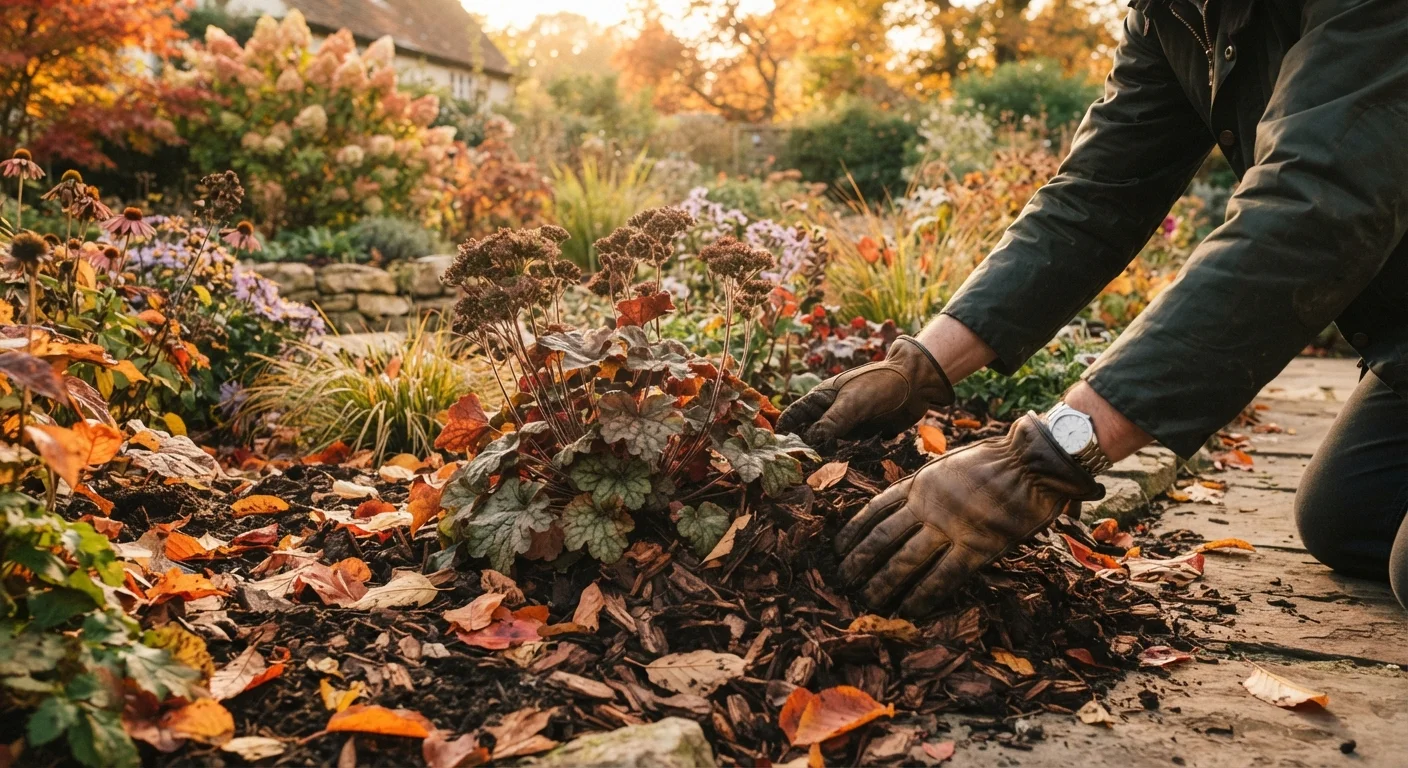
Mulching is arguably the single highest-return task on this entire checklist. A proper 2-4 inch layer over perennial beds and around woody plants reduces soil temperature swings, retains residual moisture, and suppresses early-spring weed germination - all without any effort from you once it's down.
Shredded bark, pine straw, and shredded autumn leaves are all solid choices. Avoid piling mulch directly against plant stems or trunk flares, which can trap moisture and promote rot. For a deep dive into material types, application depths, and timing nuances, our guide on mulching for garden beds covers the full picture.
If you have leftover shredded leaves after mulching, add them to your compost pile in alternating layers with green material - they'll break down into a rich amendment ready for use next planting season.