

Key Takeaways
- Aerating in spring or fall reduces soil compaction and improves nutrient absorption.
- Fall overseeding is the single most effective way to thicken a thin lawn.
- Mowing height directly affects weed pressure and drought resistance.
- Watering deeply and infrequently encourages deeper, more resilient root growth.
- Winter is the right time to test soil, sharpen mower blades, and plan spring improvements.
Why Seasonal Lawn Care Matters
Grass is a living system that responds to temperature, moisture, and soil conditions - all of which shift dramatically across the calendar year. A maintenance routine that ignores these shifts often produces a lawn that looks acceptable in May but struggles through July and turns patchy by October.
Understanding what your grass needs at each stage of the growing cycle lets you work with the plant rather than against it. The result is a lawn that stays thick enough to crowd out weeds naturally, recovers faster from foot traffic, and holds up through weather stress. If you're also curious about lower-maintenance alternatives, our overview on why gardeners are rethinking the traditional lawn offers useful context.
~1 inch
Weekly water needed during growing season
Turf science guidelines broadly recommend one inch per week, including rainfall, for most cool- and warm-season grasses.
½ inch
Maximum thatch depth before action needed
Cooperative extension programs generally flag thatch layers exceeding half an inch as a barrier to water and nutrient penetration.
25%+
Fertilizer savings from grasscycling
Turf management research indicates returning clippings to the lawn can reduce synthetic fertilizer requirements by roughly 25% annually.
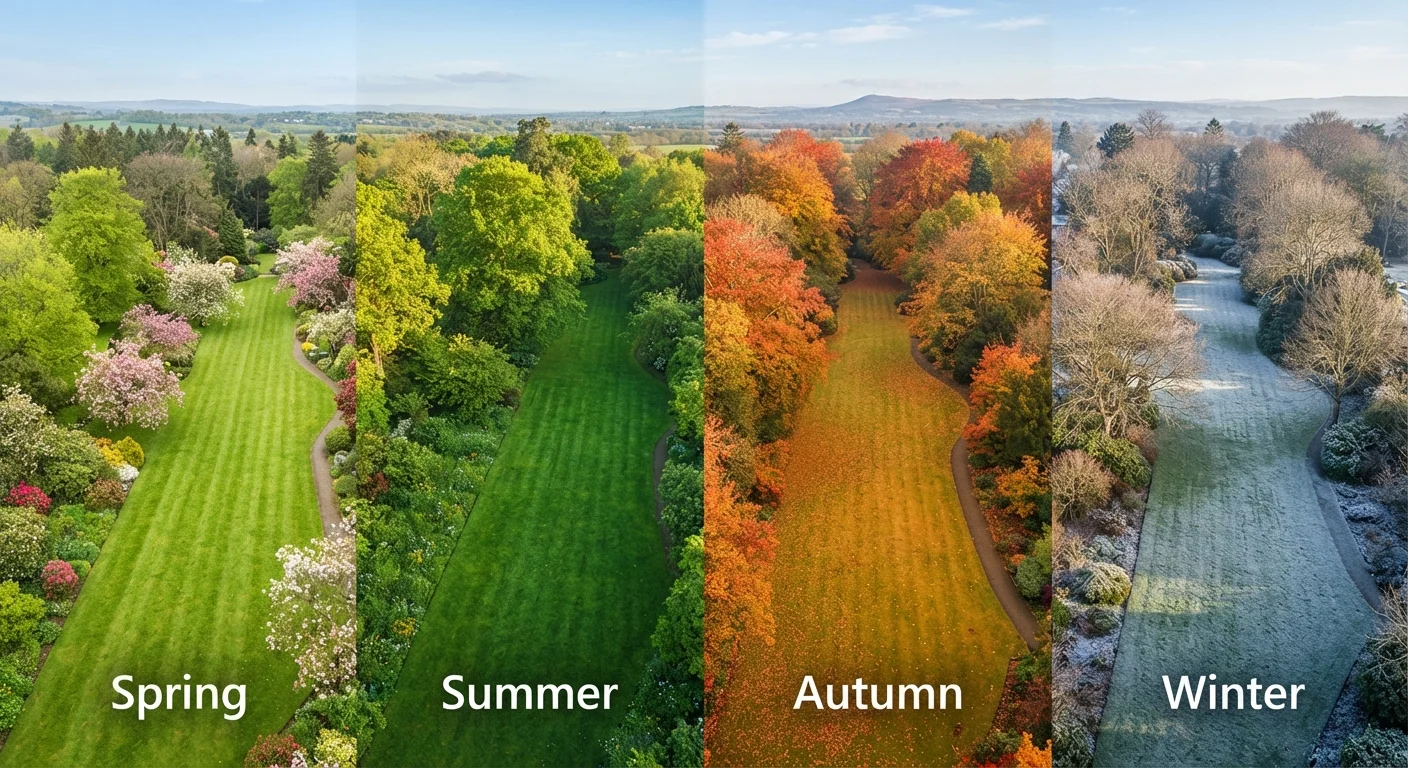
Spring: Wake Your Lawn Up Right
Spring is a period of rapid growth, which means it's also a window where good decisions have outsized impact. As soil temperatures reach around 50-55°F, cool-season grasses like fescue and bluegrass begin active growth; warm-season varieties like Bermuda and zoysia stir later, once temperatures consistently exceed 65°F.
Key Spring Tasks
- Rake and dethatch: Remove matted dead grass (thatch) that blocks light and air. A thin layer of thatch is normal; anything over ½ inch can impede growth.
- Aerate if compaction is present: Core aeration - removing small plugs of soil - opens pathways for water, oxygen, and fertilizer to reach roots. Lawns with heavy foot traffic or clay-heavy soil benefit most.
- Fertilize after green-up: Applying nitrogen too early pushes leafy growth before roots are established. Wait until the grass has been mowed once or twice before fertilizing.
- Apply pre-emergent herbicide for crabgrass: Timing is critical - too early or too late and the window is missed. A soil thermometer is the most reliable guide.
Use a soil thermometer, not the calendar, to time your spring pre-emergent application. Crabgrass germinates when soil temperatures reach 55°F at a two-inch depth - that date shifts by weeks depending on your region and the specific year.
Calendar-based timing is a rough average that misses the actual biological trigger. A soil thermometer costs under $15 and removes the guesswork entirely.
When overseeding in fall, skip the fertilizer high in nitrogen for at least two weeks after seeding. New seedlings benefit more from consistent moisture and soil contact than from a nitrogen push that favors the existing turf.
Nitrogen at seeding time accelerates the established grass and creates competition that can crowd out germinating seedlings before they establish.
Summer: Protect Against Heat and Drought
Summer places the greatest physiological stress on most lawns. Cool-season grasses may go semi-dormant during prolonged heat; warm-season varieties thrive but can brown quickly if water-stressed. The goal shifts from promoting growth to protecting what you've built.
Adjust Mowing Height
Raise your mowing deck by half an inch to one inch compared to spring settings. Taller grass blades shade soil, reducing moisture evaporation and suppressing weed germination. Never remove more than one-third of the blade length in a single mow - doing so sends the plant into stress recovery mode.
Water Deeply, Not Daily
Most lawns need approximately one inch of water per week during the growing season, including rainfall. Shallow, frequent watering encourages shallow roots. Instead, water once or twice per week, long enough to moisten the soil to a depth of four to six inches. For a detailed comparison of delivery options, see our guide on drip irrigation vs. sprinkler systems.
Fall: The Most Important Season for Lawn Health
If you could do only one season of intentional lawn care, fall would be it. Cooler temperatures and softer soil create near-ideal conditions for grass to recover from summer stress, fill in bare patches, and store energy for winter.
Overseed Thin Areas
Fall overseeding - broadcasting grass seed over existing turf - is the most reliable way to thicken a lawn and reduce the bare patches where weeds take hold. Seed-to-soil contact is essential: aerate before overseeding or rake bare spots lightly to prepare the seedbed.
Fertilize with a Winterizer
A fall fertilizer application, sometimes called a winterizer, emphasizes phosphorus and potassium over nitrogen. This supports root development and carbohydrate storage rather than leafy growth, giving the grass resources to bounce back strongly the following spring.
Keep Mowing Until Growth Stops
Continue mowing at regular intervals until the grass stops growing. Leaving grass too long before winter encourages snow mold fungal disease. Gradually lowering the cutting height in late fall - rather than abruptly - is a gentler transition. Pair fall lawn work with broader garden prep using our fall garden checklist.
Don't Apply Pre-Emergent Before Overseeding
Pre-emergent herbicides work by preventing seed germination - they can't distinguish between crabgrass seed and the grass seed you're trying to establish. If you plan to overseed in fall, skip or delay any pre-emergent application in those areas. Applying both in the same window is one of the most common reasons fall overseeding fails.
Winter: Rest, Observe, and Plan
For most of the US, winter means a dormant lawn that requires little active maintenance. That doesn't mean there's nothing productive to do.
- Soil testing: Winter is a practical time to collect soil samples and submit them for pH and nutrient analysis. Results guide spring fertilization choices far more precisely than package label defaults.
- Equipment maintenance: Sharpen mower blades, change engine oil, and clean undercarriages. A dull blade tears grass rather than cutting it cleanly, creating entry points for disease.
- Avoid heavy traffic on dormant or frost-covered grass: Walking repeatedly on frozen turf compresses crowns and can cause lasting damage to individual plants.
- Plan improvements: If drainage, bare patches, or weed pressure were persistent issues, winter is the time to research solutions - whether that's adjusting irrigation zones or evaluating whether your grass variety suits your climate.
Year-Round Habits That Pay Off
Beyond seasonal tasks, a few consistent practices underlie every healthy lawn regardless of time of year.
Leave clippings on the lawn (known as grasscycling) when they're short enough not to clump. Clippings decompose quickly and return nitrogen to the soil, reducing fertilizer needs by an estimated 25% or more according to turf management research.
Maintain a clear edge along beds and walkways. A defined border keeps grass from creeping into garden beds and makes mowing more efficient. For adjoining garden areas, mulching beds properly further reduces the overlap of maintenance tasks.
Act early on weeds and thin spots. A thick, well-fed lawn is its own best defense - dense turf physically prevents most weed seeds from germinating. The seasonal practices outlined above compound over time: each year's investments make the next year's maintenance easier and the results more consistent.