

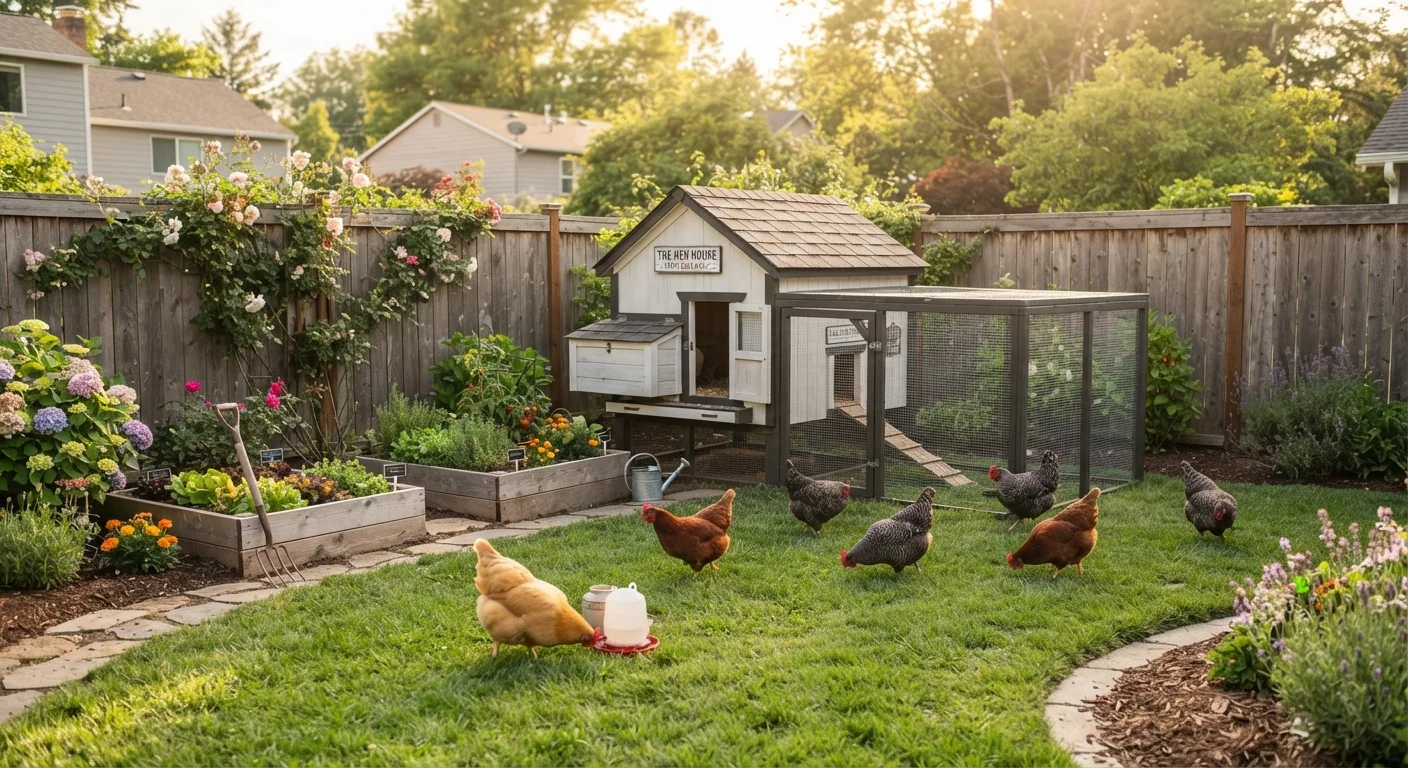
Key Takeaways
- Most municipalities have zoning laws or HOA rules that regulate or prohibit backyard chickens.
- A starter flock typically requires consistent daily care including feeding, watering, and egg collection.
- Chickens offer genuine benefits - fresh eggs, natural pest control, and compost-ready manure.
- Upfront setup costs for a coop and run can range from a few hundred to over a thousand dollars.
- Predator-proofing and biosecurity measures are essential to protect your flock's health and safety.
Fresh eggs from known, well-kept hens
A small flock of productive hens can supply a household with eggs regularly, offering transparency about how those eggs were produced and what the birds were fed.
Natural pest control in the garden
Free-ranging chickens actively forage for insects, grubs, and ticks, reducing pest pressure in yards and garden beds without chemical intervention.
Compost-ready manure for soil health
Chicken manure is high in nitrogen and, once properly composted, becomes a valuable soil amendment that supports vegetable and flower gardens.
Educational value for children and families
Caring for chickens teaches responsibility, observation, and a practical connection to where food comes from - benefits families often cite as highly rewarding.
Chickens eat kitchen scraps, reducing food waste
Many vegetable peels, bread scraps, and cooked grains that would otherwise go into the trash can be safely fed to hens, closing a useful household loop.
Daily care with no days off
Chickens require feeding, watering, and egg collection every single day. Vacations and busy periods require reliable backup care, which can be difficult to arrange.
Significant upfront setup costs
A predator-proof coop, enclosed run, feeders, waterers, bedding, and starter supplies can cost several hundred to well over a thousand dollars before a single chick arrives.
Ongoing feed and veterinary expenses
Layer feed, supplements, bedding, and occasional vet visits - avian veterinarians are not universally available - represent a recurring cost that can offset the value of eggs.
Noise and odor can affect neighbors
Hens cluck regularly and can be surprisingly loud at laying time. Even without a rooster, poorly maintained coops produce odor that can create real friction in dense neighborhoods.
Vulnerability to predators and disease
Foxes, raccoons, hawks, and rats are persistent threats, and flocks can be exposed to diseases like Marek's disease or respiratory illness that require prompt attention.
Laying slows significantly with age and season
Egg production drops in winter due to reduced daylight and declines as hens age past two to three years, meaning long-term flock management decisions are unavoidable.
Our Verdict
Backyard chickens can be a genuinely rewarding addition to a home - providing fresh eggs, garden benefits, and an engaging connection to food production. However, they demand consistent daily effort, meaningful upfront cost, and careful navigation of local regulations. This is not a low-maintenance hobby.
Best suited to homeowners with adequate outdoor space, flexible daily schedules, tolerance for some noise and mess, and clear local permission to keep a small flock.
Before You Start: Zoning, Rules, and Neighbor Relations
The very first step - before buying a single chick - is confirming whether backyard chickens are legal where you live. Zoning ordinances vary widely across US municipalities. Some cities permit small flocks with restrictions on flock size, coop placement, or rooster ownership; others prohibit chickens entirely in residential zones. Homeowners associations may add an additional layer of restrictions independent of local government rules.
Contact your local planning or zoning department, and review any HOA covenants you've signed. Permits are sometimes required before construction of a coop begins. Operating without the proper approvals can result in fines or being required to rehome your flock - a difficult outcome after you've already invested time and money.
Good neighbor communication matters too. Even where chickens are legal, the sound of hens clucking and the smell of a coop can create friction in close quarters. A proactive conversation - and a well-maintained coop - goes a long way.
The Real Pros of Keeping Backyard Chickens
For homeowners who do their homework and have the right setup, a small flock delivers meaningful benefits to both the household and the garden.
Fresh eggs from known, well-kept hens
A small flock of productive hens can supply a household with eggs regularly, offering transparency about how those eggs were produced and what the birds were fed.
Natural pest control in the garden
Free-ranging chickens actively forage for insects, grubs, and ticks, reducing pest pressure in yards and garden beds without chemical intervention.
Compost-ready manure for soil health
Chicken manure is high in nitrogen and, once properly composted, becomes a valuable soil amendment that supports vegetable and flower gardens.
Educational value for children and families
Caring for chickens teaches responsibility, observation, and a practical connection to where food comes from - benefits families often cite as highly rewarding.
Chickens eat kitchen scraps, reducing food waste
Many vegetable peels, bread scraps, and cooked grains that would otherwise go into the trash can be safely fed to hens, closing a useful household loop.
Chickens also integrate naturally with other backyard food systems. Their manure is nitrogen-rich and, once composted, makes an excellent soil amendment - a topic covered in depth in our guide to composting at home. Pair a flock with a vegetable patch and you have a productive closed loop: kitchen scraps feed the chickens, manure feeds the compost, compost feeds the garden. See starting a vegetable garden from zero for a full guide to getting that side of the equation going.
The Honest Cons: Time, Cost, and Commitment
Chickens are often described as low-maintenance relative to other livestock - but they are not low-maintenance compared to most backyard hobbies. Every day, without exception, requires feeding, fresh water, and egg collection. Coops need regular cleaning to prevent ammonia buildup and disease. Vacations require a trusted caretaker who is comfortable handling birds.
Daily care with no days off
Chickens require feeding, watering, and egg collection every single day. Vacations and busy periods require reliable backup care, which can be difficult to arrange.
Significant upfront setup costs
A predator-proof coop, enclosed run, feeders, waterers, bedding, and starter supplies can cost several hundred to well over a thousand dollars before a single chick arrives.
Ongoing feed and veterinary expenses
Layer feed, supplements, bedding, and occasional vet visits - avian veterinarians are not universally available - represent a recurring cost that can offset the value of eggs.
Noise and odor can affect neighbors
Hens cluck regularly and can be surprisingly loud at laying time. Even without a rooster, poorly maintained coops produce odor that can create real friction in dense neighborhoods.
Vulnerability to predators and disease
Foxes, raccoons, hawks, and rats are persistent threats, and flocks can be exposed to diseases like Marek's disease or respiratory illness that require prompt attention.
Laying slows significantly with age and season
Egg production drops in winter due to reduced daylight and declines as hens age past two to three years, meaning long-term flock management decisions are unavoidable.
Roosters: Often Off-Limits in Suburban Areas
Many municipal codes that allow backyard hens specifically prohibit roosters due to noise concerns. Hens do not need a rooster to lay eggs - only to produce fertilized eggs. If you're purchasing straight-run (unsexed) chicks, be prepared for the possibility of cockerels in the batch and have a plan for rehoming them if needed.
When thinking about daily care demands, it's worth comparing chickens to other animals. Our honest look at owning a pet bird explores similar themes of routine care and commitment for another feathered companion.
Setting Up: Coop, Run, and Flock Size
A well-designed coop is the foundation of a healthy, manageable flock. General guidelines suggest at least 4 square feet of indoor coop space per bird, and 10 square feet of outdoor run space per bird - though more is always better. Overcrowding leads to stress, pecking behavior, and faster disease spread.
Predator-proofing is non-negotiable. Raccoons, foxes, hawks, and even neighborhood dogs pose real threats. Hardware cloth (not standard chicken wire) should cover all openings, and the run floor should be protected against digging predators. Automatic coop doors can help ensure hens are safely locked in at dusk.
4 sq ft
Minimum indoor coop space per bird
Poultry extension programs at multiple US land-grant universities cite 4 square feet per bird as a baseline for indoor coop space in small backyard flocks.
5-6 eggs/week
Peak weekly output per productive hen
High-production laying breeds such as Leghorns or Rhode Island Reds can achieve this rate during peak season, though output varies by breed, age, and daylight hours.
3-6 hens
Typical starter flock size for households
Poultry educators commonly recommend this range for first-time keepers - large enough to maintain flock social dynamics, small enough to manage manageably.
Plan your flock size realistically. Three to six hens is a common starting point for a household. Hens of productive breeds typically lay five to six eggs per week during peak season, slowing significantly in winter and as they age. Factor this into your expectations about egg supply.