

Key Takeaways
- Most vegetables need at least six hours of direct sunlight daily to produce a meaningful harvest.
- Healthy, well-draining soil amended with organic matter is more important than any fertilizer.
- Starting small - a 4×8 ft bed - helps beginners succeed without becoming overwhelmed.
- Matching plant choices to your local frost dates dramatically improves first-year results.
- Consistent, deep watering beats frequent shallow watering for most vegetable crops.
Start here
Choosing the Right Spot
Next
Understanding Your Soil
Then
Picking What to Grow
Going deeper
Planting, Spacing, and Watering
Final step
Seasonal Timing and First-Year Expectations
Choosing the Right Spot
The single biggest factor in vegetable garden success isn't seed variety or fertilizer - it's location. Most vegetables require a minimum of six hours of direct sunlight per day, and eight hours produces noticeably stronger plants and larger yields. Before digging anything, spend a day watching how sunlight moves across your yard.
Beyond sun, consider these practical factors:
- Proximity to water: You'll water frequently, especially in summer. Place your garden within easy reach of a hose or spigot.
- Level ground: Sloped sites cause water to run off before soaking in. If your yard slopes, a raised bed on a leveled platform helps.
- Away from large trees: Tree roots compete aggressively for water and nutrients, and canopy shade reduces light significantly.
If your yard doesn't have a sunny open area, consider container gardening on a sunny patio or deck - many crops thrive in large pots.
Test Before You Dig
Before committing to a garden location, observe the area at three different times of day - morning, midday, and late afternoon - to accurately count sun hours. Many gardeners overestimate how much light a spot receives because they only check once. Even a nearby fence or roofline can cast more shade than expected during key growing hours.
Understanding Your Soil
Vegetables are heavy feeders that depend on loose, nutrient-rich, well-draining soil. Native yard soil is often compacted, low in organic matter, or pH-imbalanced - none of which are ideal out of the box.
Before planting, perform a simple soil test. Your local cooperative extension service typically offers inexpensive kits that measure pH and basic nutrients. Most vegetables prefer a slightly acidic to neutral pH range of roughly 6.0-7.0.
Regardless of your test results, working compost into your bed is almost always the right first step. Compost improves drainage in heavy clay soils, helps sandy soils retain moisture, and feeds soil biology that makes nutrients available to plant roots. Our guide to composting at home explains how to make your own from kitchen and yard waste - a long-term investment that pays off season after season.
Last frost date
The approximate calendar date after which freezing temperatures are unlikely in your area for the season. It marks the safe window for planting cold-sensitive crops outdoors.
pH (soil)
A measure of how acidic or alkaline your soil is, on a scale from 0 to 14. Most vegetables grow best in slightly acidic to neutral soil, around pH 6.0-7.0.
Organic matter
Decomposed plant or animal material, like compost or aged manure, that improves soil structure, drainage, and nutrient availability when mixed into garden beds.
Transplant
A young plant grown from seed elsewhere - indoors or in a nursery - and then moved into the garden. Transplants give slow-maturing crops a head start on the season.
Cool-season crop
A vegetable that grows best in cooler temperatures and can tolerate mild frost, typically planted in early spring or fall. Examples include lettuce, spinach, and peas.
Mulch
A layer of material - such as straw, wood chips, or shredded leaves - spread over soil to retain moisture, regulate temperature, and suppress weeds.
Picking What to Grow
The best vegetable garden is one you'll actually tend - so start with crops your household enjoys eating. Then filter that list by what grows reliably in your climate and season length.
Beginner-friendly crops to consider:
- Cool-season: Lettuce, spinach, radishes, peas, kale
- Warm-season: Zucchini, bush green beans, cherry tomatoes, cucumbers
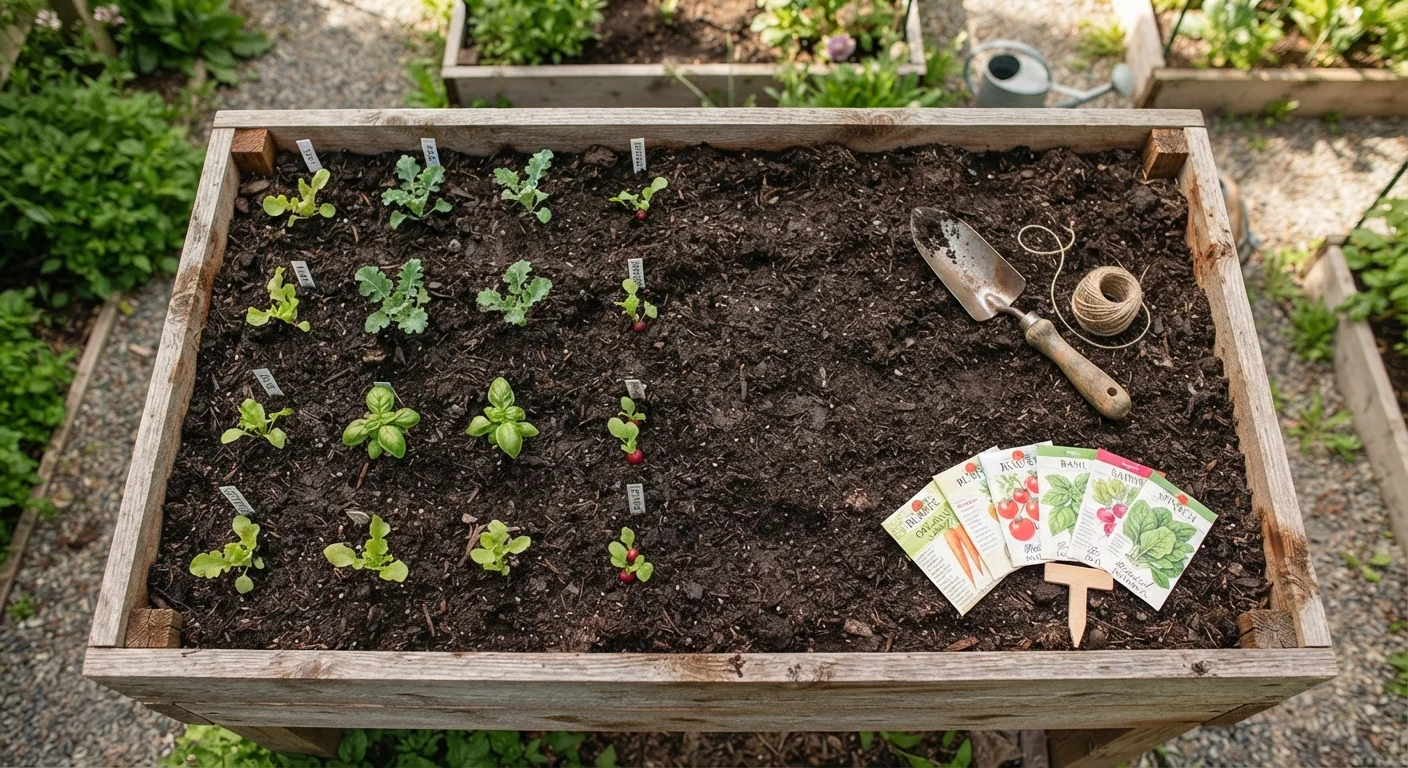
Resist the urge to plant everything in year one. Overplanting is one of the most common beginner mistakes - it leads to overwhelm, neglect, and wasted effort. A single 4×8 foot bed gives you enough to learn from without becoming a second job.
Seed packets and transplant tags include spacing requirements, days to maturity, and sun needs. Read them. A tomato plant that needs 24 inches of space can't share that space with a pepper that needs 18 - crowding reduces airflow and invites disease.
Planting, Spacing, and Watering
Some crops are easiest started directly from seed in the ground - radishes, beans, carrots, and lettuce all fall into this category. Others, like tomatoes and peppers, benefit from being started indoors weeks ahead or purchased as transplant seedlings, since their long growing seasons would otherwise outpace your warm weather window.
When transplanting seedlings, dig a hole slightly deeper than the root ball, firm the soil gently around the base, and water immediately to settle the roots. Avoid planting on the hottest part of a sunny afternoon - early morning or evening gives transplants time to adjust before heat stress sets in.
Watering guidance for new gardeners:
- Aim for approximately one inch of water per week from rain or irrigation combined.
- Water at the base of plants rather than overhead to reduce fungal disease risk.
- Check soil moisture two inches down - dry at that depth means it's time to water.
- Mulching around plants with straw or wood chips reduces evaporation and cuts watering frequency.
Don't Overwater Seedlings
Newly planted seedlings are vulnerable to root rot if the soil stays constantly wet. More vegetable garden seedlings are lost to overwatering than underwatering. Allow the top layer of soil to begin drying between waterings rather than watering on a rigid daily schedule regardless of conditions.
Seasonal Timing and First-Year Expectations
Vegetable gardening is inherently tied to the calendar. Every region has a last spring frost date and a first fall frost date that bookend your primary growing window. The USDA Plant Hardiness Zone map is a reliable reference, though local microclimates can shift your actual dates slightly.
Cool-season crops like lettuce and peas can tolerate light frost and go in the ground 2-4 weeks before your last frost date. Warm-season crops - tomatoes, squash, peppers - must wait until after that date when soil has warmed.
In fall, thinking ahead is equally important. Our fall garden prep checklist covers how to protect plants, clear spent crops, and enrich your soil before winter so you start next spring ahead of the curve.
Set realistic expectations for year one: you will likely encounter a pest, a wilted plant, or a crop that just doesn't perform. That's normal and instructive. Most experienced gardeners consider their first season a learning season. Track what you planted, when, and what happened - even brief notes help you make smarter decisions the following year.