

Key Takeaways
- A low bid doesn't indicate a reliable contractor - process and communication matter just as much as price.
- Always verify licensing, insurance, and references independently before signing any contract.
- How a contractor handles your questions reveals how they'll handle your project.
- Written documentation of scope, timeline, and payment terms protects both parties.
- Understanding subcontractor relationships helps you know who will actually be in your home.
Summary
18 items · 20-40 minutes per contractor interview
Why the Interview Matters More Than the Estimate
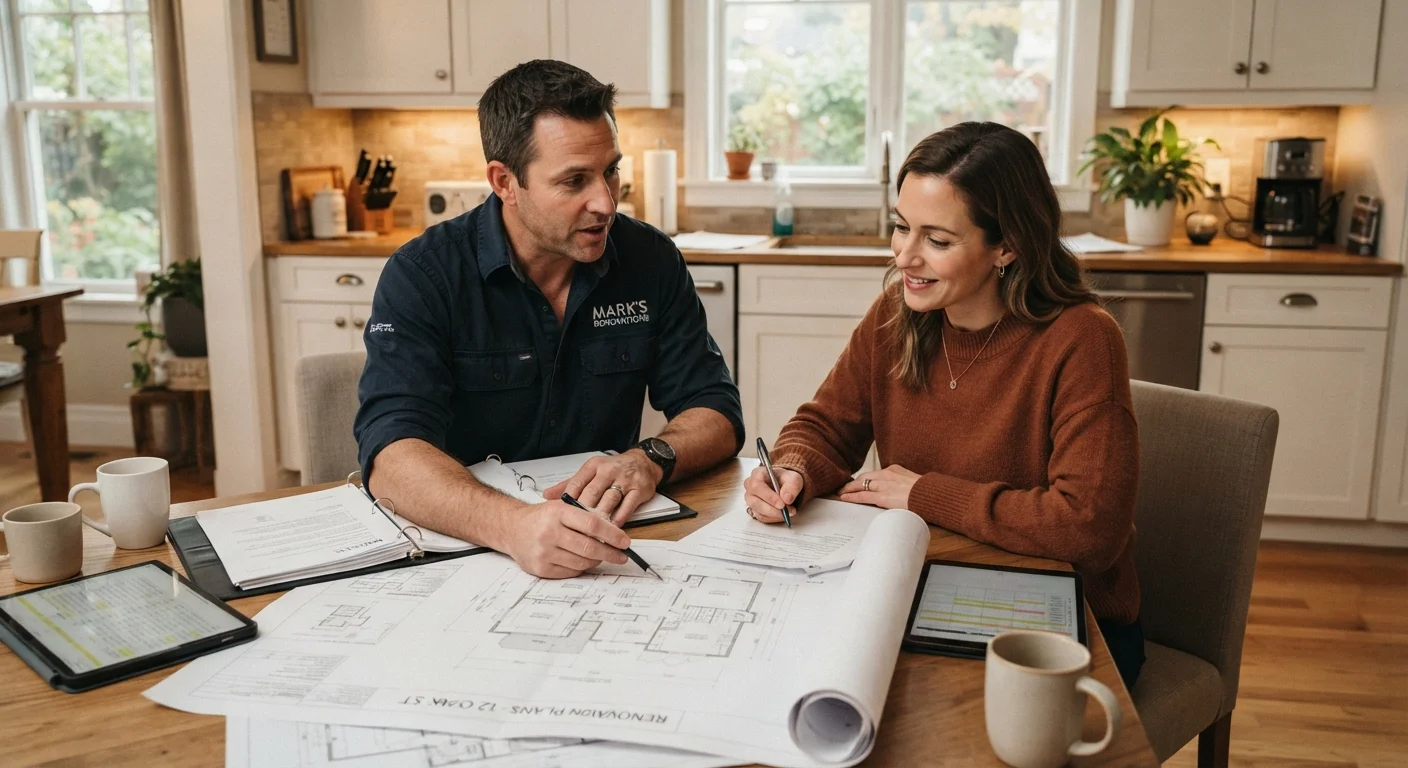
A contractor quote tells you what a project might cost. The conversation around it tells you far more - how someone communicates under pressure, whether they welcome scrutiny, and how professionally they run their business. Before any renovation, it pays to treat contractor selection less like a price comparison and more like a job interview.
Most homeowners collect two or three bids, pick the middle number, and move forward. That approach can work, but it misses warning signs that surface long before a shovel hits the ground. Hidden renovation costs often trace back to vague scopes of work and misaligned expectations - problems that sharp questions can surface early.
Use the checklist below during every contractor interview. The goal isn't to catch anyone out - it's to find someone whose working style, communication habits, and professional standards align with your project and your household.
State Licensing Board Website
Verify a contractor's current license status, any disciplinary actions, and insurance requirements in your state.
Printed Question Checklist
Bring a printed copy of your questions to each interview so responses can be documented and compared across candidates.
Sample Contract Template
Use a standard residential construction contract template as a baseline to identify what may be missing from a contractor's proposed agreement.
Notepad or Interview Recording App
Capture contractor responses accurately during the interview for later comparison - especially for timeline and subcontractor details.
Contractor Interview Checklist
Work through these questions across three key areas: credentials and accountability, project management, and fit. Document responses so you can compare contractors on equal terms.
Credentials & Accountability
Project Scope & Subcontractors
Timeline & Communication
Payment Terms & Contract
Never Skip Independent License Verification
A contractor presenting a license number is not the same as holding a valid, active license. Many states allow you to verify contractor credentials online in minutes through the state licensing board. Skipping this step is one of the most common - and costly - mistakes homeowners make before a renovation.
Not sure whether to hire out or tackle part of the project yourself? See our guide to the DIY vs. professional decision for a structured way to think through that call before signing anything.
Reading the Answers You Get
Strong candidates will answer credential questions without hesitation and offer documentation proactively. They'll describe their communication process with specifics - not just "we'll keep you in the loop" - and speak openly about how they've resolved problems on past jobs.
Be cautious of contractors who deflect questions about subcontractors, resist putting payment terms in writing, or quote unusually low prices without explanation. A bid significantly below others usually signals something: thinner materials, unlicensed labor, or scope assumptions that don't match yours. Common renovation myths - like assuming the lowest bid is the smartest financial choice - can lead to exactly the kind of mid-project chaos that derails budgets and timelines.
Finally, trust your read on the conversation itself. A contractor who listens carefully, asks clarifying questions, and admits they don't know something rather than bluffing is showing you how they'll behave when your kitchen wall is open and an unexpected issue appears. That candor, more than any number on a quote sheet, is what makes a renovation partnership work.
This article provides general educational guidance for homeowners evaluating contractors. It is not legal or financial advice. Licensing, permit, and insurance requirements vary by state and locality - always verify current requirements with your local building authority before beginning any renovation project.