

Key Takeaways
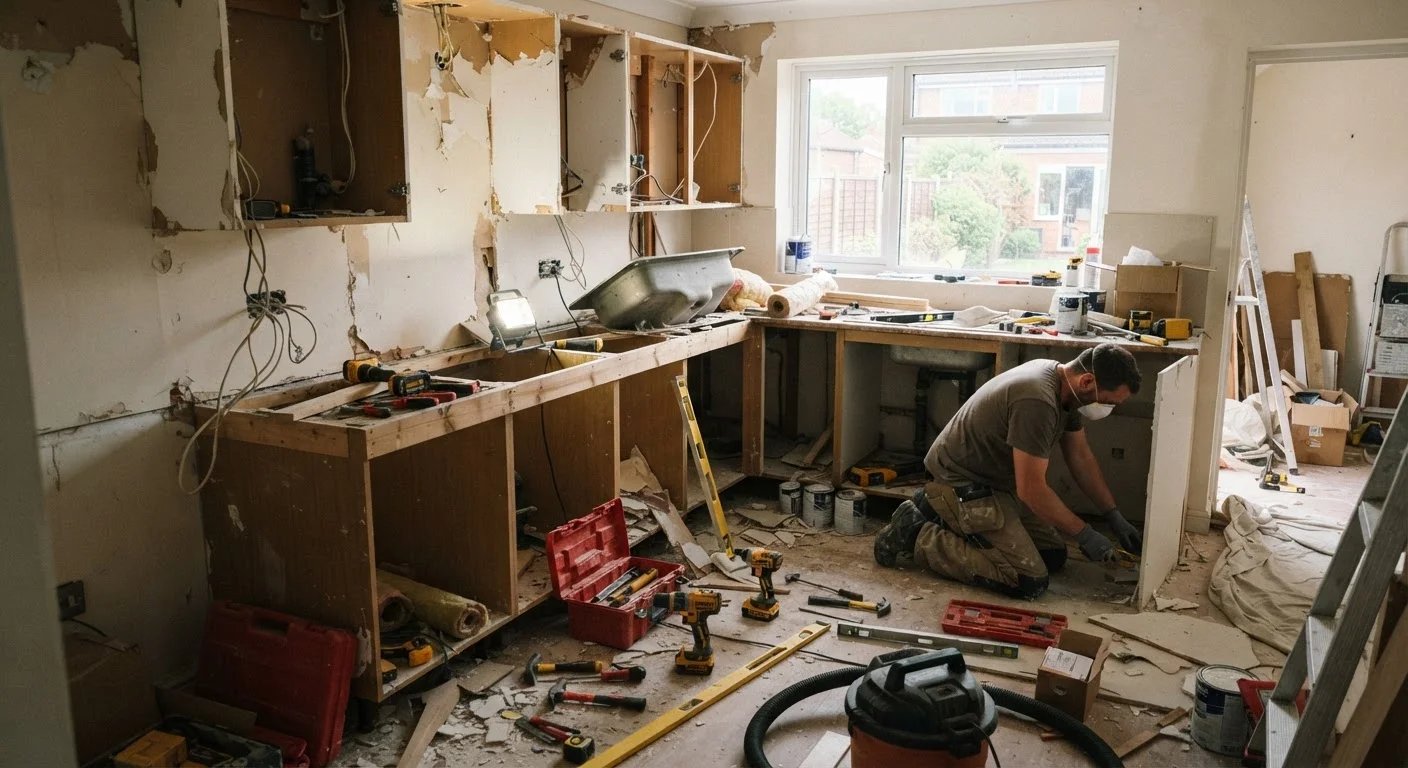
- Renovation budgets routinely overrun due to hidden structural issues discovered after walls open up.
- Code compliance upgrades - especially in electrical and plumbing - can add thousands of unplanned dollars.
- Most contractors recommend setting aside 15-20% of total project cost as a contingency buffer.
- Scope creep driven by in-project decisions is one of the most common and controllable budget killers.
- Material lead times and price fluctuations can delay projects and inflate costs significantly.
Why Renovation Budgets Fail Before the First Wall Opens
Most homeowners begin a renovation with a number in mind - a figure gathered from contractor quotes, online calculators, or a neighbor's recent project. The problem is that initial estimates almost never reflect what a project will actually cost once it's underway. Understanding why budgets collapse is the first step toward keeping yours intact.
The core issue is that a home hides information. Until walls come down, subfloors come up, or ceilings are opened, nobody - not the contractor, not the inspector, not the homeowner - knows exactly what's behind them. Planning as if the unknown doesn't exist is the foundational mistake that makes every other budget error worse.
For a complementary look at how renovation assumptions can quietly cost you money, see our piece on home renovation myths that cost homeowners real money.
Skipping a pre-renovation inspection or assessment of existing conditions.
Why it happens: Homeowners focus on the vision of the finished project and want to move quickly into execution. Paying for an inspection before demolition feels like an unnecessary delay.
Omitting a contingency fund from the project budget.
Why it happens: People anchor to the contractor's quote and treat it as the ceiling rather than the floor. Adding a cushion feels like overspending on something that might not happen.
Failing to account for code-required upgrades triggered by the renovation.
Why it happens: Homeowners assume permits are just a formality. In reality, opening walls or adding square footage can require bringing adjacent systems - wiring, venting, insulation - up to current code, regardless of whether those systems were part of the original plan.
Allowing scope creep to expand the project without adjusting the budget.
Why it happens: Once a space is torn open, it's tempting to address adjacent issues or upgrade finishes beyond the original plan. Each individual decision seems minor in isolation.
Underestimating material costs and lead times, especially for custom or specialty items.
Why it happens: Material prices are often sourced from online estimates that reflect base costs without accounting for regional variation, installation waste, or supply chain delays.
Underbudgeting for temporary living arrangements or storage during the project.
Why it happens: Homeowners focus entirely on construction costs and forget that a kitchen renovation lasting six weeks means six weeks without a functional kitchen - which has real financial consequences.
Building a Budget That Accounts for What You Can't See
Once you understand the failure patterns, building a more realistic budget becomes straightforward - if still uncomfortable. The discipline is in accounting for uncertainty rather than hoping it won't apply to your project.
~80%
Renovations that exceed initial budget
Industry surveys consistently suggest the large majority of home renovation projects exceed their original estimated cost, often due to unforeseen conditions.
15-20%
Recommended contingency buffer
Most experienced contractors and renovation planners advise reserving 15-20% of total project cost as a contingency for unexpected discoveries and changes.
30%+
Cost increase from code upgrades
Projects in older homes can see total costs rise by 30% or more when required code compliance work - such as electrical panel upgrades - is added during permitting.
Start by requesting itemized estimates, not lump-sum quotes. A line-item breakdown lets you identify which costs are firm and which are conditional on what's found inside the walls. Ask your contractor explicitly: "What assumptions is this number based on, and what would change it?" That conversation surfaces contingencies before they become surprises.
When evaluating contractors, the questions you ask reveal as much as the quotes they provide. Our guide on hiring a general contractor walks through exactly what to ask before signing anything.
Finally, separate your contingency fund from your project budget mentally and practically. Keep it in a separate account if that helps. Its purpose is not to extend your project scope - it exists solely to absorb cost surprises without derailing the work already in progress. Treating it as available spending money is one of the fastest ways to run out of both.
Permits Aren't Optional - And Skipping Them Costs More
Unpermitted work can create serious problems when you sell: buyers' inspectors flag it, lenders may refuse to finance, and you may be required to tear out completed work for inspection. Always pull the permits your project legally requires, even if it adds time and cost upfront. Your local building department can tell you what's needed before work begins.
If you're weighing whether to expand your footprint or use existing space more efficiently, the cost implications are significant - our article on room additions vs. finishing existing space lays out the trade-offs clearly.