

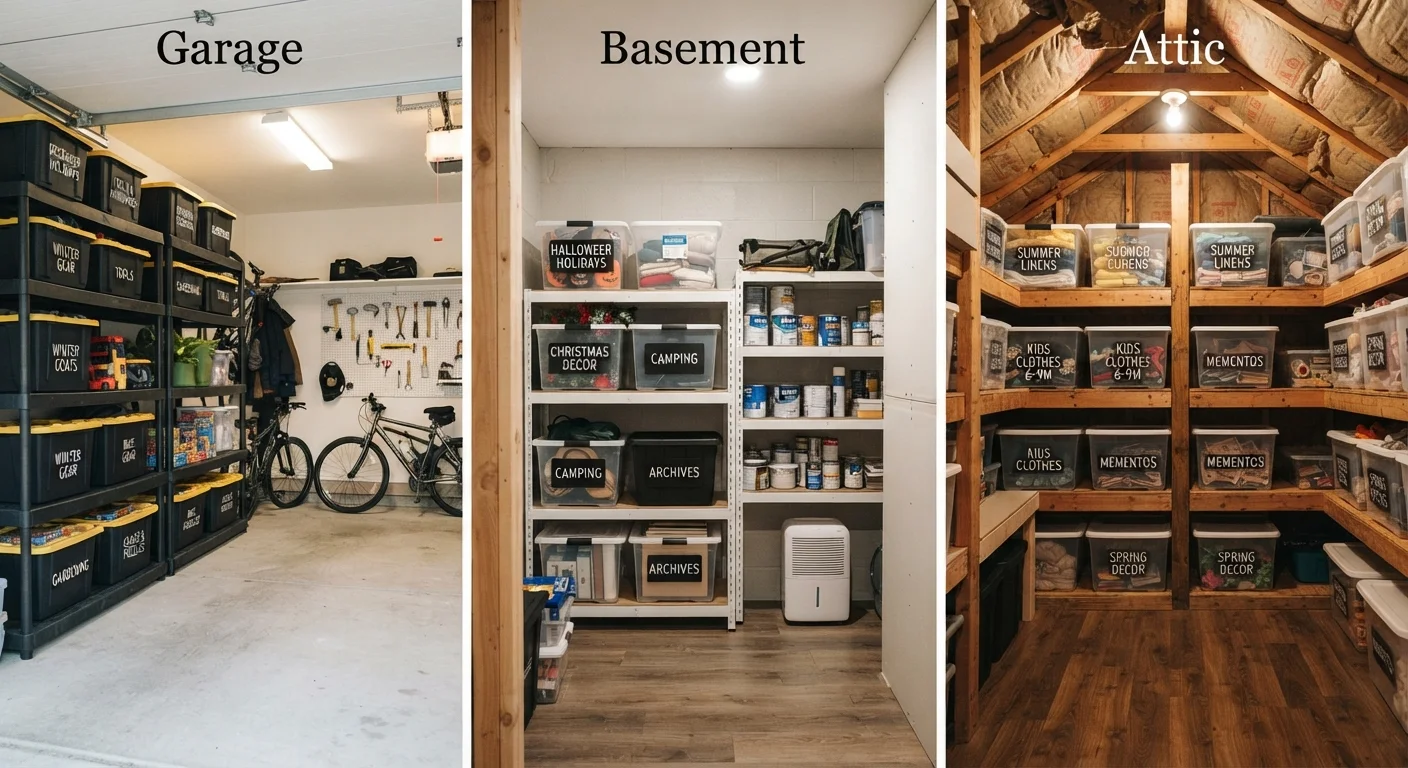
Key Takeaways
- Temperature extremes in attics and garages can damage fabrics, electronics, and wood over time.
- Basements offer the most stable temperatures but pose the highest humidity risk for moisture-sensitive items.
- Frequency of use should drive placement - items retrieved seasonally belong closer to living spaces than items used once a year.
- Proper containers (airtight, moisture-resistant) matter more than the specific space in many situations.
- No single storage zone is universally best - matching item type to space conditions protects belongings and reduces frustration.
Our Verdict
Each space has a distinct environmental profile that makes it well-suited to certain categories of seasonal items and poorly suited to others. Matching what you're storing to the conditions of each zone - rather than defaulting to whichever space has the most floor room - is the single most effective way to protect your belongings and keep retrieval easy. Most households benefit from splitting storage intentionally across all three spaces rather than relying on one.
| Best for | Recommended |
|---|---|
| Storing items sensitive to moisture but tolerant of temperature swings | Garage |
| Long-term storage of items needing stable temperatures but low humidity | Basement with dehumidifier |
| Lightweight, low-moisture items accessed once or twice a year | Attic |
| Frequently rotated seasonal items like holiday décor and sports gear | Garage with labeled shelving |
Why Storage Location Is a Decision, Not a Default
Most households assign seasonal storage by habit - holiday bins go in the attic because that's where someone put them a decade ago, camping gear ends up in the basement because there was space. But each storage zone has a distinct environmental profile, and placing the wrong items in the wrong space leads to warped boards, mildew-smelling sleeping bags, and holiday ornaments cracked by temperature swings.
Three factors should guide every placement decision: temperature stability, humidity level, and access frequency. Understanding how each zone scores on those factors makes the rest of the decision straightforward. For a broader framework on how to organize by activity patterns, see our guide on zone-based organization.
Garage: Convenient but Climatically Harsh
The garage scores high on access but low on climate control. In most US climates, an uninsulated garage can swing from well below freezing in winter to over 100°F in summer. That range damages anything with adhesives, electronics, or wood components over repeated cycles.
What works well here:
- Lawn and garden equipment (mowers, hoses, hand tools)
- Bicycles, sporting equipment, and recreational gear used seasonally
- Plastic storage bins containing items tolerant of temperature variation
- Holiday inflatables and outdoor décor
What to avoid storing here:
- Wooden furniture, musical instruments, or antiques
- Photographs, important documents, or media
- Candles, wax-based products, or anything with adhesive labels
- Off-season clothing without sealed, airtight containers
| Garage | Basement | Attic | |
|---|---|---|---|
| Temperature stability | Low - wide seasonal swings | High - consistent year-round | Very low - extreme heat/cold |
| Humidity risk | Moderate | High without dehumidifier | Low to moderate |
| Access ease | High - ground level | Moderate - stairs | Low - ladder or hatch |
| Best item types | Tools, outdoor gear, equipment | Clothing, décor in sealed bins | Lightweight décor, empty bags |
| Worst item types | Electronics, wood, candles | Cardboard, photos, documents | Electronics, leather, wine |
| Key mitigation | Insulation or climate control | Dehumidifier below 50% RH | Ventilation, sealed containers |
If your garage is attached and climate-controlled, many of these restrictions ease considerably - but for the typical detached or uninsulated space, treat it as a utility zone rather than a preservation zone.
Basement: Stable but Moisture-Prone
Basements maintain relatively consistent temperatures year-round, which makes them appealing for long-term storage. The problem is moisture. Basement humidity levels often run high enough to promote mold and mildew, particularly in older homes or those in humid climates. A dehumidifier running during warmer months changes the equation significantly.
What works well here:
- Off-season clothing stored in airtight containers or vacuum bags
- Holiday décor in sealed plastic bins (not cardboard)
- Non-valuable books, board games, and media in moisture-controlled conditions
- Camping gear - provided humidity is managed
What to avoid storing here:
- Photographs and important documents (use fireproof, waterproof containers at minimum)
- Electronics not in sealed cases
- Anything in cardboard boxes - cardboard absorbs moisture and attracts pests
Use a Hygrometer to Monitor Basement Humidity
An inexpensive hygrometer placed in your basement gives you a real-time read on relative humidity. Aim to keep it below 50 percent during warmer months when moisture infiltration is highest. Running a dehumidifier on a timer or humidity-triggered setting makes this largely automatic and protects everything you've stored without daily monitoring.
Basements work best as seasonal storage when treated as a managed environment rather than a passive dump zone. Pair a dehumidifier with a hygrometer (a humidity gauge) and aim to keep relative humidity below 50 percent.
Attic: Out of Sight but Often Extreme
Attics are tempting because they're out of the way, but they're often the harshest storage environment in the home. Roof-adjacent spaces can reach 130°F or more in summer and drop below freezing in winter in northern climates. They also tend to lack ventilation adequate for protecting stored goods.
What works reasonably well here:
- Holiday lights (in hard cases), ornaments, and lightweight décor
- Seasonal textiles in vacuum-sealed bags that limit exposure to heat spikes
- Empty luggage and bags not made from leather or vinyl
What clearly doesn't belong here:
- Anything with electronics - heat degrades batteries and circuit boards
- Wine, candles, or anything wax-based
- Leather goods, wooden items, or instruments
- Family photos, films, or irreplaceable documents
If attic access requires a pull-down ladder and maneuvering around rafters, factor in safety as well - heavy, awkward bins stored there become a retrieval hazard. Pairing your vertical versus horizontal storage strategy with attic layout can help maximize what space you do use safely.
Building a Practical Seasonal Rotation System
The most functional approach is to assign storage based on item category rather than available space. Start by listing your seasonal categories - winter clothing, holiday décor, garden tools, camping gear, sports equipment - then match each to the most appropriate zone using temperature tolerance and humidity sensitivity as your primary filters.
Label everything by season and contents, not just contents. A bin labeled Winter - Scarves, Hats, Gloves is faster to locate than one labeled Accessories. For households that rotate items frequently, keeping a simple written or digital log of what's where reduces the time spent hunting.
Use your seasonal transitions as natural review points. Before moving items back into active use, check for damage, assess whether you still need each item, and clean anything that needs it. Our seasonal declutter checklist offers a useful quarterly framework for exactly this kind of structured review.
Finally, invest in appropriate containers for each zone. Airtight plastic bins with secure lids outperform cardboard universally. Vacuum-seal bags reduce volume for bulky textiles. Cedar blocks or lavender sachets help deter insects without chemical residue in clothing storage areas.