

Key Takeaways
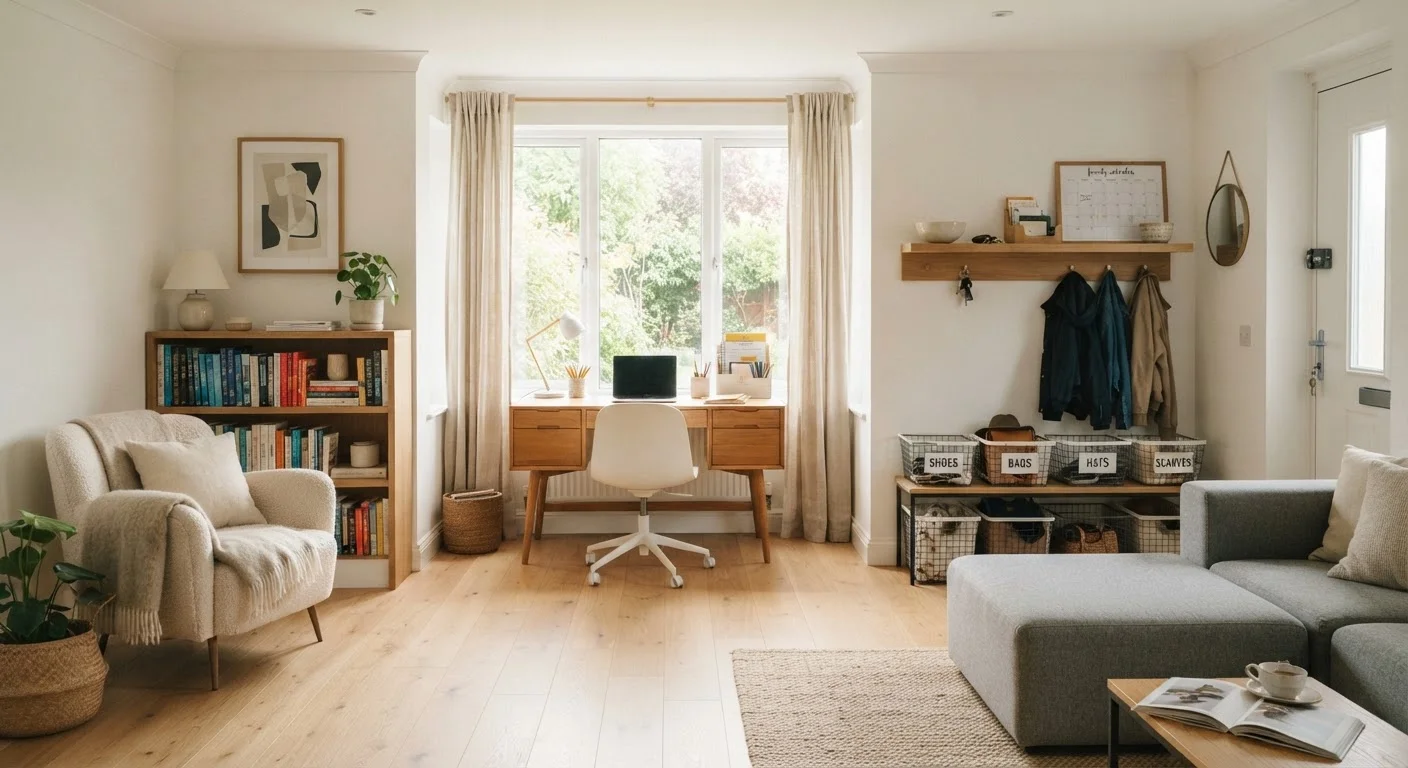
- Zone organization stores items by activity, not by room - placing supplies exactly where they're used.
- Mapping your household's actual daily habits is the essential first step before creating any zone.
- Zones can cross traditional room boundaries - a homework zone might live in the kitchen, not a bedroom.
- Shared households benefit most when zones are designed around everyone's real routines, not an idealized version.
- Even small homes can use zone logic to reduce clutter and cut down on searching for misplaced items.
Zone-Based Organization
Zone-based organization is a storage approach that groups items by the activity they support, rather than by the room they happen to be in. Instead of asking 'where does this belong in the house?' you ask 'where does this activity happen?' Every zone contains everything needed for one task or routine - so you're not hunting across multiple rooms to get things done.
In professional organizing, zones are sometimes called 'activity centers' or 'functional clusters.' The concept draws from workplace ergonomics, where workstations are designed around task flow to reduce wasted motion.
Why Rooms Don't Always Match How We Live
Most homes are built around conventional room labels - kitchen, bedroom, living room - but daily life rarely respects those boundaries. Homework gets done at the kitchen counter. Medications live on a nightstand instead of a medicine cabinet. Sports gear piles up near the front door rather than in a dedicated storage room.
This gap between architectural intent and actual behavior is the root cause of most household clutter. When storage doesn't match habit, items end up wherever they land - which is rarely where they're easy to find again.
Zone-based organization closes that gap by designing storage around your household's real patterns. If you're building your first real organization system, zone logic is one of the most effective frameworks to start with because it doesn't require you to change behavior - it meets behavior where it already is.
23 min
Average time spent daily searching for misplaced items
According to research cited by organizational psychologists studying household workflow inefficiency, the average American adult loses roughly 23 minutes per day locating items.
80%
Of clutter attributed to disorganization, not lack of space
Professional organizers commonly report that the majority of household clutter stems from unclear item placement systems rather than insufficient storage square footage.
How to Map Your Household's Activity Zones
Before moving a single basket or bin, spend a few days observing where activities actually happen in your home. This is called an activity audit, and it's the foundation of every effective zone plan.
Walk through your typical morning, afternoon, and evening routines and note:
- Where do you drop bags, keys, and mail when you walk in?
- Where do children do homework - and is that where supplies end up?
- Where does laundry wait before it's folded?
- Where do devices charge overnight?
Once you've identified the real activity clusters, name each zone by its function: Entry Zone, Meal Prep Zone, Work Zone, Laundry Zone, and so on. Each zone should contain everything needed for that activity - and nothing that belongs to a different one.
Start With Your Highest-Friction Zone
Rather than overhauling your entire home at once, identify the single zone that causes the most daily stress - usually the entry or kitchen. Designing just that one zone first gives you a working model to refine before scaling the approach to other areas. Most households see immediate, tangible results from fixing their highest-friction zone alone.
Zone Design in Practice: Common Examples
Understanding zones in the abstract is one thing; seeing how they translate into real households makes the concept concrete.
One principle applies across all of these: zone boundaries don't have to be rooms. A zone can occupy a kitchen drawer, a corner of a bedroom, or a section of shelving in a shared hallway. What defines it is function, not walls.
Storage tools like labeled bins and tiered shelves help solidify zone boundaries visually. For a closer look at how vertical versus horizontal storage fits into zone design, that comparison can help you decide how to arrange each cluster physically.
Maintaining Zones Over Time
Zones fail when they're designed for an idealized version of life rather than real daily use. A system that requires ten steps to put something away will be abandoned within a week. The most durable zones share a few traits:
- Low friction: Returning items to their zone takes no more effort than setting them down.
- Clear ownership: In shared homes, each zone either belongs to one person or has clear sub-sections. See our guidance on organizing homes when people disagree for household negotiation strategies.
- Seasonal flexibility: Zones can shift slightly as routines change. A back-to-school season might add a homework zone; summer might replace it with a crafts station.
Plan a brief monthly reset - about 10 to 15 minutes - to return stray items to their zones and evaluate whether any zone's contents need updating. Zones that consistently collect the wrong items are usually signaling a habit mismatch, not a discipline problem. Adjust the zone before assuming the behavior needs to change.
Zones Evolve as Life Changes
A zone system built for a household with young children will look different from one suited to empty nesters or remote workers. Major life changes - a new job, a move, a baby, a teenager gaining independence - are natural triggers to reassess your zone layout. Treating your system as permanent is the most common reason organization breaks down over time.