

Key Takeaways
- Paper clutter returns because inflow is never addressed, only the backlog.
- Most households lack a decision point - a place where every paper gets immediately sorted.
- Digital alternatives and opt-out options can significantly reduce how much paper enters your home.
- A simple, low-friction filing system is more sustainable than an elaborate one you'll avoid using.
- Regular short purges prevent paper from accumulating into an overwhelming backlog.
Why Paper Keeps Winning
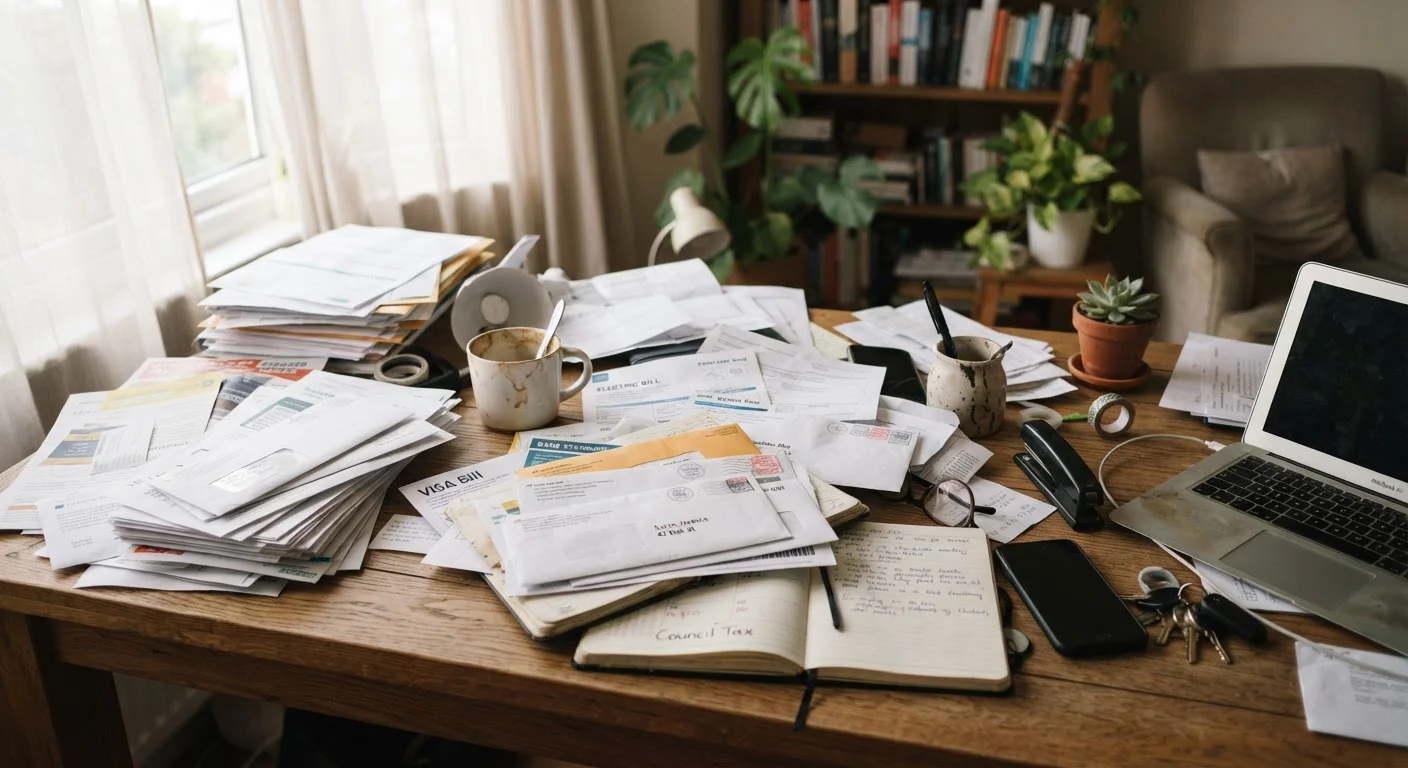
Paper clutter is one of the most persistent problems in home organization - not because people are disorganized, but because paper has a structural advantage: it never stops arriving. Mail comes daily. Kids bring home school forms. Receipts multiply in wallets and pockets. Unlike a cluttered closet that stays static after you tidy it, the paper pile regenerates on its own schedule.
The root cause isn't a lack of filing space or the wrong kind of folder. It's that most households address the backlog - sorting through the old pile - without ever building a system that handles the inflow. Tackle the pile on Sunday and by Thursday it's already started again. If this pattern sounds familiar, you're not alone, and the solution isn't more willpower.
Understanding the specific mistakes that allow paper to accumulate is the fastest path to breaking the cycle. Building a home organization system from scratch can help you see how paper fits into the bigger picture of keeping a household tidy.
Sorting the pile instead of intercepting it at arrival.
Why it happens: It feels productive to tackle a visible stack, but without a triage point at the door or mail station, new paper immediately begins forming the next pile.
Creating a filing system too complex to use consistently.
Why it happens: Many people build elaborate category structures during a burst of motivation, then find the system too time-consuming to maintain during normal life.
Keeping paper "just in case" without a clear retention rule.
Why it happens: Uncertainty about what to keep leads to keeping everything, which defeats any filing system and guarantees accumulation.
Using a "to be filed" pile as a permanent holding zone.
Why it happens: Filing feels like a chore, so papers accumulate in a staging pile that gradually becomes indistinguishable from regular clutter.
Never reducing paper inflow from outside the home.
Why it happens: Most organizing efforts focus entirely on what's already inside, ignoring the ongoing stream of mail, catalogs, flyers, and school notices that replenish the pile daily.
Building a System That Actually Holds
Once you understand why your current approach breaks down, building a better one becomes straightforward. The goal is a low-friction pipeline: every piece of paper that enters your home gets triaged immediately, routed to one of three destinations - act, file, or recycle - and never lands in an ambiguous pile.
80%
Of filed papers never referenced again
Organization research commonly cites that roughly 80% of papers people file are never looked at again, suggesting most retention decisions lean too far toward keeping.
~41 lbs
Average junk mail received per US household annually
The US Postal Service and environmental groups have estimated the average American household receives substantial volumes of unsolicited mail each year, much of it never read.
Your action station (a small tray or wall pocket near the door) holds only items that need a response within the week: a bill due, a form to sign, an appointment reminder. Your filing system holds everything you need to keep long-term - ideally organized by category, not by date. Everything else goes directly into recycling or a shred bin. The system only works if these three destinations are physically convenient and clearly defined.
Paper reduction at the source is equally important. Opting out of paper billing, catalogs, and junk mail reduces the daily load before it even reaches your door. The less paper entering the home, the easier any system is to maintain. For households where multiple people handle paper, agreeing on shared rules matters enormously - see how to organize shared spaces when people have different standards for practical approaches.
A weekly five-minute review of your action tray - filing what's been handled, discarding what's expired - prevents the tray itself from becoming another pile. Pairing this habit with something routine (paying bills on the same day each week, for example) makes it far easier to maintain. For broader re-cluttering patterns beyond paper, habits that prevent spaces from re-cluttering offers complementary strategies worth reading alongside this one.
Don't Discard Documents With Legal or Financial Stakes
While decluttering, it can be tempting to shred broadly. Tax records, legal agreements, insurance policies, and medical records may need to be retained for years - sometimes indefinitely. When uncertain about retention timelines for sensitive documents, consult a tax professional or attorney before discarding.