

Key Takeaways
- A lasting organized home requires a repeatable system, not a one-time cleanup effort.
- Every item should have a specific, consistent location where it is always returned after use.
- Reducing friction - the effort required to put things away - is the most practical organizing principle.
- Start with one high-frustration area rather than attempting a whole-home overhaul at once.
- Short daily resets (5-10 minutes) prevent small disorder from compounding into major clutter.
- In shared homes, agreed-upon systems matter just as much as the storage setup itself.
Start here
Why Organization Systems Fail Before They Start
Next
The Principles That Make Any System Work
Then try
Choosing Your First Area
After that
Building Habits That Keep the System Running
Go deeper
Expanding Your System Over Time
Why Organization Systems Fail Before They Start
Most beginners approach organization as a cleaning marathon - one big weekend effort, and then done. The problem is that tidying up isn't the same as building a system. Without a consistent structure for where things go and how they return there, a home naturally drifts back toward clutter within weeks.
The goal isn't to create a perfect space once; it's to build repeatable habits around a logical structure. That shift in thinking - from event to system - is where lasting organization actually begins.
The Principles That Make Any System Work
Designated Home
The specific, consistent location where a particular item is always stored when not in use. Without a designated home, items land wherever they happen to be set down.
Friction
The physical or mental effort required to put something away. High-friction storage - anything inconvenient or complicated - means items are less likely to actually be returned to their spot.
Zone
A dedicated area of your home assigned to a specific activity or category of belongings, such as a coat-and-keys zone near the front door or a bill-paying zone at a desk.
Declutter
The process of sorting through your possessions to identify and remove items you no longer need, use, or want. Decluttering always precedes organizing.
Daily Reset
A brief routine - typically five to ten minutes - focused on returning items to their designated places so that spaces stay at their organized baseline rather than slowly compounding into clutter.
Category Sorting
Grouping items by type or function rather than by the room where they currently happen to be stored. This approach makes it easier to see what you have and eliminate duplicates.
Three ideas underpin virtually every effective approach to home organization:
Every item needs a designated home
A "home" for an item means one specific, consistent location where it lives when not in use. When something doesn't have a home, it lands wherever it's set down - and clutter accumulates by default.
Systems should follow your actual behavior
If you always drop your keys on the kitchen counter, placing a small hook or dish there works with your habits rather than against them. Systems that demand behavior changes you haven't yet made tend to collapse quickly.
Reduce friction wherever possible
The harder it is to return an item to its spot, the less likely that return becomes. Simpler storage nearly always outperforms elaborate storage - and an open bin beats a lidded box for anything you use daily.
Choosing Your First Area
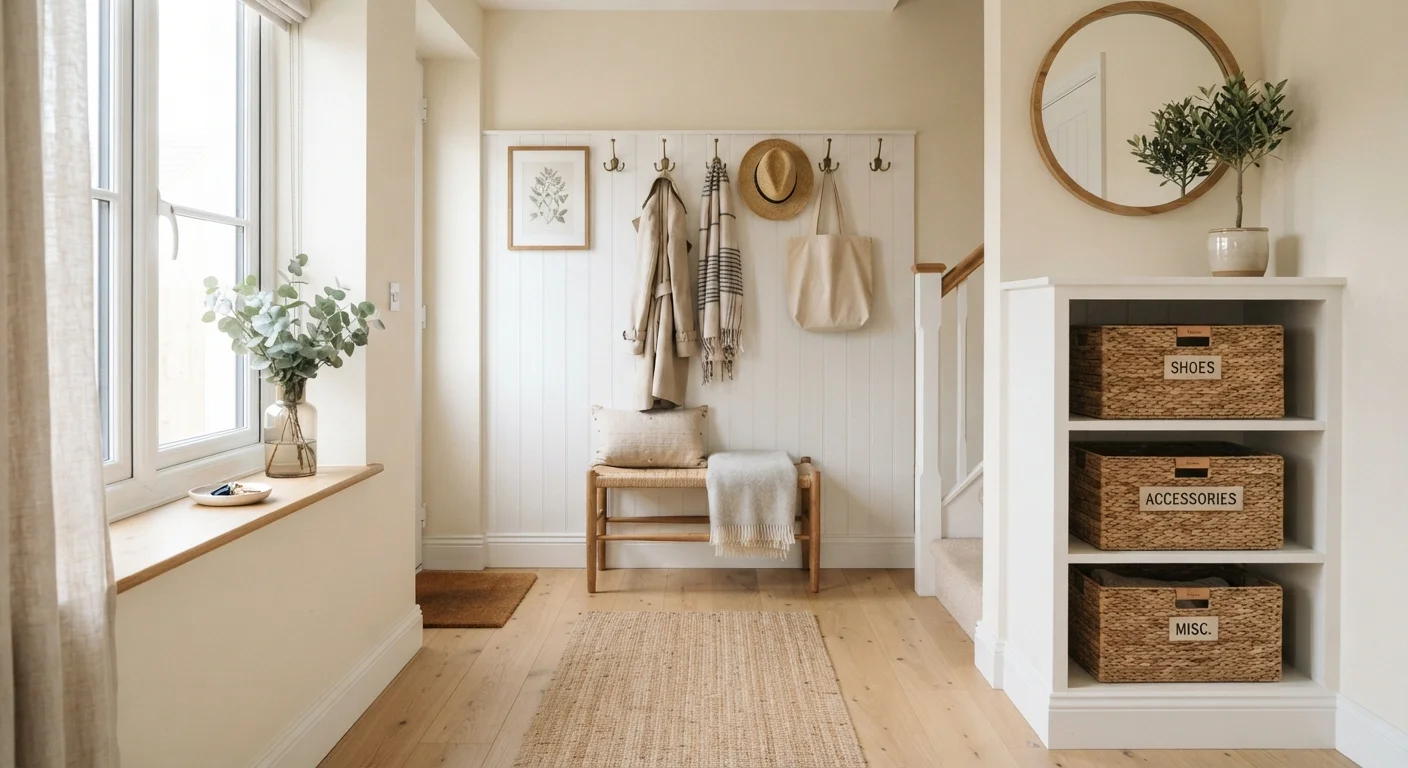
Don't try to organize everything at once - that path leads to exhaustion and half-finished rooms. Instead, identify the one area of your home that creates the most daily frustration. Common starting points include entryways (where items pile up on arrival), kitchen countertops, or a junk drawer.
Once you've chosen an area, sort what's there into three categories: items that belong in this space, items that belong somewhere else, and items to remove entirely (donate, recycle, or discard). This three-part sort is the foundation of almost every organizing method.
Only after sorting should you consider storage solutions. Buying containers before you understand what you're storing creates new clutter rather than less of it.
Building Habits That Keep the System Running
Try the One-Minute Rule
If putting something away takes less than a minute, do it immediately rather than setting it down temporarily. This single habit prevents the gradual pile-up that eventually requires a full decluttering session. It works best once every item already has a clearly designated home.
A system without maintenance is just a temporary arrangement. Two short habits sustain organized spaces over time:
A daily reset takes five to ten minutes and means returning things to their designated homes at the end of each day - surfaces cleared, stray items returned. It is not cleaning; it is resetting to baseline.
A weekly review (ten to fifteen minutes) catches what daily resets missed and handles slower-moving categories like incoming mail, paperwork, and seasonal items before they accumulate.
For households with multiple people, agreeing on shared systems matters as much as the systems themselves. When everyone understands the structure, maintenance becomes genuinely shared - and far more realistic to sustain.
Expanding Your System Over Time
Once your first area runs reliably, move to the next high-friction zone and repeat the process. Gradual expansion is far more durable than a whole-home overhaul attempted in a single stretch.
If you're working with limited square footage, the same principles apply - but storage priorities shift. Our guide to small-space organization covers strategies that don't compromise livability in tighter homes.
For a deeper structural framework, the zone-based approach to organization - which maps storage directly to how you move through your home - offers a practical next step. It's also worth understanding why certain spaces keep re-cluttering, so you can anticipate and interrupt those patterns before they undo your work.