

| Rotation frequency | Every 5,000-7,500 miles (General industry guideline; verify with your owner's manual) |
| Balancing frequency | Every 12,000-15,000 miles or when vibration occurs (General industry guideline) |
| Alignment frequency | Every 12,000-15,000 miles or after impacts (General industry guideline) |
| Primary rotation benefit | Extends overall tire set lifespan |
| Primary balancing symptom | Steering wheel or seat vibration at highway speed |
| Primary alignment symptom | Vehicle pulling to one side; uneven tread wear |
Three Services, Three Different Jobs
Rotation, balancing, and alignment are often mentioned together - sometimes even bundled into service packages - which leads many drivers to assume they're basically the same thing. They're not. Each addresses a distinct mechanical issue, and skipping any one of them has specific consequences for your tires, your fuel economy, and your vehicle's handling. Understanding what each service actually does makes it much easier to know when you need it and why it matters.
See our guide to your car's maintenance schedule for a fuller picture of how these services fit into a broader upkeep plan.
| Rotation frequency | Every 5,000-7,500 miles (General industry guideline; verify with your owner's manual) |
| Balancing frequency | Every 12,000-15,000 miles or when vibration occurs (General industry guideline) |
| Alignment frequency | Every 12,000-15,000 miles or after impacts (General industry guideline) |
| Primary rotation benefit | Extends overall tire set lifespan |
| Primary balancing symptom | Steering wheel or seat vibration at highway speed |
| Primary alignment symptom | Vehicle pulling to one side; uneven tread wear |
Tire Rotation: Evening Out the Wear
What it does: Rotation moves each tire to a different position on the vehicle - for example, front tires move to the rear, rear tires move to the front, sometimes crossing sides. The goal is to equalize wear across all four tires.
Why it matters: Front tires wear faster than rear tires on most vehicles because they handle both steering and, on front-wheel-drive cars, acceleration forces. Without rotation, front tires can wear down significantly faster, forcing you to replace two tires while the rear ones still have useful life left. Regular rotation evens out tread depth so all four tires wear at roughly the same rate, extending the overall set's lifespan.
How often: Most manufacturers recommend rotation every 5,000 to 7,500 miles, though some newer vehicles and tire types may allow longer intervals. Your owner's manual is the authoritative source for your specific vehicle. Many drivers schedule rotation with every other oil change as a simple rule of thumb.
Consistent rotation also supports better fuel efficiency, since unevenly worn tires create uneven rolling resistance.
Tire rotation
Moving tires from one position on a vehicle to another (e.g., front to rear) to equalize tread wear across all four tires over time.
Wheel balancing
The process of correcting uneven weight distribution in a wheel-and-tire assembly using counterweights, eliminating vibration at speed.
Wheel alignment
Adjustment of the angles (camber, toe, caster) at which tires meet the road to match manufacturer specifications, ensuring straight tracking and even wear.
Camber
The inward or outward tilt of a tire when viewed from the front of the vehicle. Incorrect camber causes tires to wear on one edge faster than the other.
Toe
Whether the fronts of the tires point slightly inward (toe-in) or outward (toe-out) relative to the vehicle's centerline. Incorrect toe is one of the most common causes of rapid, uneven tread wear.
Tread cupping
An uneven, scalloped wear pattern on tire tread, often caused by wheel imbalance or worn suspension components, that produces road noise and vibration.
Wheel Balancing: Eliminating Vibration
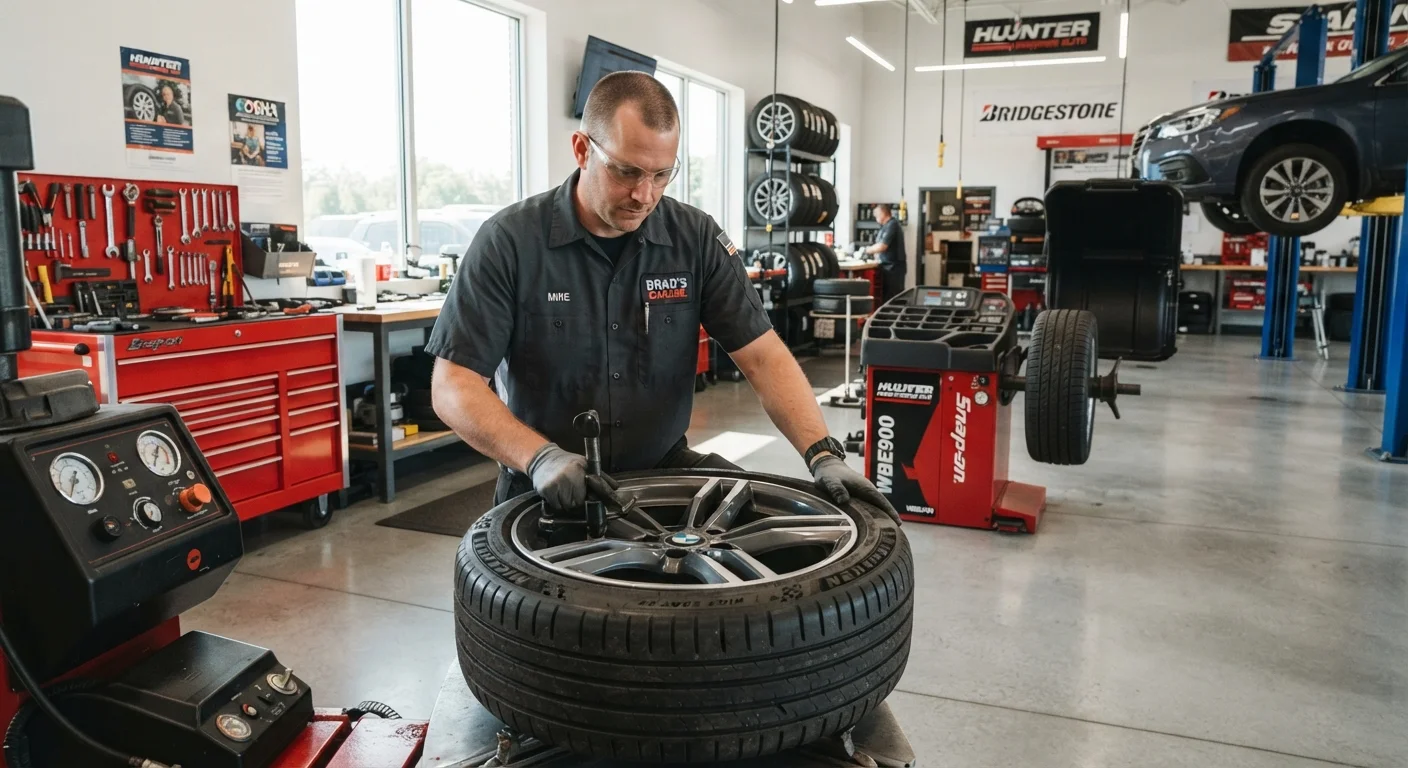
What it does: Balancing corrects uneven weight distribution in a wheel-and-tire assembly. A technician mounts the wheel on a balancing machine that spins it and identifies heavy spots, then attaches small counterweights to the rim to compensate.
Why it matters: Even small weight imbalances - sometimes just a fraction of an ounce - cause the wheel to wobble at speed. Drivers typically notice this as a steering-wheel vibration or a shuddering sensation in the seat, usually more pronounced at highway speeds. Beyond comfort, imbalanced wheels accelerate tread wear in specific spots (called cupping or scalloping) and put unnecessary stress on suspension components.
How often: Balancing is commonly recommended every 12,000 to 15,000 miles, whenever you notice vibration, after a new tire is mounted, or if a wheel weight falls off. Hitting a significant pothole or curb is also a good reason to have balance checked.
When to Check All Three After an Impact
Hitting a large pothole or curb at speed can affect rotation schedules, knock wheels out of balance, and shift alignment angles - sometimes all at once. If you notice pulling, vibration, or uneven wear after a significant road impact, it's worth having a qualified technician assess all three rather than assuming only one was affected. This is especially important at highway speeds where small imbalances become more pronounced.
Wheel Alignment: Correcting the Angles
What it does: Alignment adjusts the angles at which your tires contact the road - primarily camber (inward/outward tilt), toe (whether tires point inward or outward), and caster (the steering axis angle). A computerized alignment machine measures these angles and a technician adjusts suspension components to bring them within the manufacturer's specifications.
Why it matters: Misaligned wheels cause tires to scrub against the road at a slight angle rather than rolling straight. This creates uneven, often rapid tread wear - a tire can be ruined in tens of thousands of fewer miles than it should last. Misalignment also causes the vehicle to pull to one side, requiring constant steering correction, and can make the car feel unstable or imprecise.
How often: Many mechanics suggest alignment checks every 12,000 to 15,000 miles, after any significant impact (curbs, potholes, collisions), or whenever uneven tread wear or pulling is noticed. It's also wise to check alignment after suspension or steering component replacement.
For drivers managing aging vehicles, regular alignment checks can help stretch tire life and delay more costly suspension repairs. These services also sit alongside brake system maintenance as foundational to safe, predictable handling. Together, they're core to routine maintenance that protects long-term vehicle value.
~10%
Potential fuel economy loss from underinflation and uneven wear
The U.S. Department of Energy notes that proper tire maintenance, including even wear, supports optimal fuel efficiency.
2x
Faster front-tire wear without rotation on FWD vehicles
Front-wheel-drive vehicles place steering and acceleration loads on front tires, accelerating wear compared to the rear axle.
Thousands of miles
Tire lifespan reduction from persistent misalignment
Sustained misalignment causes continuous scrubbing wear that can significantly shorten a tire's useful service life.