

Key Takeaways
- Drip irrigation delivers water directly to root zones, reducing evaporation and runoff significantly.
- Sprinkler systems cover large areas quickly but lose more water to evaporation and wind drift.
- Drip setups typically require more initial planning but less water over the long term.
- Sprinklers are better suited to lawns and ground covers; drip excels in vegetable and flower beds.
- Combining both systems in different garden zones is a practical strategy for many home properties.
- Local climate, soil type, and plant selection all influence which system performs better for you.
Option A
Drip Irrigation
The precision, low-waste option for beds and borders.
Best for: Vegetable gardens, flower beds, shrubs, and any plantings where targeted, root-level watering matters most.
Option B
Sprinkler Systems
The broad-coverage, convenient choice for turf and open areas.
Best for: Lawns, large open garden areas, and ground covers that benefit from uniform overhead watering.
If you grow vegetables or maintain dedicated flower beds
Drip Irrigation
Drip systems deliver water precisely where plants need it, reducing foliar disease risk and wasting far less water than overhead sprinklers.
If your primary goal is keeping a lawn green and healthy
Sprinkler Systems
Lawn grasses benefit from the even, broad coverage that sprinklers provide, and the overhead delivery suits turf's growth habit well.
If water conservation is a top priority
Drip Irrigation
Drip systems can use significantly less water than sprinklers by eliminating evaporation losses and targeting the root zone directly.
If you have a large, mixed yard with both lawn and planting beds
Both systems in separate zones
A zoned approach - drip for beds, sprinklers for turf - lets each area receive the watering method best matched to its needs.
If you want the simplest possible installation and maintenance
Sprinkler Systems
Pop-up or rotary sprinkler systems are widely understood, and many homeowners find them easier to expand or repair without specialized knowledge.
How Each System Delivers Water
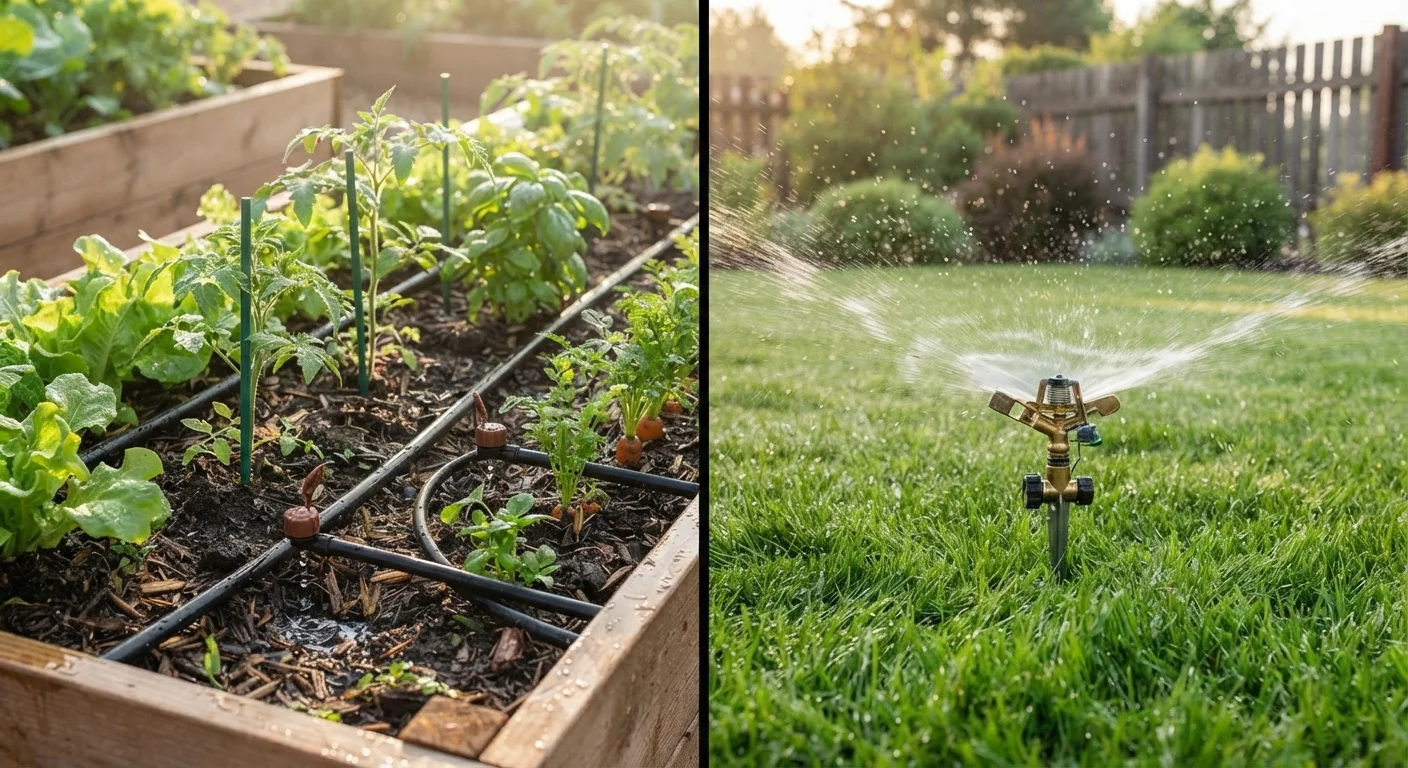
Understanding the core mechanics of each system makes the comparison much clearer. Drip irrigation uses a network of low-pressure tubing and emitters placed at or just below soil level. Water seeps slowly and directly into the root zone of individual plants, minimizing contact with leaves and reducing the amount lost to evaporation or runoff.
Sprinkler systems broadcast water through the air via rotating heads, pop-up nozzles, or oscillating arms. This mimics rainfall and works well for covering uniform, open areas - especially lawns - but the overhead delivery means a meaningful share of water evaporates before reaching the soil, particularly in hot or windy conditions.
These delivery differences drive most of the practical trade-offs between the two approaches, from water efficiency to installation complexity to plant compatibility. For gardeners thinking about what grows in each zone, raised bed vs. in-ground planting considerations also factor heavily into which irrigation method fits best.
| Criterion | Drip Irrigation | Sprinkler Systems |
|---|---|---|
| Water delivery method | Root-zone, slow emitters | Overhead, broadcast spray |
| Water efficiency | High - minimal evaporation | Moderate - evaporation losses occur |
| Best plant types | Vegetables, shrubs, flower beds | Lawns, ground covers, open areas |
| Installation complexity | Moderate - DIY-friendly for small areas | Higher - often needs professional install |
| Maintenance needs | Emitter flushing, filter checks | Head adjustments, winterization |
| Foliar disease risk | Low - leaves stay dry | Higher - wet foliage promotes fungal issues |
| Scalability | Requires pressure planning to expand | Easier to add zones with proper setup |
| Automation compatibility | Works well with timer controllers | Works well with timer controllers |
Water Efficiency and Conservation
Water efficiency is where drip irrigation holds its clearest advantage. Because emitters deliver water slowly at the root zone, there is little opportunity for surface runoff or mid-air evaporation. Drip systems are widely cited by water management extension programs as among the most efficient options for garden irrigation, with some estimates suggesting they can use 30-50% less water than comparable sprinkler coverage - though actual savings vary with climate, soil, and plant type.
Sprinkler systems are less efficient by design. Water thrown into the air on a hot afternoon or a windy day can lose a significant portion to evaporation before it contacts soil. Irrigating in the early morning helps, but cannot fully eliminate these losses. Sprinkler systems also tend to promote shallow root development in lawns if run too frequently, compared to the deeper root growth encouraged by longer, less frequent cycles.
30-50%
Potential water savings with drip vs. sprinklers
U.S. extension programs and water management agencies commonly cite this range, though actual savings depend on climate, soil, and system design.
50%
Water lost to evaporation with midday sprinkler use
The EPA's WaterSense program notes that inefficient outdoor watering can waste significant water, particularly when sprinklers run during peak heat.
9 billion gallons
Daily US outdoor residential water use
According to the EPA, roughly 9 billion gallons of water are used daily for outdoor residential purposes, with irrigation accounting for a large share.
That said, a poorly maintained drip system with clogged emitters or damaged tubing can waste water just as readily as any sprinkler. Regular inspection of emitters, filters, and pressure regulators is essential for both types. Pairing either system with a good layer of mulch around planting beds can further reduce moisture loss - see our guide on mulching for moisture retention for more detail.
Installation, Maintenance, and Cost Considerations
Installation complexity differs substantially between the two systems. Basic drip kits for raised beds or small garden areas are available in modular formats that many homeowners can set up themselves using a simple layout plan. Expanding a drip system as your garden grows, however, requires attention to pressure ratings and emitter flow rates - adding too many emitters on a single line can reduce performance across all of them.
In-ground sprinkler systems typically involve trenching, backflow preventer installation, and zone valve wiring - tasks that often benefit from professional installation, particularly when connecting to a home's main water supply. Permits or inspections may be required depending on your municipality; always check local requirements before beginning any in-ground work. Above-ground oscillating or hose-end sprinklers are a lower-commitment alternative, though they offer less precision and automation.
On the maintenance side, drip emitters are susceptible to clogging from mineral deposits or debris and should be flushed and checked at the start of each season. Sprinkler heads can sink, shift, or crack over time, particularly in freeze-thaw climates where winterization (blowing out lines with compressed air) is a seasonal necessity. Both systems benefit from timer-based controllers, which help avoid over- or under-watering and make scheduling easier. For those planning garden beds with perennial plantings that will stay in place for years, perennial vs. annual plant planning can help you decide how permanent your irrigation infrastructure should be.
Matching the System to Your Garden
There is rarely a single right answer for an entire property. Many experienced home gardeners use both systems in different zones: drip lines for vegetable beds, raised planters, and ornamental borders; sprinkler heads for lawn sections and large groundcover areas. A zoned controller allows each area to run on its own schedule, tailored to the plants' actual water needs.
Consider your plant types carefully. Vegetables and most flowering perennials perform well with drip irrigation, which keeps foliage dry and reduces fungal pressure. Lawn grasses and many ground covers, on the other hand, are naturally suited to overhead watering and would be impractical to drip-irrigate at scale. Soil type also matters: sandy soils drain quickly and may need emitters with higher flow rates, while clay soils absorb water slowly and can be easily waterlogged by fast-dripping emitters or poorly calibrated sprinklers.
Climate is another variable. In hot, arid regions, the evaporation losses from sprinklers are amplified, making drip systems a stronger default for beds. In cooler, humid climates, sprinkler losses are more modest and the efficiency gap narrows. Whatever system you choose, combining it with healthy soil - improved through compost additions, for example - will help your garden make the most of every drop. Our overview of year-round lawn care also addresses seasonal watering adjustments that apply regardless of which system you use.