

Key Takeaways
- Perennials return each year from established root systems, reducing replanting costs and labor over time.
- Annuals complete their life cycle in one season and typically deliver longer, more continuous bloom.
- Combining both types lets you enjoy reliable structure plus flexible, season-filling color.
- Soil preparation, sun exposure, and USDA hardiness zone all affect which plants thrive in your yard.
- Transitioning even part of a garden to perennials can lower long-term maintenance demands.
Our Verdict
Neither perennials nor annuals is universally superior - each fills a distinct role in a well-planned garden. Perennials build the backbone with reliable, returning structure, while annuals inject flexible color and fill seasonal gaps. Most experienced home gardeners benefit from using both strategically.
| Best for | Recommended |
|---|---|
| Homeowners who want to plant once and minimize replanting each spring | Perennials |
| Gardeners who want vivid, non-stop color all season with maximum flexibility | Annuals |
| Those building a low-maintenance, pollinator-friendly landscape over time | Perennials (especially native species) |
| Anyone designing a complete, layered garden with both structure and visual pop | A mixed perennial-and-annual planting plan |
Understanding the Core Difference
The distinction between perennials and annuals comes down to life cycle. Annuals germinate, flower, set seed, and die within a single growing season. Plants like zinnias, marigolds, and impatiens must be replanted each year. Perennials, by contrast, die back to the ground in winter but regenerate from their root system the following spring - coneflowers (Echinacea), black-eyed Susans, and hostas are common examples.
A third category worth knowing is biennials, which complete their cycle over two years (foxglove is a familiar example), though they make up a smaller portion of most home gardens.
Your USDA Plant Hardiness Zone determines which perennials will reliably overwinter in your area. A plant labeled a perennial in Zone 8 may behave as an annual in Zone 5 - so always check zone suitability before planting.
How Perennials and Annuals Compare
Each plant type has measurable trade-offs across the dimensions that matter most to home gardeners: cost, effort, bloom duration, and design flexibility.
| Perennials | Annuals | |
|---|---|---|
| Life span | Return each year from roots | Complete cycle in one season |
| Upfront cost | Higher per plant | Lower per plant |
| Bloom duration | Often 4-8 weeks per season | Continuous until frost |
| Replanting required | No (after establishment) | Yes, every year |
| Design flexibility | Fixed once established | Easily changed each season |
| First-year impact | Modest while roots develop | Immediate, showy color |
| Long-term labor | Lower after establishment | Higher (annual replanting) |
One nuance the table can't capture: perennials often look sparse during their first season while roots establish. Most gardeners use the phrase "sleep, creep, leap" - expecting modest growth in year one, moderate spread in year two, and a full display by year three. Annuals, by contrast, deliver impact from the moment they go in.
Designing With Both: The Layered Approach
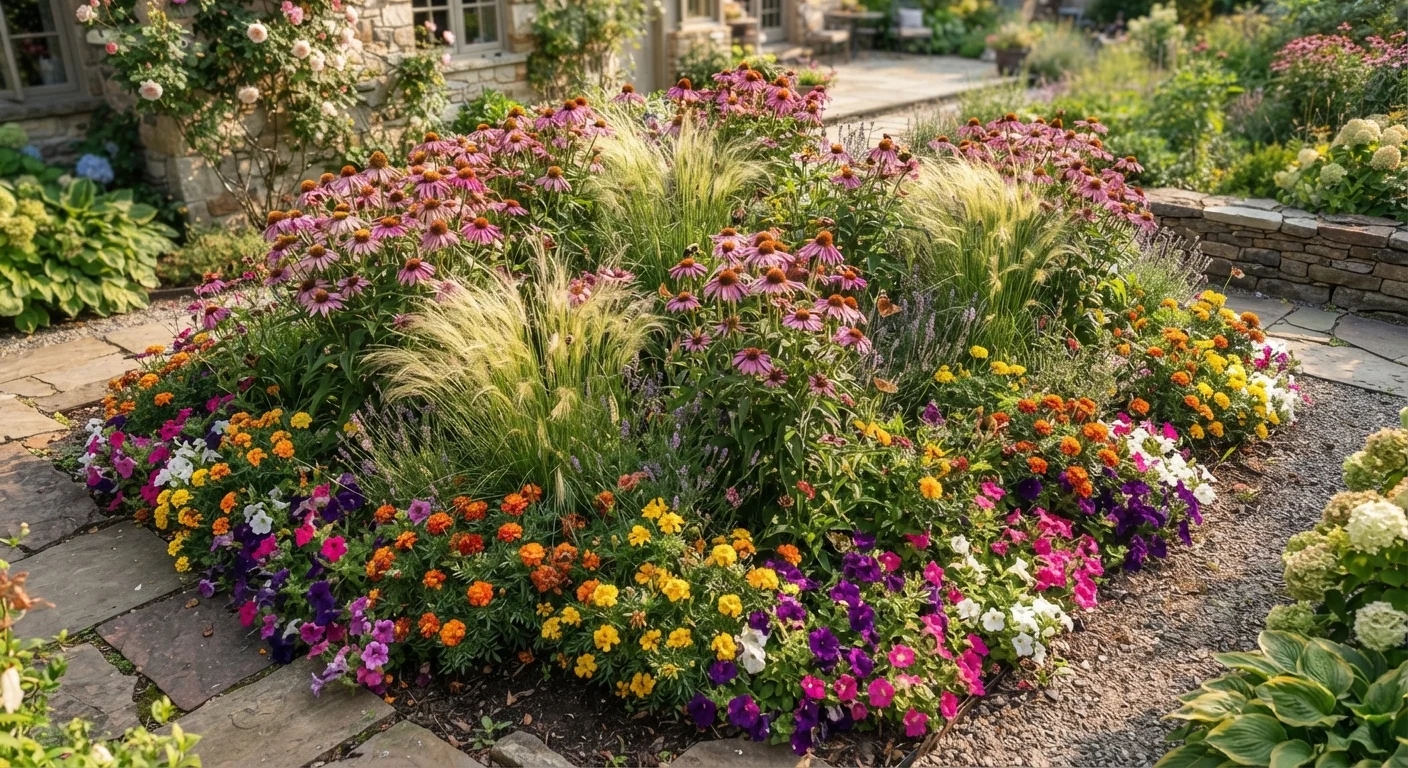
The most effective home gardens use perennials as the structural layer and annuals to fill color gaps. Think of perennials as your furniture and annuals as your throw pillows - you rearrange the accents seasonally without overhauling the whole room.
Practical Layout Principles
- Back-of-border perennials: Tall, late-season perennials like Joe Pye weed or ornamental grasses anchor the rear, providing height and fall interest.
- Mid-border workhorses: Medium-height perennials - salvia, catmint, yarrow - bloom in spring and early summer, then rest. Fill their post-bloom gap with interplanted annuals like annual salvia or cleome.
- Front edging with annuals: Low-growing annuals such as lobularia (sweet alyssum) or calibrachoa spill over bed edges and bloom continuously until frost.
For a deeper look at how physical structure shapes garden function, see how hardscaping integrates with planting beds. And if you're weighing whether to plant in the ground or in raised beds, this comparison of raised beds vs. in-ground planting covers the key trade-offs.
Plug Bloom Gaps With Strategic Annuals
Map out when each of your perennials peaks, then identify the weeks when your border goes quiet. Those are precisely the spots to fill with annuals. For example, if your spring-blooming peonies and early salvia fade by July, a planting of annual zinnias or cosmos will carry color through late summer without competing with the perennials for space.
Maintenance, Cost, and Long-Term Planning
Perennials typically cost more per plant upfront but spread and multiply over time - dividing clumps every three to four years both rejuvenates the plant and gives you free divisions to expand your beds. Annuals cost less individually but accumulate expense and labor when replanted every season.
Soil health is the underlying investment that benefits both. Organic matter, consistent moisture, and appropriate mulching meaningfully improve plant performance. Mulching correctly is one of the highest-return habits in any garden, suppressing weeds and reducing watering needs for annuals and perennials alike.
End-of-season tasks differ too. Many perennials benefit from being cut back in fall, while others should be left standing to provide wildlife habitat and winter interest. Annuals simply get pulled after frost. For a full seasonal checklist, fall garden prep guidance walks through what to do before temperatures drop.
Don't Overlook Invasive Potential
Some perennials spread aggressively - mint, certain ornamental grasses, and bishop's weed can overtake a garden bed within a few seasons. Before planting any fast-spreading perennial, research its behavior in your region and consider using root barriers or containers to keep it in check. Your local cooperative extension office is a reliable resource for regional invasive plant lists.
If sustainability is a priority, consider incorporating native perennials into your planting plan. Native species are adapted to local rainfall patterns and support pollinators more effectively than many ornamental cultivars.