

Key Takeaways
- Vertical wall space is one of the most underused storage assets in small apartments.
- Every item needs a designated home - ambiguous storage is the root cause of most clutter.
- One-in, one-out habits prevent gradual accumulation without requiring constant purges.
- Zoning distinct activity areas within a single room preserves a sense of livable order.
- Maintenance routines of just a few minutes daily outperform occasional deep-clean sessions.
- Organization systems should fit how you actually live, not an idealized vision of tidiness.
Why Small Spaces Punish Vague Systems
In a larger home, clutter can migrate to a spare bedroom or a basement and stay out of sight for weeks. In a studio or one-bedroom apartment, there's nowhere for disorder to hide. Every item left without a home immediately competes with the space you live in. That's why small-space organization isn't really about having less stuff - it's about having precise systems.
If you're just starting to build those systems, the beginner's guide to home organization is a useful foundation before applying the apartment-specific practices below. Understanding core principles first makes the tactical work stick.
Habits That Keep Apartment Order From Unraveling
Physical systems only function when paired with consistent habits. In a small apartment, the gap between tidy and chaotic can close within a single busy afternoon. Small daily rituals - resetting surfaces before bed, returning items immediately after use - do far more long-term work than a monthly reorganization sprint.
The one-in, one-out principle is especially effective here: whenever something new enters the apartment, something else leaves. This isn't minimalism for its own sake - it's a practical boundary that prevents gradual accumulation from quietly overwhelming your storage capacity. For a deeper look at that trade-off, the honest pros and cons of going fully minimalist offers a realistic assessment without pressure to go to extremes.
Zoning: Making One Room Do Multiple Jobs
A studio or compact one-bedroom often asks a single room to serve as living space, workspace, and bedroom simultaneously. Without intentional zoning, these functions blur into each other, and the space begins to feel chaotic even when it's technically clean.
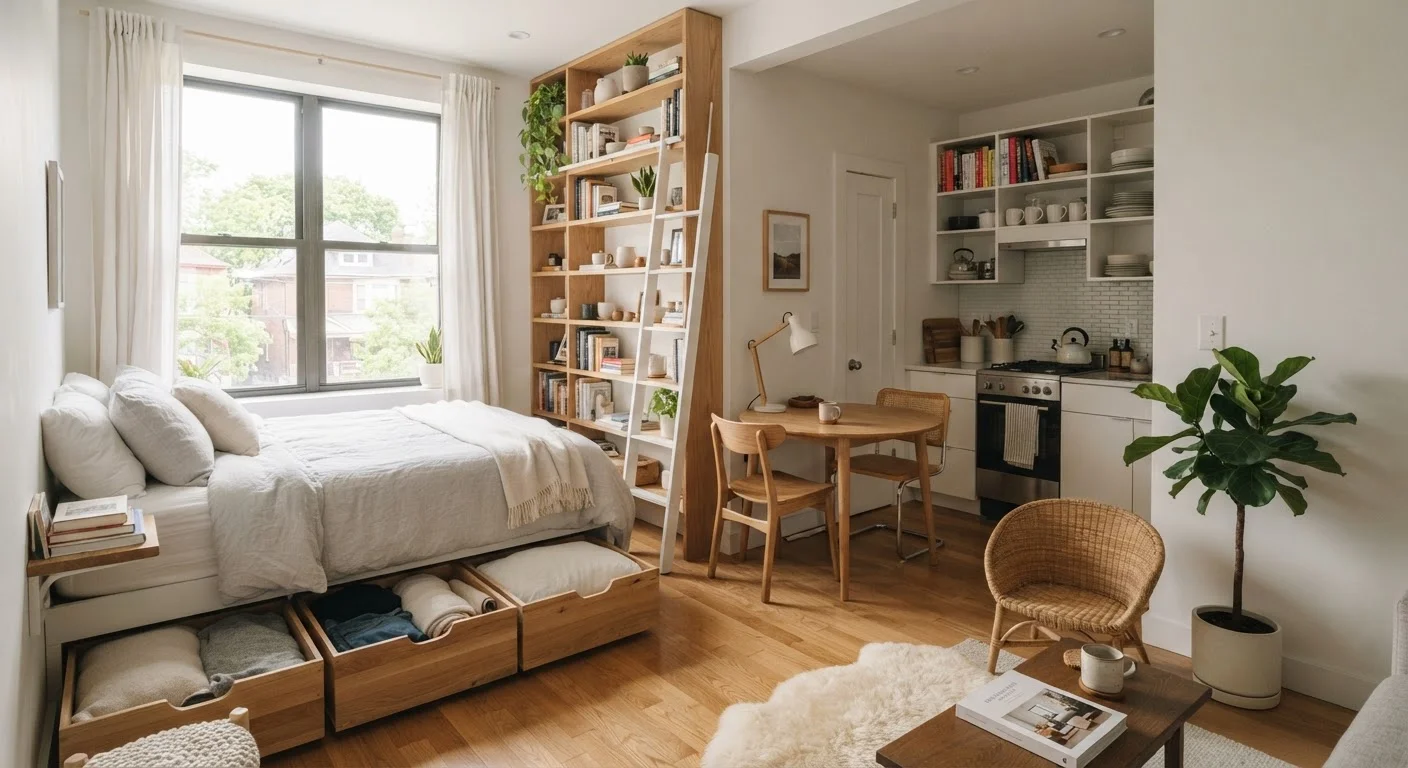
Zoning doesn't require walls - it uses rugs, furniture orientation, lighting, and storage placement to signal distinct activity areas. A desk facing away from the bed, for example, creates a mental boundary between work and rest. Open shelving used as a room divider can separate a sleeping area from a living space while adding functional storage.
If you share the apartment with others who have different tidiness standards, zoning can also help delineate personal versus shared territory. The article on organizing a home when people disagree explores this further.
Zoning Works Differently in Every Layout
There's no universal blueprint for apartment zoning - the right approach depends on your specific floor plan, furniture, and the activities you need to accommodate. Treat zoning as an experiment: test a furniture arrangement for a few weeks and adjust based on how the space actually feels to use. What reads as logical on paper doesn't always translate well to daily movement patterns.
Tackling the Specific Trouble Zones
Every apartment has recurring problem areas - the entryway that absorbs bags and shoes, the kitchen counter that collects mail, and the drawer that catches everything without a home. Addressing these zones specifically tends to deliver outsized results because they're the first things you see and the first to signal disorder.
The entryway deserves hooks, a small tray, and ideally a narrow bench with interior storage. The kitchen counter needs hard limits: only items used daily earn permanent surface space. For the inevitable catch-all drawer, rethinking the catch-all habit entirely offers a more durable approach than simply reorganizing what's already there.
Seasonal items present a particular challenge in apartments that lack basements, garages, or attics. When off-season storage must live inside the unit, under-bed containers, vacuum storage bags, and the highest cabinet shelves all become legitimate options. Understanding where seasonal items should actually live can clarify which approach suits each category.
68%
Americans say clutter causes stress at home
According to a survey by the American Psychological Association, a majority of US adults link household disorganization to elevated stress levels.
30%
Average share of home items rarely or never used
Research from the National Soap and Detergent Association found that roughly 30% of the average household's possessions are seldom or never touched.