

Key Takeaways
- KonMari organizes by category across the whole home, not one room at a time.
- The method follows a fixed sequence: clothing, books, papers, komono, then sentimental items.
- Decisions are guided by an item's emotional resonance rather than strict utility.
- Gathering an entire category in one place reveals true quantity and prevents duplicate keeping.
- The method works best as a one-time intensive reset, not an ongoing weekly chore.
- Households with multiple people may need to adapt the approach to respect shared decision-making.
The KonMari Method
The KonMari Method is a home organization approach developed by Marie Kondo that focuses on keeping only items that 'spark joy' and discarding everything else. Rather than tidying room by room, the method works through five fixed categories - clothing, books, papers, komono (miscellaneous items), and sentimental items - in that specific order. The goal is a single, complete tidying event that reshapes your relationship with your belongings for the long term.
The phrase 'spark joy' is a translation of the Japanese 'tokimeku,' which more precisely means to flutter or throb - describing an intuitive, physical response to an object rather than a purely logical assessment of usefulness.
Why Category Order Changes Everything
Most tidying advice starts with a specific room - clear out the closet, then tackle the kitchen. The KonMari Method flips that logic entirely. Instead of moving through spaces, you move through categories, gathering every item of a given type from every room in the house before making a single decision.
The reason is psychological as much as practical. When you pull every piece of clothing you own into one pile, the sheer volume becomes undeniable. You can't rationalize keeping a shirt you forgot existed when it's sitting in front of you next to forty others. This visibility is the whole point.
The prescribed sequence - clothing, books, papers, komono (miscellaneous items), and sentimental objects - is intentional. It moves from the relatively emotionally neutral toward the deeply personal. Clothing is practiced ground; sentimental items require the decision-making muscle you've been building throughout the process. Attempting sentimental items first is a common reason people stall.
Category vs. Room: A Key Distinction
When you tidy room by room, the same category of item (say, books) gets evaluated separately in the bedroom, the living room, and the home office. This makes it almost impossible to get a realistic sense of how much you own. Gathering by category first solves that fragmentation. It's a structural shift, not just a preference.
If you're weighing KonMari against other systems, our guide to zone-based organization explains how activity-based storage offers a different but complementary framework.
The 'Spark Joy' Standard: What It Is and Isn't
The phrase 'spark joy' has been widely quoted and occasionally mocked, but understanding what it actually describes matters if you want the method to work. The test isn't about happiness - it's about noticing a physical or emotional response when you hold an object. A well-worn kitchen spatula probably won't make your heart sing, but you might feel calm and certain holding it rather than vaguely reluctant.
The point is to shift away from justification-based keeping - 'I might need this someday,' 'it was expensive,' 'someone gave it to me.' These are common cognitive traps that fill homes with items nobody actively wants. The joy standard bypasses those justifications by asking what you do want, rather than what you're afraid to release.
Start With a Manageable Subcategory
If the full clothing pile feels overwhelming, start with one sub-type - socks or T-shirts only. Completing a small subcategory successfully builds the decision-making confidence you'll need for more complex categories later. Momentum matters more than perfection at the outset.
That said, the method explicitly acknowledges that utility matters. You're encouraged to thank items for their service before discarding them - not as a spiritual requirement, but as a way of acknowledging value and reducing the guilt that makes discarding feel wasteful.
How to Actually Work Through Each Category
Each KonMari category has its own logic worth understanding before you begin.
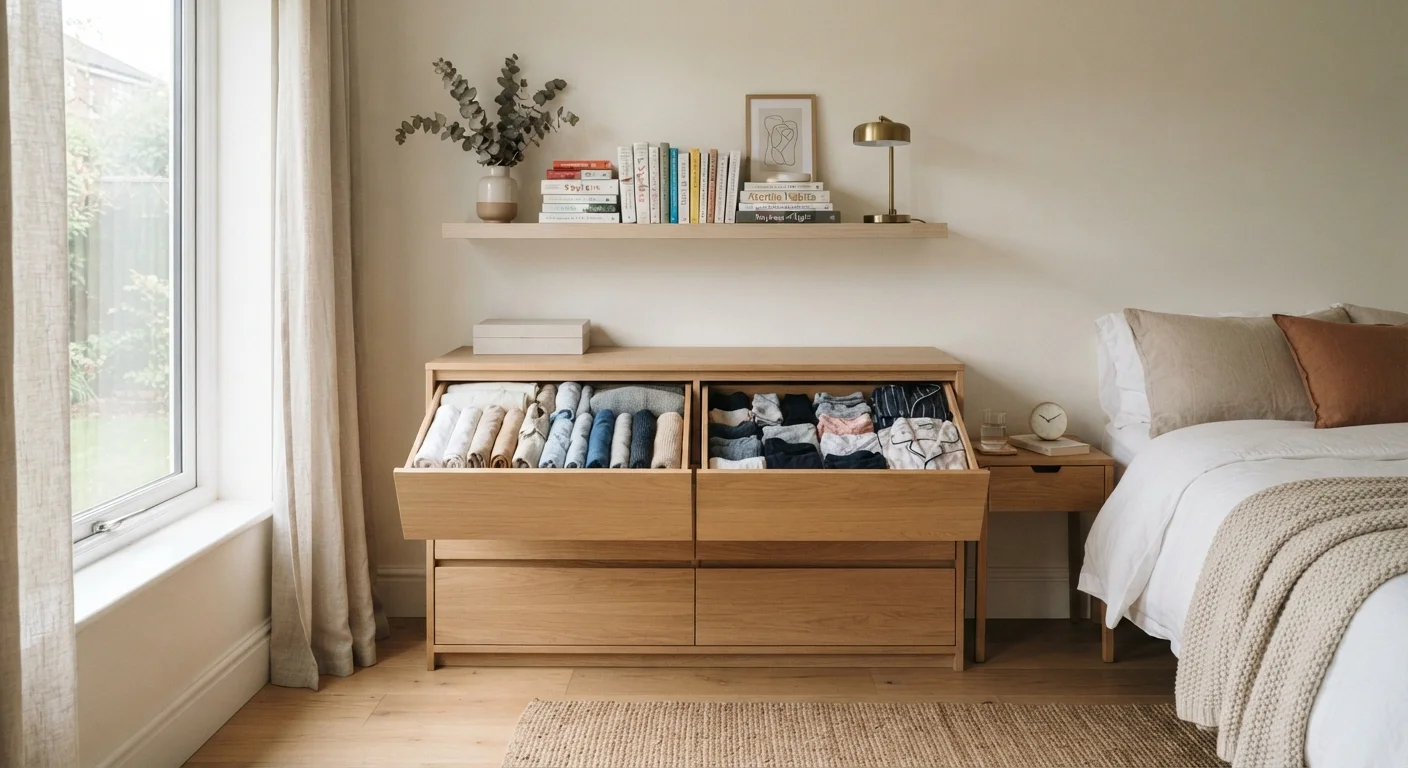
- Clothing: Every item you own - including off-season storage, gym wear, and accessories - goes into a single pile. You handle each piece individually. The vertical folding technique Kondo recommends stores clothes upright in drawers so every item is visible at once.
- Books: Physical books only. The common sticking point is keeping books 'to read someday.' The method asks whether the book excites you now, not whether it might be useful abstractly.
- Papers: The default is to discard almost everything. The narrow exceptions are documents you're legally required to keep (tax records, property papers) and those with active use. Pending paperwork gets its own designated spot.
- Komono: The largest and most varied category, covering kitchen items, tools, electronics, hobby supplies, and more. Kondo recommends sub-categorizing within komono to avoid overwhelm.
- Sentimental items: Addressed last because they require the most careful attention. Photos, gifts, and mementos are handled one at a time with as much time as needed.
For households working through this process together, the related guide on organizing shared spaces when people disagree offers practical strategies for navigating different tidiness standards.
5
Fixed categories in the KonMari sequence
The method uses exactly five categories - clothing, books, papers, komono, and sentimental items - always addressed in that order.
~80%
Portion of home clutter attributed to deferred decisions
Professional organizers commonly estimate that the majority of household clutter results from postponed choices rather than intentional keeping.
Who the Method Suits - and Who Might Need Adjustments
KonMari works especially well for people who feel their homes have accumulated possessions without intentional choices - the result of years of gifts, impulse purchases, and deferred decisions. The intensive, all-at-once format forces resolution rather than postponement.
It's less naturally suited to households managing small children's rapidly changing needs, shared rentals where storage is limited, or people who struggle with perfectionism and might stall on the 'right' answer for every item. The method also assumes you have the time and physical ability to handle a multi-session intensive project.
If you're newer to home organization generally, starting with foundational principles before attempting KonMari can help. Our beginner's guide to building a home organization system covers the groundwork. Alternatively, a room-by-room decluttering walkthrough offers a more gradual path for busy family homes.
The underlying principle - that the things you keep should be deliberate rather than default - translates across any system you choose, even if you adapt or abandon the specific KonMari steps.