

Key Takeaways
- The 50/30/20 rule divides after-tax income into three broad buckets: needs, wants, and savings or debt repayment.
- Zero-based budgeting requires income minus all planned expenses to equal zero before the month starts.
- The 50/30/20 rule is faster to set up; zero-based budgeting demands more ongoing attention.
- Neither method guarantees results - consistency and honest tracking matter more than the system you pick.
- Your income variability, financial goals, and personal discipline level should guide which framework you try first.
Option A
The 50/30/20 Rule
The simple, percentage-based framework for everyday budgeters.
Best for: People who want a low-maintenance structure that allows flexibility without micromanaging every expense.
Option B
Zero-Based Budgeting
The detail-driven method that assigns every dollar a specific job.
Best for: People who want full visibility into their spending and are willing to plan each dollar of income before the month begins.
If you're new to budgeting and want a quick starting point
The 50/30/20 Rule
The three-category structure is easy to understand and apply, making it a practical entry point for first-time budgeters without overwhelming detail.
If you're working to eliminate debt or reach a specific savings goal quickly
Zero-Based Budgeting
Assigning every dollar a purpose forces deliberate trade-offs, which can accelerate debt payoff and targeted saving more effectively than broad percentage targets.
If your income fluctuates month to month
Zero-Based Budgeting
Rebuilding the budget from scratch each month lets you realistically allocate irregular income rather than relying on percentages that may not reflect your current reality.
If you want a sustainable, low-effort system for the long term
The 50/30/20 Rule
Once your baseline allocations are set, the 50/30/20 framework requires minimal monthly upkeep, making it easier to maintain over years without burnout.
How Each Framework Works
Before comparing the two methods, it helps to understand what each one actually requires you to do day-to-day.
The 50/30/20 rule was popularized as a simple way to structure after-tax income into three categories: roughly 50% toward needs (housing, utilities, groceries, transportation), 30% toward wants (dining out, entertainment, subscriptions), and 20% toward savings and debt repayment. The percentages are guidelines, not rigid rules - a reader in a high-cost city might reasonably allocate more to needs and less to wants. What matters is the proportional thinking the framework encourages. If you're new to tracking your money, see our introduction to budgeting for the first time for foundational context.
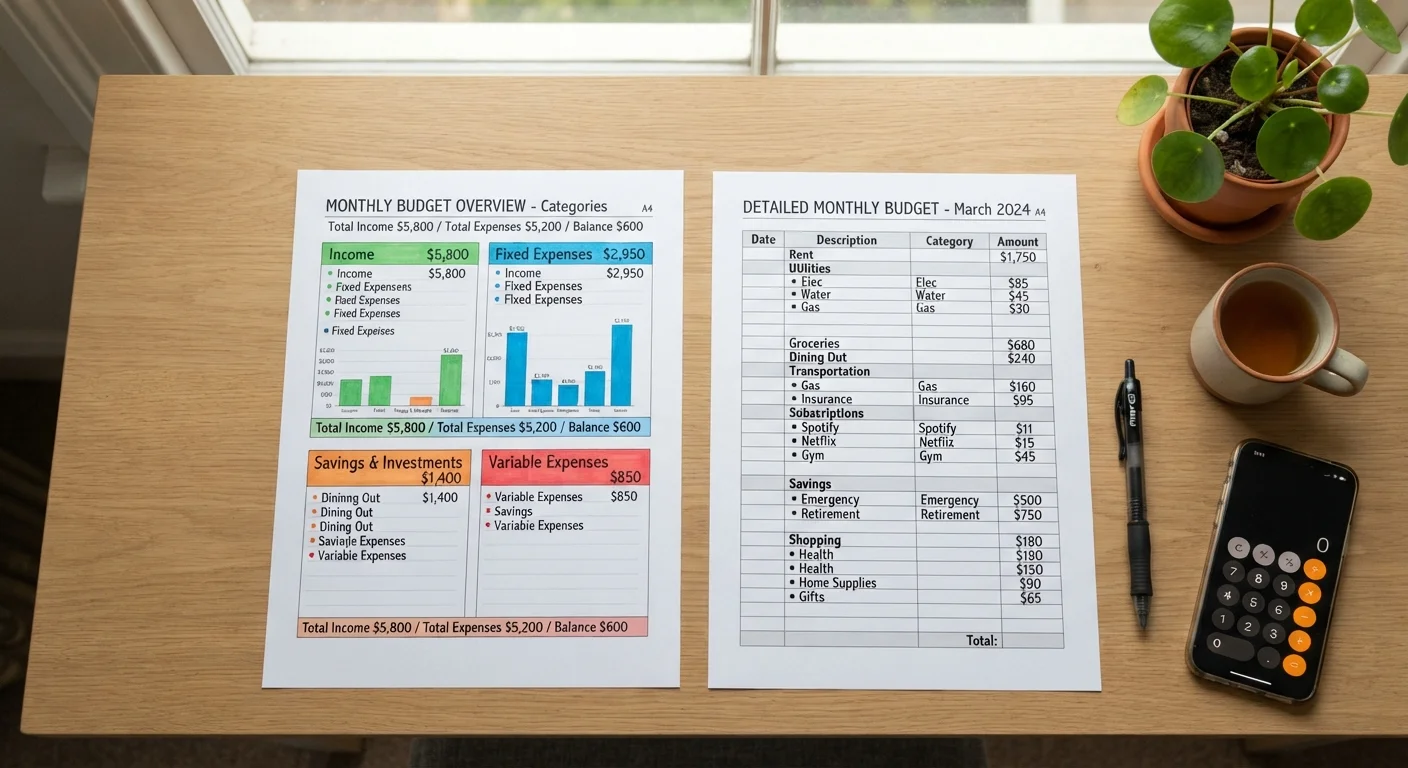
Zero-based budgeting (ZBB) works from a different premise: every dollar of monthly income gets assigned to a specific category - bills, groceries, gas, savings, debt payments, entertainment - until income minus all assigned amounts equals zero. Nothing is left unallocated. This doesn't mean you spend everything; it means your savings and investment contributions are also deliberate line items. Learn more about how this method functions in our deep dive on zero-based budgeting.
| Criterion | 50/30/20 Rule | Zero-Based Budgeting |
|---|---|---|
| Setup time | 30-60 minutes initially | 1-2 hours per month |
| Ongoing maintenance | Low - monthly check-in | High - rebuilt each month |
| Spending categories | 3 broad buckets | Detailed line items |
| Best income type | Stable, predictable income | Any income, including variable |
| Flexibility | High within each category | Low - reallocations are deliberate |
| Precision of tracking | Approximate | Exact |
| Ideal for | Beginners, low-maintenance savers | Debt payoff, aggressive saving goals |
Time Investment and Ongoing Effort
One of the most practical differences between these two methods is the time they each require.
Setting up a 50/30/20 budget takes roughly 30 minutes: calculate your monthly take-home pay, sort your current expenses into the three buckets, and check whether your actual spending aligns with the target percentages. Ongoing maintenance is light - you may review totals once a month without needing to re-plan from scratch. This makes it appealing for people with predictable income and stable expenses.
Zero-based budgeting is more demanding. Each month (or pay period, depending on your approach), you rebuild the entire budget from income down to zero. This process requires knowing your fixed vs. variable expenses in detail, since variable costs like groceries or fuel shift month to month. The upside is control: nothing slips through unexamined. Use our monthly budget review checklist to build a consistent end-of-month habit regardless of which method you use.
~33%
Americans with a detailed monthly budget
Gallup surveys consistently find that fewer than one in three U.S. adults maintain a detailed household budget, suggesting most rely on informal or no tracking.
20%
Recommended savings and debt allocation (50/30/20)
The 50/30/20 framework targets 20% of after-tax income for savings and debt repayment, though individual circumstances may warrant adjusting this proportion.
Flexibility vs. Precision: Which Trade-Off Fits Your Life?
The 50/30/20 rule trades precision for ease. Because it groups expenses broadly, there's natural flexibility within each bucket - you don't need to decide in advance exactly how much to spend at restaurants versus on streaming services. That flexibility is a feature for some people and a blind spot for others. If discretionary spending tends to creep beyond what you expect, a broad "wants" category may not provide enough friction to catch it. Our article on discretionary spending limits explores this tension in detail.
Zero-based budgeting offers precision at the cost of flexibility. Because every dollar is pre-assigned, spending outside your planned categories requires a conscious reallocation - moving money from one line item to another. This friction is intentional: it makes off-plan purchases visible rather than invisible. For someone actively paying down debt or building an emergency fund on a tight timeline, that visibility is genuinely useful.
Neither method is inherently superior. The right choice depends on whether you need simplicity to stay consistent or structure to stay accountable. Once you've chosen a framework, our step-by-step monthly budget walkthrough can help you put it into practice.
What If Neither Method Fits Perfectly?
Many budgeters find success by blending elements of both frameworks - using the 50/30/20 percentages as guardrails while building zero-based detail within the wants or savings categories. There's no rule requiring you to choose one system exclusively. The most effective budget is the one you'll actually stick with month after month, even if it's a hybrid of recognized approaches.
This article provides general financial education and is not personalized financial advice. Consider speaking with a qualified financial professional about decisions specific to your situation.