

Key Takeaways
- List every debt with its balance, interest rate, and minimum payment before doing anything else.
- Knowing your monthly cash flow tells you how much you can realistically direct toward debt.
- A small emergency buffer of $500-$1,000 helps prevent new debt from derailing your plan.
- Two main repayment strategies - avalanche and snowball - suit different motivations and situations.
- Automating minimum payments protects your credit score while you build momentum.
- Consistency over 30 days builds habits that matter far more than the size of your first payment.
Start here
Start with a Complete Debt Inventory
Next
Understand Your Monthly Cash Flow
Foundation step
Build a Small Emergency Buffer First
Then decide
Choose a Repayment Strategy
Make it stick
Set Up Your System and Stay Consistent
Start with a Complete Debt Inventory
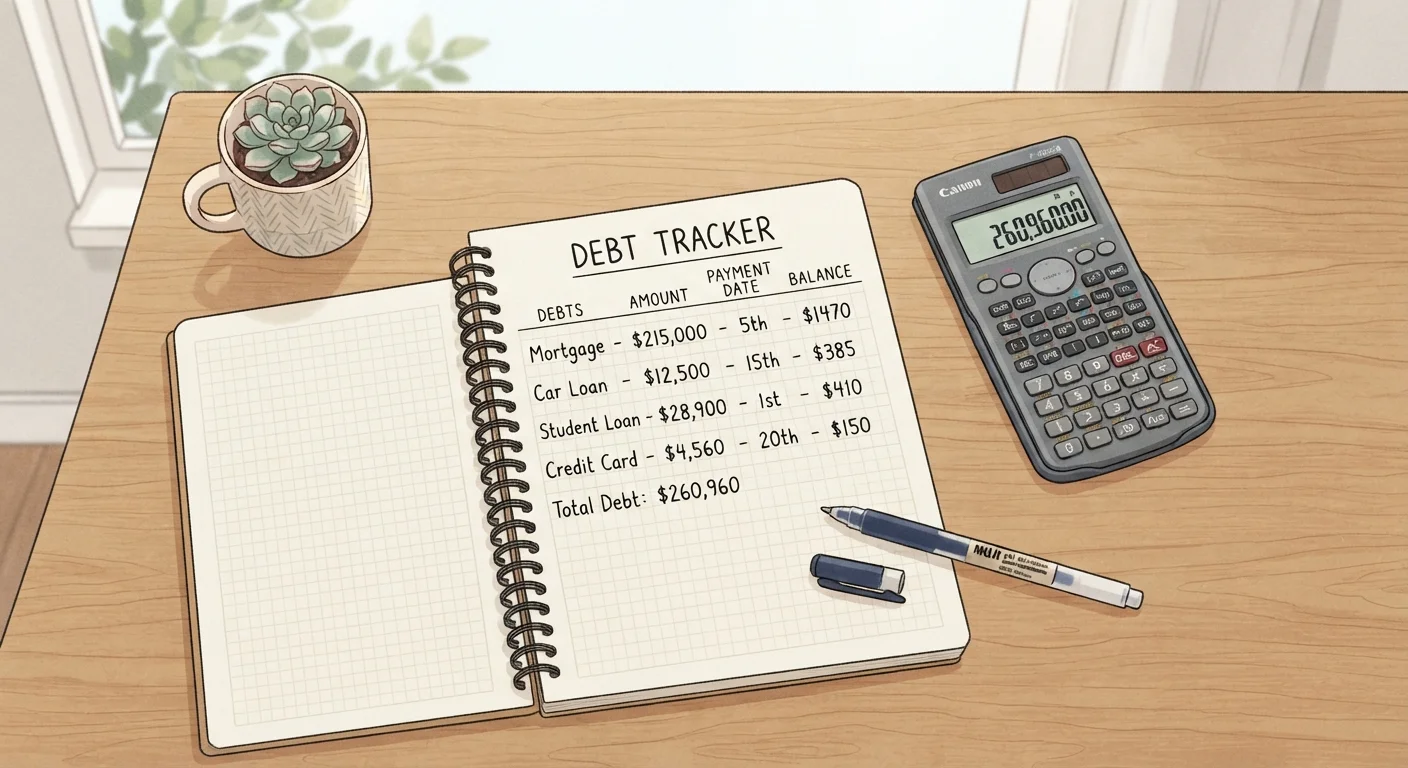
Before you can make progress on debt, you need a clear picture of exactly what you owe. Many people avoid this step because it feels uncomfortable - but an accurate inventory is the foundation of every effective repayment plan.
For each debt you carry, record the following in a notebook, spreadsheet, or simple list:
- Creditor name (the lender or card issuer)
- Current balance
- Interest rate (APR)
- Minimum monthly payment
- Due date
To find accounts you may have forgotten, pull a free credit report at AnnualCreditReport.com. Federal student loan borrowers can check balances at StudentAid.gov. Once your list is complete, add up the total minimum payments - this number becomes a fixed expense in your budget.
APR (Annual Percentage Rate)
The yearly cost of borrowing money, expressed as a percentage. A higher APR means you pay more in interest over time, so it's a key number when prioritizing which debt to pay first.
Minimum payment
The smallest amount a lender requires you to pay each billing cycle. Paying only the minimum keeps your account in good standing but typically extends your payoff timeline significantly.
Debt avalanche
A repayment strategy where you put extra money toward your highest-interest debt first, potentially saving more in interest charges over time.
Debt snowball
A repayment strategy where you target your smallest balance first to build momentum through quick wins before moving to larger debts.
Cash flow surplus
The amount of money left over each month after your income minus all essential expenses and minimum debt payments. This is the pool from which extra debt payments come.
Starter emergency fund
A small savings cushion - often $500 to $1,000 - kept in a separate account to cover unexpected costs and prevent new debt from derailing a repayment plan.
This article provides general financial education and is not personalized financial, tax, or legal advice. Consult a qualified financial professional for guidance specific to your situation.
Understand Your Monthly Cash Flow
Your cash flow - the difference between money coming in and money going out - determines how much you can realistically put toward debt each month. Without this number, any repayment plan is a guess.
Add up your reliable monthly take-home income from all sources. Then list your essential monthly expenses: housing, utilities, groceries, transportation, insurance, and your debt minimums. Subtract expenses from income to find your monthly surplus.
If you haven't tracked your spending before, our beginner's guide to budgeting walks through the process step by step. Even a rough estimate is more useful than no number at all - you can refine it over time.
Track Your Surplus Weekly at First
In your first month, checking your cash flow weekly rather than monthly helps you catch overspending before it erases your repayment progress. After a few months of consistent tracking, monthly reviews are usually sufficient. Most people find the habit becomes automatic faster than they expect.
If your surplus is very small or negative, look for one or two discretionary spending categories you can reduce temporarily. Even modest adjustments free up money that compounds meaningfully over months of consistent repayment.
Build a Small Emergency Buffer First
One of the most common reasons people fall deeper into debt while trying to pay it off: an unexpected expense hits and there's nowhere to turn but a credit card. A starter emergency fund - typically $500 to $1,000 - acts as a firewall between your repayment plan and life's surprises.
This is not a full emergency fund (three to six months of expenses). It's a focused, quickly achievable buffer that keeps minor setbacks from becoming major setbacks. Deciding whether to prioritize saving or repayment beyond this initial buffer involves weighing your interest rates, job stability, and personal risk tolerance - factors explored in our article on choosing between an emergency fund and debt payoff.
Skipping the Emergency Buffer Is Risky
Starting aggressive debt repayment without any savings cushion leaves you one unexpected car repair or medical bill away from adding to your debt load. Many financial educators consider a small starter fund a prerequisite, not optional. Even setting aside $25-$50 per paycheck builds this buffer faster than most people expect.
Choose a Repayment Strategy
Once you know your balances, interest rates, and available surplus, you're ready to choose a method for allocating extra payments. The two most widely discussed approaches are:
- Debt Avalanche
- Direct extra payments to the debt with the highest interest rate first. Once it's paid off, roll that payment to the next-highest-rate debt. This approach typically minimizes the total interest you pay over time.
- Debt Snowball
- Pay the smallest balance first, regardless of interest rate. The rapid wins can build motivation and momentum - research in behavioral economics suggests some people stay more consistent when they see accounts closed quickly.
There is no universally correct answer. The strategy you'll stick with is the one that works for you. For a detailed side-by-side comparison, see the debt avalanche and debt snowball methods compared.
If you carry federal student loans, be aware of income-driven repayment options and forgiveness programs that may affect your strategy - our overview of student loan repayment and forgiveness programs covers the major federal options.
Set Up Your System and Stay Consistent
The final step in your first 30 days is building a system that reduces reliance on willpower. Automate your minimum payments on every debt to protect your credit history and avoid late fees. Schedule your extra payment - even a small one - to your target debt on payday, before that money can be spent elsewhere.
Mark your progress monthly. Crossing a balance off your list or watching a number shrink reinforces the habit. Over time, small consistent actions compound into significant payoff. Our guide on habits that help people pay off debt faster explores the behaviors most associated with long-term success.
AnnualCreditReport.com
The federally authorized source for free annual credit reports from the three major bureaus. Use it to locate debts you may have overlooked and verify account details.
CFPB Debt Repayment Resources
The Consumer Financial Protection Bureau offers free, unbiased guides on managing debt, understanding credit reports, and working with creditors - useful for anyone building a repayment plan.
Nonprofit Credit Counseling (NFCC)
The National Foundation for Credit Counseling connects consumers with accredited nonprofit credit counselors who can review your full debt picture and discuss structured options at low or no cost.
For a broader framework connecting saving, debt, and long-term financial health, explore the complete guide to saving and debt management for US households.