

Key Takeaways
- Feather fluffing can signal contentment or illness — context determines which.
- Pupil 'pinning' (rapid dilation and contraction) indicates emotional arousal, positive or negative.
- Beak grinding in a relaxed bird is a sign of contentment, not discomfort.
- Tail fanning, lunging, and raised feathers around the head are common stress or aggression signals.
- Consistent vocalizations like contact calls mean your bird is checking in — silence can be the real warning sign.
- Responding consistently to your bird's signals builds trust and reduces stress-driven behaviors.
Bird Body Language
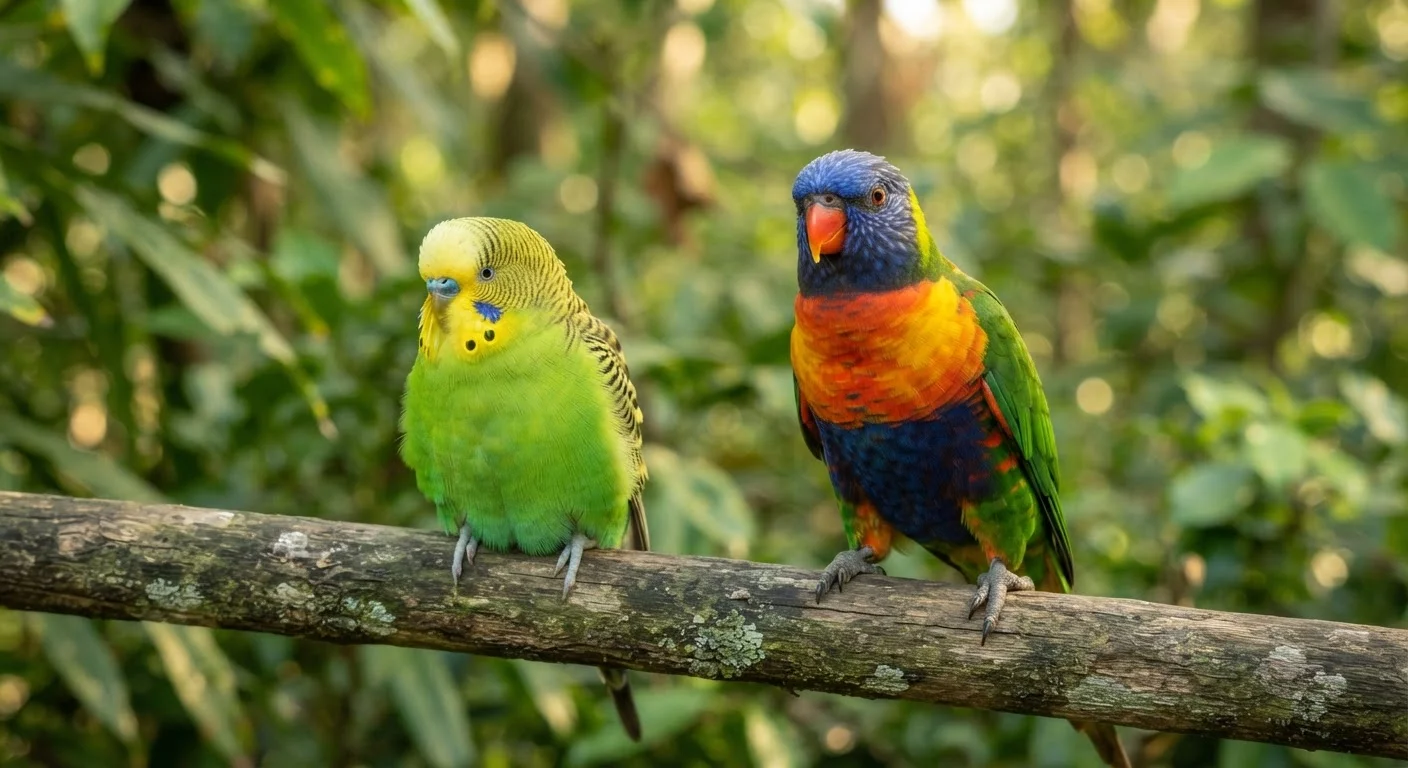
Bird body language refers to the physical and vocal signals parrots, parakeets, and other pet birds use to express their emotional state, needs, and intentions. These signals include feather position, posture, eye changes, beak behavior, and vocalizations. Reading them accurately helps owners respond appropriately to their bird's comfort, curiosity, or distress.
Unlike mammals, birds cannot move facial muscles expressively, so they rely heavily on feather position (piloerection), pupil dilation (called 'pinning'), and postural cues to communicate internal states.
Why Bird Communication Is Uniquely Visual
Parrots and parakeets evolved as prey animals in complex social flocks, where rapid, subtle communication was essential for survival. Unlike dogs or cats, birds cannot rely on scent signaling or varied facial expressions. Instead, they communicate through an intricate combination of feather position, posture, eye changes, and sound — often all at once.
Understanding this system matters practically. A bird that feels misread or ignored may escalate signals into biting, screaming, or feather-destructive behavior. Conversely, owners who learn to respond to early cues can de-escalate tension before it becomes a problem. If you're still weighing whether bird ownership suits your lifestyle, our honest overview of pet bird ownership covers the full picture.
~5 million
Pet birds kept in US households
The American Veterinary Medical Association estimates approximately 5 million households in the US include pet birds, making avian communication literacy a widely relevant skill.
~50
Distinct vocalizations in some parrot species
Research on parrot cognition suggests some species produce dozens of functionally distinct vocalizations used in different social contexts within flock settings.
15–30+ years
Lifespan of many medium parrot species
Species such as African greys and Amazon parrots commonly live 30 or more years in captivity, making early investment in communication understanding especially valuable.
Feather Signals: More Than Just Fluffing
Feather position is one of the most reliable communication channels a bird has. Smooth, tight feathers lying flat against the body typically indicate alertness or mild stress — the bird is on guard. Slightly relaxed feathers with a soft, rounded appearance signal comfort. Fully fluffed feathers in a warm, active bird often mean contentment, but the same display in a lethargic or quiet bird may indicate illness and warrants a veterinary check.
Pay special attention to the crest on cockatiels and cockatoos. A fully raised crest signals excitement or alarm; a crest held flat and slicked back can mean aggression or fear. For parakeets, which lack a movable crest, watch for the feathers around the head — a ruffled 'angry' head silhouette is an early warning to back off. Raised hackle feathers around the neck and shoulders across species generally mean the bird is preparing for conflict or feels threatened.
Eye and Beak Cues to Know
Eye pinning — the rapid dilation and constriction of the pupil — is a distinctly avian signal. Birds can control their pupils voluntarily, and pinning nearly always accompanies emotional intensity. It can accompany excitement over a favorite food just as readily as it precedes aggression, so always interpret it alongside posture and feather signals rather than in isolation.
Beak behavior is equally expressive. A soft, rhythmic grinding sound produced just before sleep is a contentment signal. Beak clicking or rapid snapping sounds, especially paired with raised feathers, signals irritation. A wide-open beak accompanied by a hissing sound is an unambiguous warning. Wing drooping away from the body may mean overheating or fatigue, while tight wings held slightly away can signal discomfort or illness.
Observe Clusters, Not Single Signals
Never interpret a single behavior in isolation. A puffed bird could be sleepy or sick; an open beak could mean overheating or aggression. Always look at feather position, posture, eye state, and vocalization together before drawing a conclusion. Keeping a brief behavioral journal when you first bring a bird home helps you establish what 'normal' looks like for your individual bird.
Vocalizations: Contact Calls, Alarms, and Conversation
Parrots are among the most vocal animals kept as pets, and their vocalizations serve distinct functions. The contact call — a repeated, medium-volume call — is essentially the bird checking that its flock (which now includes you) is nearby. Responding verbally to contact calls teaches your bird that communication works, which can actually reduce screaming over time.
Alarm calls are louder, sharper, and often trigger feather crest displays or pacing. They occur in response to sudden movements, unfamiliar visitors, or startling sounds. Soft chattering, whistling, and mimicking speech are social, exploratory behaviors indicating a relaxed bird. Silence that is unusual for your individual bird — particularly combined with fluffing and inactivity — is often the earliest observable sign of illness and should not be dismissed.
Bird communication differs fundamentally from canine or feline signals, but the interpretive principle is the same: read signals in clusters, not individually. Compare this approach with how owners decode dog body language or cat body language — context always shapes meaning.
“Birds are not passive pets — they are active communicators with complex social needs. When owners take the time to learn their bird's individual signals, they typically see dramatic reductions in problem behaviors like screaming and feather destructive behavior.”
— Irene Pepperberg, Comparative psychologist and avian cognition researcher, Harvard University
Putting It Into Practice: Building a Responsive Relationship
The most effective thing an owner can do is observe their individual bird consistently — moods, timing, triggers, and preferences vary significantly between species and individuals. A parakeet that tolerates head scratches at noon may reject them entirely at dusk during natural flock-call arousal periods.
When you recognize a stress signal, the correct response is usually calm withdrawal rather than pursuit or reassurance-seeking. Chasing a bird that is backing away or showing a slicked-back crest reinforces anxiety. Instead, give the bird space, speak softly, and try again at a calmer moment. Reinforcing relaxed behavior with attention and treats builds a positive association over time.
Enrichment also plays a major role in reducing chronic communication of distress. Bored birds often cycle through repetitive stress behaviors. Our guide to bird enrichment strategies that actually work offers practical tools for keeping your bird mentally engaged — and more communicative in healthy ways.
This article provides general educational information about bird behavior and is not a substitute for guidance from a qualified avian veterinarian. If your bird shows sudden changes in behavior, activity level, or appearance, consult a veterinary professional promptly.