

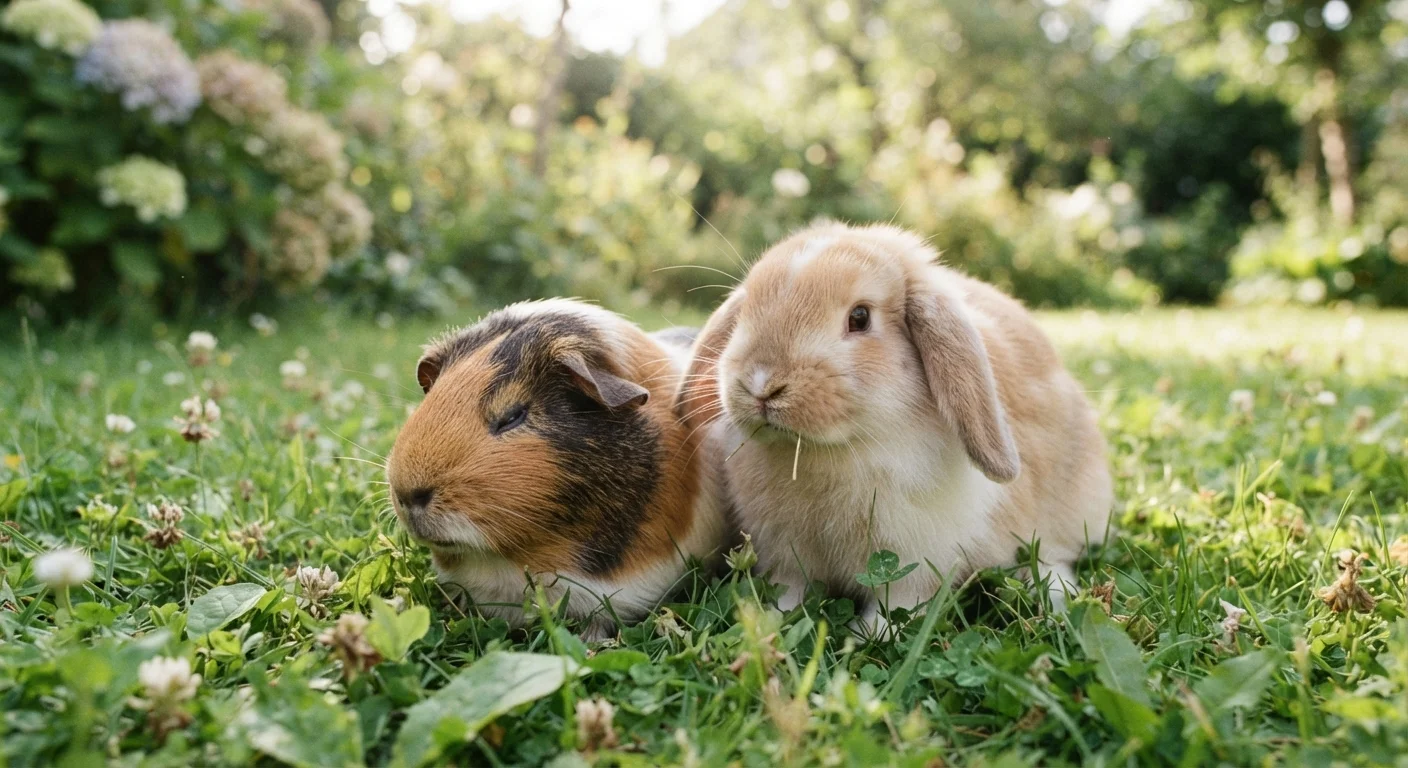
Key Takeaways
- Guinea pigs are generally easier for first-time owners; rabbits require more space and mental stimulation.
- Both species are highly social and do best when housed with a compatible companion of the same species.
- Rabbits live significantly longer than guinea pigs, meaning a greater long-term time and financial commitment.
- Hay forms the dietary foundation for both animals, but vitamin C supplementation is critical only for guinea pigs.
- Exotic veterinary care is a shared ongoing cost that prospective owners of either species must plan for.
Option A
Guinea Pig
The sociable, low-maintenance companion for beginners.
Best for: Families or individuals seeking an expressive, relatively easy-to-handle small pet that thrives with a companion of its own kind.
Option B
Rabbit
The active, intelligent pet with higher space and enrichment demands.
Best for: Owners prepared to provide substantial free-roaming space, regular interaction, and a bunny-proofed living environment.
If you want a beginner-friendly pet with gentle handling needs
Guinea Pig
Guinea pigs rarely scratch or kick and communicate openly through vocalizations, making them a more forgiving choice for owners new to small animal care.
If you have ample home space and enjoy interactive, curious pets
Rabbit
Rabbits need extensive daily free-roaming time and thrive with enrichment; owners who can provide this are rewarded with a highly engaging companion.
If you're looking for a shorter multi-year commitment
Guinea Pig
Guinea pigs typically live four to seven years, compared to eight to twelve years for rabbits, which suits owners who want a meaningful but shorter commitment.
If you want a pet that can be litter-trained and integrated into home life
Rabbit
Rabbits can reliably learn to use a litter box and often free-roam safely in bunny-proofed rooms, integrating more naturally into everyday household routines.
If young children will be the primary caregivers
Guinea Pig
Guinea pigs are less likely to scratch or bite defensively when startled, and their smaller size makes supervised handling by children more manageable.
Social Needs and Temperament
Both guinea pigs and rabbits are social animals that suffer when kept in isolation, but the nature of their social needs differs. Guinea pigs are obligate social animals — the Swiss government even recognizes keeping a single guinea pig as a form of mistreatment. They communicate constantly through a rich vocabulary of sounds including purring, wheeking, and rumbling, making their emotional states easy for owners to read.
Rabbits are also highly social but more selectively so. A bonded rabbit pair can be deeply affectionate, yet the bonding process between two rabbits requires patience and careful introduction. A rabbit kept without companionship may bond more strongly with a human caretaker, but this places a significant daily time obligation on the owner. For a deeper look at housing considerations, see what research suggests about paired versus solo housing for small animals.
Temperament-wise, guinea pigs rarely bite or scratch and are generally tolerant of gentle handling. Rabbits, by contrast, may thump, scratch, or nip — particularly when lifted — because their instinct as prey animals is to resist restraint. Neither species enjoys being picked up from above, mimicking a predator's strike.
| Criterion | Guinea Pig | Rabbit |
|---|---|---|
| Typical lifespan | 4–7 years | 8–12 years |
| Minimum enclosure size (pair) | ~7.5 sq ft | ~12 sq ft + exercise area |
| Daily free-roam requirement | Recommended but flexible | Several hours, essential |
| Vitamin C requirement | Yes — dietary supplement needed | No — self-synthesized |
| Litter-trainable | Partially | Yes, reliably |
| Ease of handling | Generally tolerant | Can scratch or kick if startled |
| Companionship needs | Strongly obligate social species | Highly social; bonding takes effort |
| Noise level | Moderate — frequent vocalizations | Quiet — communicates through body language |
Space, Housing, and Exercise Requirements
Housing is where these two species diverge most sharply. Guinea pigs require a minimum of 7.5 square feet of enclosure space for a pair, according to general small-animal welfare guidelines, with more being better. They do not jump or climb significantly, so open-topped enclosures at floor level work well and are straightforward to clean.
Rabbits need dramatically more room. A rabbit should have a living space of at least 12 square feet plus a separate exercise area of at least 32 square feet — and those numbers are considered a starting minimum, not a target. Many commonly sold rabbit cages fall well below these benchmarks. Why rabbits need more space than most owners realize explores this gap in detail. Rabbits also require several hours of daily free-roaming time in a bunny-proofed area, since they will chew cables, baseboards, and furniture if given the opportunity.
8–12 yrs
Average rabbit lifespan with proper care
Domestic rabbits commonly outlive expectations; some breeds regularly reach their early teens with good veterinary care and diet.
80–90%
Proportion of diet that should be hay
Veterinary and small-animal welfare organizations consistently cite unlimited grass hay as the dietary cornerstone for both rabbits and guinea pigs.
32 sq ft
Minimum recommended rabbit exercise area
General small-animal welfare guidelines suggest a minimum 32-square-foot exercise space separate from the primary living enclosure for rabbits.
Both species thrive at moderate indoor temperatures. Neither tolerates heat above roughly 80°F well, making climate-controlled indoor housing essential during summer months in most US regions.
Diet, Health, and Veterinary Care
Unlimited grass hay — timothy being the most common — should form 80–90% of the diet for both species. It supports healthy digestion and keeps continuously growing teeth worn down. Fresh leafy greens supplement both animals' diets well, though species-appropriate selections matter.
The key nutritional difference: guinea pigs cannot synthesize vitamin C and must receive it daily through fresh vegetables such as bell pepper and leafy greens, or through water-soluble supplementation. Deficiency causes scurvy, a serious and preventable condition. Rabbits produce their own vitamin C and have no such requirement.
Both species require exotic animal veterinarians — standard small-animal practices may not have the relevant expertise. Rabbits should be spayed or neutered for health and behavioral reasons; females of both species are at elevated risk for reproductive cancers if not altered. Dental problems are a recurring concern for both, particularly in breeds with flattened facial structures. For guidance on how care demands shift over time, see small pet care across lifespan stages.
Finding an Exotic Animal Vet
Neither guinea pigs nor rabbits should be treated by a general small-animal veterinarian without confirmed expertise in exotic species. Before acquiring either pet, identify a qualified exotic animal practitioner in your area. The House Rabbit Society and the American Association of Exotic Mammal Practitioners (AAEMP) offer practitioner directories that can help you locate a suitable vet.
This article provides general educational information about guinea pig and rabbit care. It is not a substitute for professional veterinary advice. Always consult a qualified exotic animal veterinarian for guidance specific to your pet's health and needs.
Costs and Long-Term Commitment
Initial setup costs for both species are broadly similar — housing, bedding, hay, water bottles, and enrichment items. Ongoing costs diverge based on lifespan. Guinea pigs typically live four to seven years; rabbits commonly reach eight to twelve years, with some living into their teens. This means a rabbit is a substantially longer commitment in time, attention, and cumulative veterinary expense.
Spaying or neutering is strongly recommended for both species and represents a notable upfront veterinary cost. Annual wellness exams with an exotic specialist, emergency care, and dental procedures contribute significantly to lifetime ownership costs for either animal. Hay, the dietary staple, is a recurring monthly cost that owners sometimes underestimate before bringing either pet home.
Owners considering a broader range of small pets should also review an honest look at hedgehogs, chinchillas, and sugar gliders to understand how guinea pigs and rabbits compare to other exotic companions in terms of care complexity and accessibility.