

Key Takeaways
- Most pet store cages are too small to meet a rabbit's basic welfare needs.
- Rabbits require solid or non-wire flooring to prevent a painful condition called sore hocks.
- Daily free-roaming exercise in a rabbit-proofed area is essential, not optional.
- Rabbits are social animals that often benefit from bonded companionship.
- Enrichment items—hides, tunnels, and foraging opportunities—reduce stress and boredom.
- Outdoor hutches alone are generally insufficient as a primary housing solution.
Rabbit Housing
Rabbit housing refers to the living space—enclosure, free-roaming area, flooring, and enrichment—provided to a domestic rabbit. Adequate housing supports a rabbit's physical health, mental well-being, and ability to express natural behaviors such as running, jumping, digging, and foraging. What qualifies as sufficient space is substantially larger than most commercially sold rabbit cages suggest.
Animal welfare organizations generally recommend a minimum continuous living space of at least 10–12 square feet for enclosure plus a daily exercise area of 24 square feet or more, though specific guidelines vary by body weight and breed size.
Why Standard Pet Store Cages Fall Short
Walk into any large pet retailer and you'll find rabbit cages marketed as complete starter setups. Most are far too small. A rabbit is not a sedentary animal—in the wild, domestic rabbits' ancestors may cover several miles a day. Even in a home environment, they need enough space to run, jump, and stretch out fully without touching the enclosure walls.
Rabbits need considerably more room than most owners realize, and the gap between what packaging implies and what welfare science supports is significant. Many veterinary and animal welfare organizations now recommend thinking of a rabbit's enclosure as a home base—a safe sleeping and eating area—rather than a complete living environment. Daily access to a larger, rabbit-proofed space is considered a necessity, not a perk.
Think Beyond the Enclosure
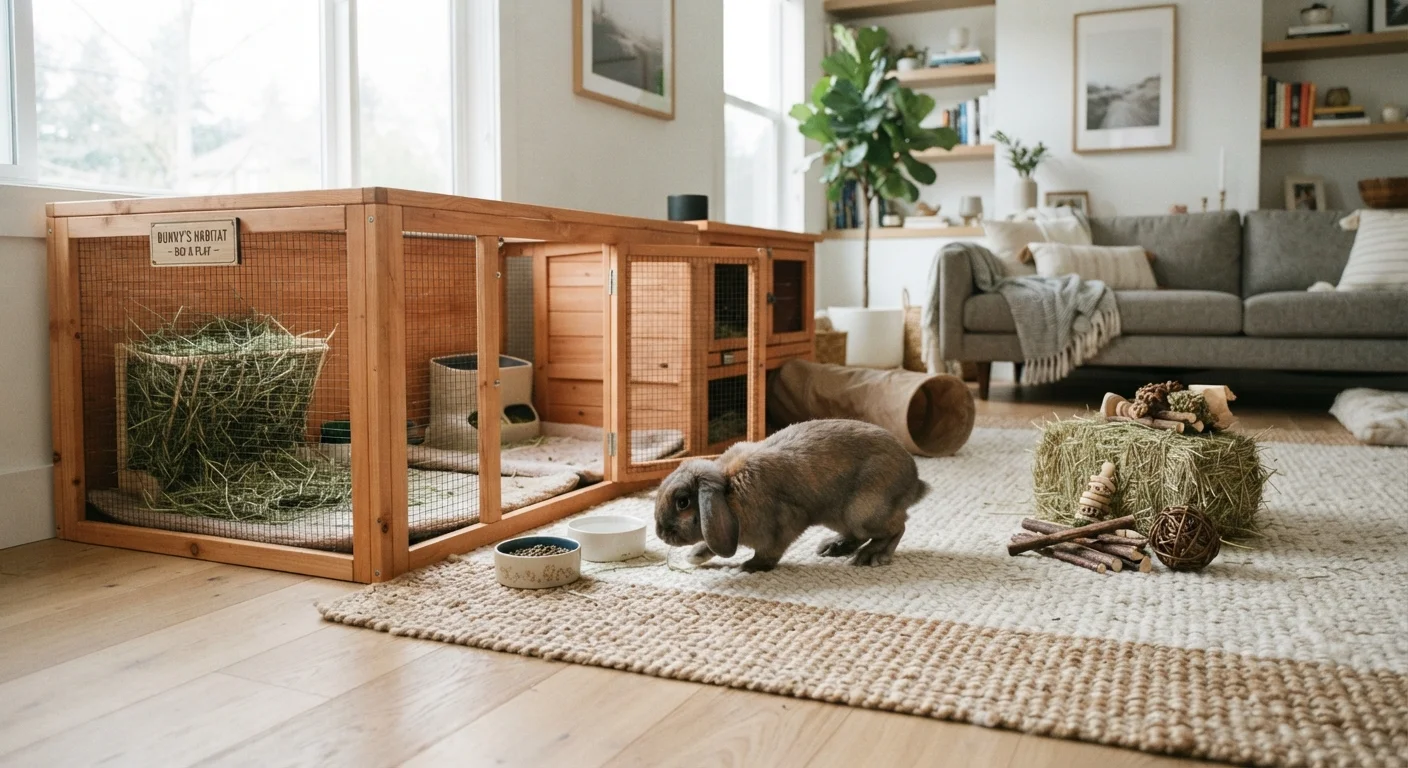
Frame your rabbit's enclosure as a home base for sleeping and eating, not a complete living space. The goal is an environment where the enclosure connects to—or opens into—a larger safe area your rabbit can access freely for several hours each day. This shift in framing leads to much better housing decisions from the start.
Enclosure Size, Type, and Flooring
The enclosure itself should be large enough for your rabbit to take three to four consecutive hops, stand fully upright on hind legs, and lie fully stretched out. For most average-sized rabbits, this translates to a minimum of 10–12 square feet of floor space. Larger breeds—such as Flemish Giants—need considerably more.
Wire-bottom cages are a significant welfare concern. They place constant pressure on the hocks (heels) of a rabbit's feet, which lack the thick padding of many other mammals. This leads to sore hocks (ulcerative pododermatitis), a painful and sometimes serious condition. Solid flooring—wood, tile, or firm plastic—covered with hay, fleece mats, or paper-based bedding is the appropriate choice. If a wire floor cannot be replaced, covering it fully with solid mats is a minimum mitigation.
X-pen setups (exercise pens) and large wooden hutch-style enclosures with solid bases tend to offer more usable space than traditional caged designs and are widely recommended by rabbit welfare advocates.
10–12 sq ft
Minimum recommended enclosure floor space
Many rabbit welfare organizations, including the Rabbit Welfare Association and Fund, cite this as a starting minimum for an average-sized rabbit's enclosure.
24+ sq ft
Recommended daily exercise area
Welfare guidelines typically pair the minimum enclosure with a separate exercise space of at least 24 square feet accessible every day.
85°F
Temperature threshold for heat stroke risk
Rabbits are highly susceptible to heat stroke, with veterinary sources commonly citing temperatures above approximately 85°F as dangerous for unprotected rabbits.
Free-Roaming Time and Rabbit-Proofing
Daily exercise outside the enclosure is not optional. Rabbits allowed to roam freely in a safe space show markedly lower stress behaviors—fewer repetitive movements, better social engagement, and more natural exploratory activity. Most welfare organizations recommend a minimum of three to four hours of free-roaming time daily, though more is better.
Rabbit-proofing a room requires addressing several specific hazards. Rabbits chew instinctively, which means exposed electrical cords are a serious danger. Baseboards, furniture legs, and houseplants also need protection. Common houseplants such as pothos, philodendron, and aloe vera are toxic to rabbits. Blocking off access under furniture—where rabbits tend to hide and chew—prevents many incidents.
Comparing rabbits to guinea pigs makes clear that rabbits generally demand more open floor space and more active supervision during free-roam time than many small pet owners initially anticipate.
Enrichment, Hiding Spots, and Social Needs
A physically adequate space still falls short if it lacks mental stimulation. Rabbits are intelligent animals that become bored, anxious, and sometimes destructive without appropriate enrichment. Key elements include:
- Hides and tunnels: Rabbits are prey animals and need enclosed spaces where they feel safe. Cardboard boxes, wooden hides, and fabric tunnels all work well.
- Chew items: Untreated wooden blocks, dried apple sticks, and willow chews satisfy the constant dental and behavioral need to gnaw.
- Foraging opportunities: Hiding pellets or leafy greens inside hay, paper bags, or foraging toys encourages natural searching behavior.
- Digging outlets: A box filled with shredded paper or soil lets rabbits express digging instincts without damaging flooring.
Social housing is another dimension of enrichment. Research on solo versus paired housing for small animals generally supports pairing rabbits when introductions are managed carefully, as companionship reduces stress-related behaviors measurably. For owners keeping a single rabbit, this makes consistent daily human interaction especially important.
Bonding Rabbits Takes Time
If you decide to house two rabbits together, expect a gradual introduction process that may take several weeks. Rabbits introduced too quickly often fight, sometimes causing serious injury. A qualified rabbit-savvy veterinarian or experienced rescue organization can guide you through the bonding process safely.
Indoor vs. Outdoor Housing Considerations
Rabbits can be housed indoors or in outdoor setups—but the two approaches carry very different welfare implications. Indoor housing allows rabbits to be integrated into household life, monitored closely, and protected from temperature extremes and predator stress. Even the sight or smell of a predator nearby can cause fatal stress responses in rabbits.
Outdoor hutches are popular but widely considered insufficient as sole housing by contemporary welfare standards. Rabbits kept primarily outdoors often experience social isolation and are vulnerable to rapid temperature shifts—rabbits are particularly susceptible to heat stroke above approximately 85°F. Any outdoor setup must provide protection from direct sun, wind, and predator access, along with a way to bring the rabbit indoors during weather extremes.
Housing needs also shift across a rabbit's lifespan. Senior rabbits may need lower-profile enclosures to reduce jumping strain and softer bedding to support aging joints. Young rabbits benefit from slightly more contained spaces until they are reliably litter trained and safe to supervise.
This article provides general educational information about rabbit housing and is not a substitute for guidance from a qualified exotic animal veterinarian familiar with your individual pet's needs.