

Key Takeaways
- Insulation resists heat flow in both directions, making it equally important in summer as in winter.
- Sound-dampening and moisture control are underappreciated but practical benefits of good insulation.
- Different insulation types suit different locations - attics, walls, and basements have distinct needs.
- R-value measures insulation's resistance to heat flow; higher values mean stronger performance.
- Work involving vapor barriers or attic systems often benefits from professional assessment.
Start here
What Insulation Actually Does
Next
Keeping Cool in Summer: The Overlooked Side of Insulation
Go deeper
Noise Control and Moisture Management
Apply it
Types of Insulation and Where They Fit
Final step
Knowing When to Call a Professional
What Insulation Actually Does
Most homeowners think of insulation as a winter necessity - a barrier that keeps cold air out and furnace heat in. That's accurate, but it's only half the story. Insulation's core function is resisting the movement of heat, and heat moves in whatever direction the temperature gradient pulls it. That makes insulation a year-round performance factor, not a seasonal one.
R-value
A number that measures how well insulation resists heat flow. Higher R-values mean the insulation is more effective at slowing heat transfer.
Thermal bridging
When heat bypasses insulation through a more conductive material - like a wood stud or metal framing - reducing the effective performance of your insulation layer.
Vapor retarder
A material (often a plastic sheet or treated facing) that slows the movement of moisture vapor through walls and ceilings, helping prevent condensation inside wall cavities.
Air sealing
The process of closing gaps, cracks, and penetrations in the building envelope where air can leak in or out. Insulation alone does not stop air movement - sealing these gaps is a separate but complementary step.
Sound attenuation
The reduction of sound transmission through a wall or floor assembly. Dense insulation materials help absorb airborne sound waves before they travel through the structure.
The primary metric homeowners encounter is R-value - a measure of thermal resistance. Higher R-values indicate stronger resistance to heat flow. The appropriate R-value for a given space depends on your climate zone and location within the home. The U.S. Department of Energy publishes zone-based recommendations that serve as a practical starting point.
Beyond thermal performance, insulation contributes to acoustic comfort and moisture management - two dimensions that rarely make the marketing headline but that homeowners notice every day.
Keeping Cool in Summer: The Overlooked Side of Insulation
In summer, solar radiation heats your roof and exterior walls. Without adequate insulation, that heat conducts inward, raising indoor temperatures and forcing your air conditioner to work harder. Well-insulated attics and walls slow that inward heat migration, keeping living spaces cooler with less mechanical cooling.
Start with the attic for maximum impact
If you're unsure where to focus insulation efforts, the attic is almost always the right answer first. Heat rises in winter and solar radiation bears down through the roof in summer, making the attic the most active thermal zone in a typical home. Bring the R-value up to your climate zone's recommendation before tackling walls or floors.
The attic is the most impactful location in a typical home. Radiant heat from a hot roof can make an under-insulated attic feel like an oven, and that heat bleeds into the rooms below. Adding or upgrading attic insulation is frequently cited by energy professionals as one of the highest-return improvements a homeowner can make - both for comfort and for energy efficiency.
This logic parallels how mulch regulates soil temperature in garden beds: a consistent, protective layer buffers against temperature extremes from both directions.
Noise Control and Moisture Management
Certain insulation materials - particularly mineral wool (also called rock wool or slag wool) and dense-pack cellulose - offer meaningful sound attenuation alongside thermal performance. This matters in shared walls between bedrooms, around home offices, or in floors between levels. If acoustic privacy is a priority, material selection becomes as important as R-value.
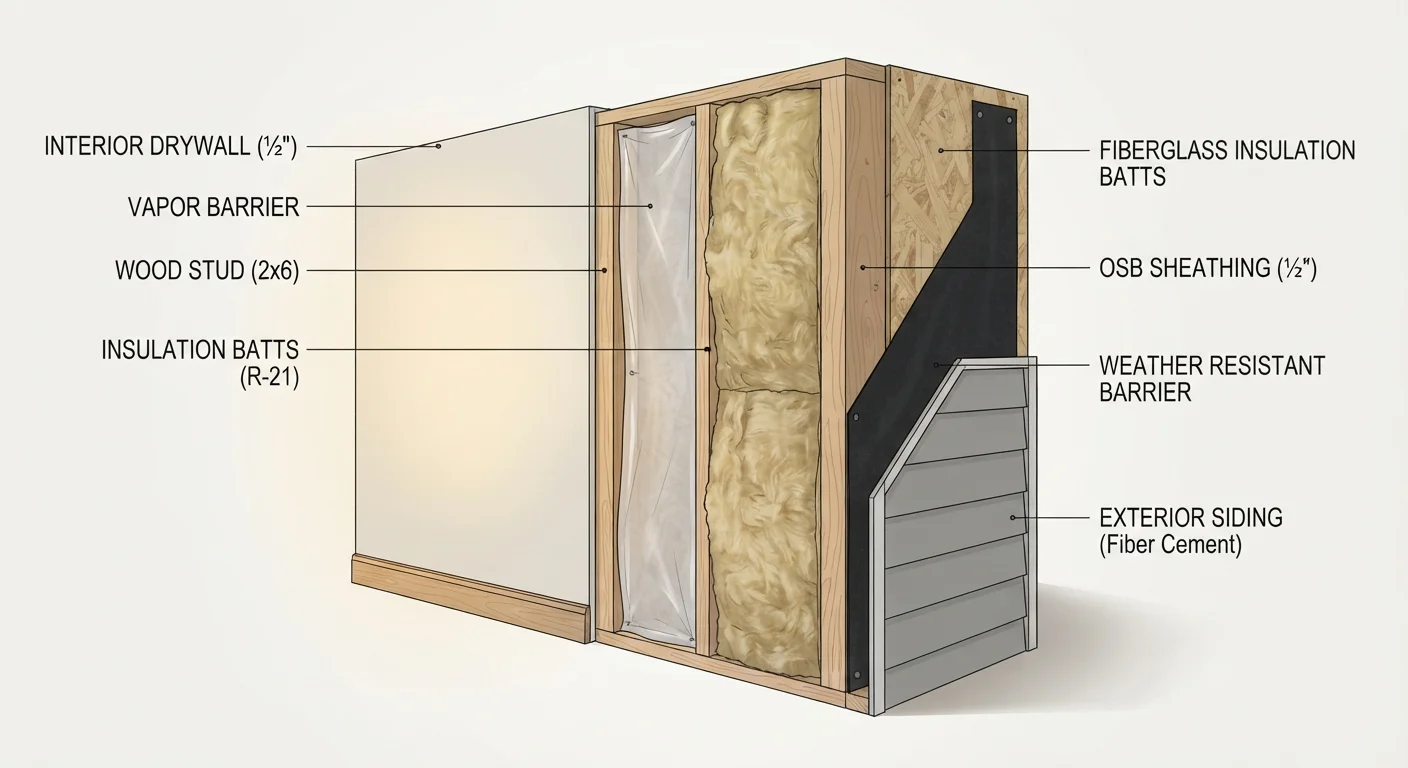
Moisture is a separate but related concern. Warm, humid interior air can migrate into wall cavities and condense on cold surfaces - a process that leads to mold, rot, and reduced insulation effectiveness over time. Vapor retarders (often called vapor barriers, though the terms are technically distinct) are installed alongside insulation to slow this moisture migration. The correct placement of a vapor retarder - whether on the warm side or cold side of the wall assembly - varies by climate and requires careful attention. Incorrect installation can trap moisture rather than prevent it.
Open layouts affect more than aesthetics
Homeowners considering open-concept renovations should be aware that removing interior walls also eliminates natural acoustic and thermal buffers. Our article on open floor plan trade-offs covers these implications in detail. Insulation planning should be part of any wall-removal conversation.
Homeowners considering open-concept renovations should be aware that removing interior walls also eliminates natural acoustic and thermal buffers. Our article on open floor plan trade-offs covers these implications in detail.
Types of Insulation and Where They Fit
Not every insulation type suits every location. Here's a practical orientation:
- Fiberglass batts: The familiar pink or yellow rolls. Sized to fit standard stud and joist spacing; commonly used in open attic floors, exterior walls, and crawl space ceilings. Requires careful installation to avoid gaps that defeat performance.
- Mineral wool batts: Denser than fiberglass, with better sound absorption and inherent fire resistance. Works in the same locations as fiberglass but at a higher material cost.
- Blown-in cellulose or fiberglass: Loose-fill material installed with a blowing machine. Ideal for adding coverage to existing attics without disturbing finishes, and for filling irregular spaces.
- Spray polyurethane foam (SPF): Applied as a liquid that expands and hardens, sealing air gaps as it insulates. Highly effective but requires professional installation and proper respiratory protection during application.
- Rigid foam board: Used on exterior walls, basement walls, and under slabs. Provides a continuous thermal break that batts alone cannot achieve.
For homeowners considering a larger project - such as finishing a basement or converting attic space - insulation decisions are intertwined with structural and code considerations. See our guide on finishing existing space vs. adding on for a fuller picture of what those projects entail.
Knowing When to Call a Professional
Adding unfaced batts to an open attic floor is a project many careful DIYers handle successfully. But several scenarios warrant professional involvement:
- Any work involving spray foam insulation
- Insulating enclosed wall cavities in an existing home
- Installing or repositioning vapor retarders
- Identifying and air-sealing bypasses before adding insulation
- Situations where existing insulation may contain hazardous materials (e.g., vermiculite in older homes)
A home energy audit - offered by many utility companies and certified energy assessors - uses blower-door tests and thermal imaging to identify exactly where your home is losing conditioned air or admitting outdoor heat. This diagnostic step can make the difference between a targeted, effective improvement and an expensive miss.
The DIY vs. professional installation decision isn't just about cost - it also depends on risk, local permit requirements, and the specific scope of work. Insulation projects that touch vapor management or require permits are generally best evaluated with a licensed contractor before you begin.